Melmoth – The Deputy Minister of Science, Technology, and Innovation, Dr. Nomalungelo Gina, has reaffirmed the government’s commitment to strengthening mathematics and science teaching and learning in rural schools in South Africa.
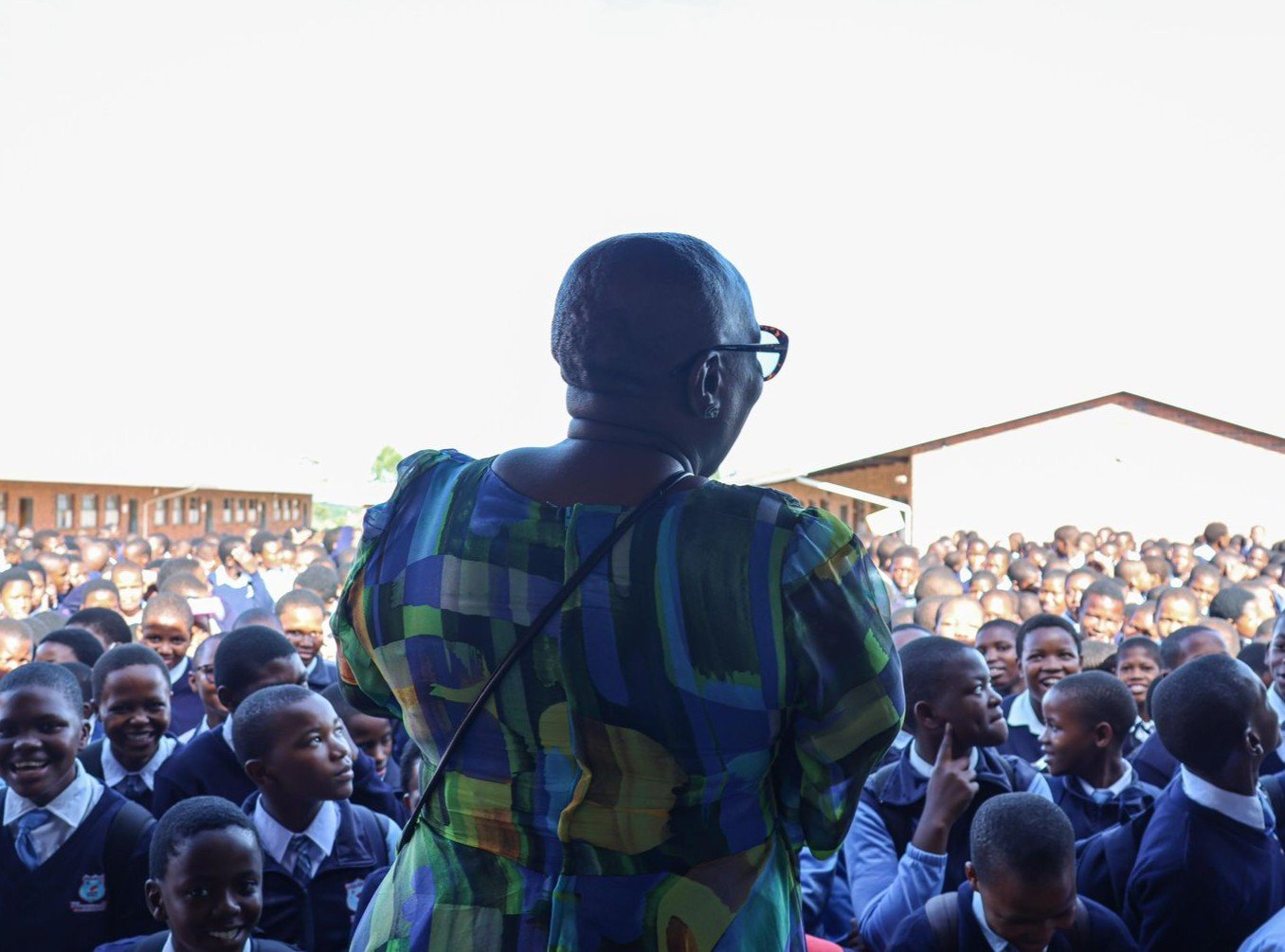
The Deputy Minister visited KwaNxusa High School in Melmoth, in KwaZulu-Natal, on Monday, 2 February 2026, located in the KwaMagwaza Mission Community within the Mthonjaneni Local Municipality.
The visit formed part of the first leg of her 2026 back-to-school campaign.
With over 1200 learners, KwaNxusa is one of the top-performing schools in the rural Melmoth area. Since 2022, it has maintained a Grade 12 pass rate of approximately 90%.
In 2025, the school achieved a pass rate of over 96 percent, despite facing several challenges, including inadequate ablution facilities for girls and limited sporting infrastructure.
Of the 197 learners who sat for the 2025 National Senior Certificate examinations, only seven did not pass.
The results included 104 bachelor’s passes and 62 diploma passes.
Upon arrival, the deputy minister was informed of a suspected arson in the school’s staff room.
Despite this setback, Dr. Gina said the Department of Science, Technology, and Innovation was committed to supporting KwaNxusa to ensure it remains a centre of excellence.
“The Department of Science, Technology and Innovation will continue, by all means possible, to support this school to ensure that it remains a centre of excellence,” said Dr. Gina
As part of the visit, the deputy minister donated 20 boxes of printing paper and 20 calculators to support learners whose parents cannot afford these essential learning tools.
Dr. Gina also encouraged learners to embrace emerging technologies such as artificial intelligence, noting that these innovations are reshaping the world and strengthening critical thinking skills needed to address societal challenges.
She further announced that the department will host a career expo at the school this quarter.
The initiative aims to expose learners in this rural community to a wide range of science-related career opportunities, including aviation, astronomy, and space science, particularly for Grade 10 learners preparing to make subject choices.
The deputy minister also acknowledged Sappi’s contribution to the school, noting that partnerships between government and the private sector play a critical role in strengthening education outcomes in rural communities.
Sappi’s community liaison officer, Nkosingiphile Ngidi, concurred that public-private partnerships were crucial to the country’s socio-economic development.
As a result, Sappi was committed to making a lasting impact in communities.
“We remain committed to contributing to initiatives that uplift communities and address social challenges through education,” said Ngidi.
School Principal Ntshangase welcomed the department’s support and pledged to work toward achieving a 100% pass rate in Grade 12 in 2026.
“We also plan to increase the number of learners taking science subjects by expanding the number of classes offering these subjects from Grade 10 in 2027, guided by learner categorisation,” said Ntshangase.
The school’s mathematics teacher, Zama Buthelezi, expressed appreciation for the donation of calculators, saying they would significantly help learners better understand the subject.
Grade 11 learner Lwangenel’uthando Mthimkhulu underscored the importance of learners choosing science, technology, engineering, and mathematics, collectively referred to as “STEM” subjects.
“Choosing science gives us the ability to innovate and contribute solutions to real-world challenges, especially in a time when technology and artificial intelligence are becoming part of everyday life,” she said.
The deputy minister’s back-to-school campaign continues with visits to Mabaya High School in Ndwendwe and ML Sultan High School in Stanger today, Tuesday, 3 February 2026.
The post Deputy Minister Gina Strengthens Maths, Science Education At Rural KZN Schools appeared first on The Bulrushes.