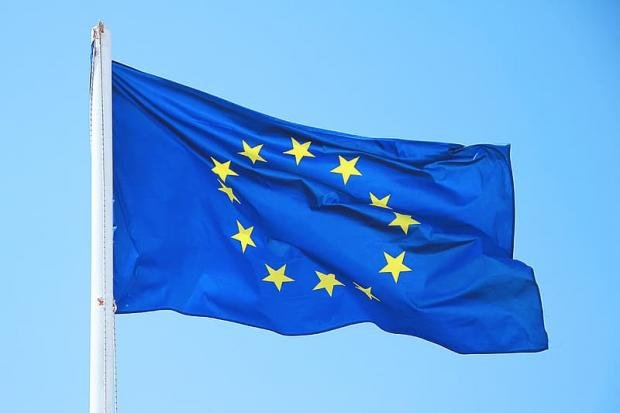
The European Union, say its critics, is toothless and outdated. Yet it may well emerge as the new geopolitical model for a fast-changing world.
Pundits talk of the rule of “strongmen”.
A far more likely future is competitive multilateralism in which regional blocs call the shots.
A key question is whether the EU will capitalise on its undoubted strengths.
Its feat of pulling so many disparate nations together economically has gained worldwide respect, but political union still eludes it.
This must be a stated goal as achieving it would guarantee Europe the prominent global role that now hangs in the balance.
Canada’s premier, Mark Carney, sparked a heated debate with his ‘rupture’ speech at Davos.
Although no one can know what a new world order will look like, we should look ahead to the inevitable shifts taking place.
Trump, Putin, and Xi Jinping are not the future.
They are anomalies in an increasingly inter-dependent world, personifying waning hegemonies whose powers are being eroded by tectonic demographic shifts.
Within a decade, China will be braked by the growth of its elderly and inactive population, Russia’s power will ebb dramatically as it shrinks from 140 million to nearer 100 million people, and an ageing United States will bitterly regret its newfound hostility to migrants.
Europe, too, faces demographic disaster.
Its saving grace will be whether it sustains a central position in the international trading system. Powerful new economic blocs are exerting growing influence around the world, and many see the EU as a prime interlocutor.
Demography is often said to be destiny.
A glance at population projections around the world reveals great geo-economic shifts.
The top ten most populous nations will by mid-century include Nigeria, Ethiopia, Indonesia and Bangladesh.
A quarter of humanity will be African, rising to a third by 2100, and the Arab world’s population will double.
Richer countries tend to be complacent about these trends, citing their scientific and industrial strengths.
The lesson of recent years, however, must be the speed with which developing nations – notably but not exclusively in East Asia – have harnessed education and innovative technologies.
Regional groupings will be the vehicles for growth and a fairer share of global wealth.
ASEAN, which spans 11 south-east Asian nations, is their poster-child and heads a lengthening list of assertive trade blocs.
Mercosur, representing most Latin American states either as full members or associates, has just come fully of age with its ‘comprehensive partnership’ deal with the EU, even though internal trade barriers remain problematic.
By no means do all such trade pacts have real clout. In Africa, there are eight in all, the more muscular being ECOWAS, centred around Nigeria, and SADC around South Africa.
Elsewhere, there’s GAFTA, the somewhat ineffectual Greater Arab Free Trade Area, accounting for only a tenth of inter-Arab business, and also the GCC.
Based in Saudi Arabia, the Gulf Cooperation Council has shown itself to be a potent external negotiator, even if it’s vulnerable to inter-state rivalries.
It’s hard to predict which regional blocs will be grouped around a single dominant nation.
Russia has promoted the Eurasia Economic Union, but the five Central Asian republics that were once part of the USSR have wavered in their fealty to Moscow since the invasion of Ukraine.
Instead, they tend to look along the Silk Road to China.
China’s future at the centre of a new trading bloc is, like India’s, open to intense speculation.
Beijing knows that it must foster new markets, and its Belt and Road development strategy has done much to pave the way.
But its authoritarian political culture complicates future partnership arrangements. India’s emergence as a potential economic rival might seed another regional grouping, although its militant Hinduism looks a very real barrier.
It’s clear, meanwhile, that the idea of a hugely powerful BRICS bloc is a non-starter. Russia’s inclusion is only part of the problem; above all, there’s the challenge of finding common economic interests between Brazil, India, China, and South Africa.
The only real binding agent is shared political opposition to US or EU initiatives.
Where does this overview of a changing world leave Europe?
As well as having shrunk in 40 years from 15% of the global population to barely 5%, it must face the crippling costs of ageing.
To succeed, the EU must grit its teeth and undergo the shock therapy of achieving a genuinely single market, common financial and fiscal policies, and unified security arrangements.
None of these can be achieved without political union. If tomorrow’s world leaders are to look to the EU as a cornerstone of the new international political economy, they need to see strong signals today.
The most convincing is arguably an agreement between member states that the EU’s leaders should be elected.
An EU president backed by a democratic mandate would be a world figure representing a forceful new era in Europe’s integration.
*The views expressed in this Frankly Speaking op-ed reflect those of the author and not of Friends of Europe.
*This article first appeared on the Friends of Europe website and is reproduced with kind permission.
*The views expressed by the author of this article, Giles Merritt, are not necessarily those of The Bulrushes
The post The EU Must Take The Lead In A ‘New World Order’ Of Trade Blocs appeared first on The Bulrushes.