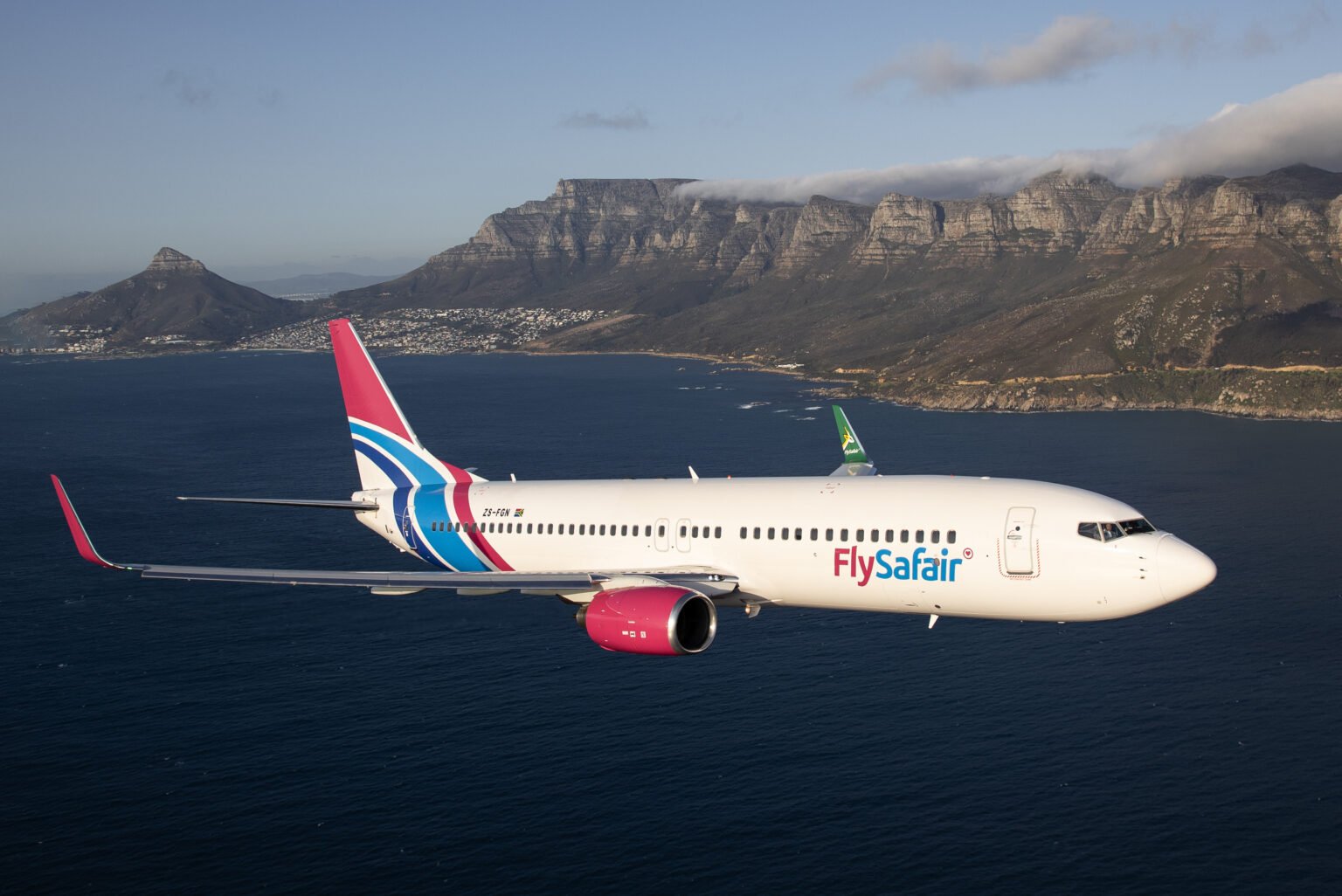
Johannesburg – Owing to rising fuel costs resulting from the conflict in the Middle East, FlySafair has announced that it is now moving to introduce a temporary fuel surcharge.
The U.S.-Israeli attacks on Iran, now in their second week, have severely disrupted global energy supplies by effectively closing the Strait of Hormuz and damaging regional oil infrastructure.
Since the crisis erupted on 28 February, the low-cost airline stated that it has absorbed steep fuel cost increases to shield passengers from immediate airfare increases.
“With Jet A1 Fuel prices at South African coastal airports now up approximately 70% in just one week, and no clear end in sight, the airline has reached the point where it must pass on a portion of these costs to ensure the long-term sustainability of the airline and its low-fare offering,” FlySafair said on Wednesday, 11 March 2026.
“The airline is now moving to introduce a temporary fuel surcharge: a measure the airline has resisted throughout its history,” said Kirby Gordon, Chief Marketing Officer at FlySafair.
“The surcharge takes effect from 12 March 2026 and will apply only to flights departing on or before 12 May 2026, reflecting the airline’s hope that this is a short-term crisis requiring a short-term response.”
“We will be specifically itemising this temporary dynamic fuel surcharge on all tickets to ensure fairness and transparency to our customers.”
Why a Fuel Surcharge Is Necessary
The conflict in the Middle East has resulted in an effective shutdown of the Strait of Hormuz: the narrow waterway through which roughly 20% of the world’s oil supply flows.
Tanker traffic has collapsed, with estimates suggesting a 70–80% drop in shipping through this critical route.
The impact on fuel prices has been immediate and severe.
Global oil prices have swung wildly, with Brent crude surging past US$100 per barrel before settling around US$87–91 amid extreme volatility.
More critically for aviation, Jet A1 fuel prices at South African coastal airports have spiked by approximately 70% in just one week.
“For context: fuel typically makes up 50–55% of FlySafair’s direct operating costs. At current price levels, the airline estimates an additional cost of around R35 000 per flight hour for each Boeing 737-800 aircraft in operation,” explained the low-cost airline.
“FlySafair has absorbed these increases since the crisis began, but this is simply not sustainable without threatening the long-term viability of affordable air travel in South Africa.”
Why FlySafair is Acting Now
FlySafair has never implemented a fuel surcharge before.
Unlike many carriers globally, the airline has historically kept pricing as straightforward as possible and avoided passing through fuel volatility to customers.
“The persistence and scale of these fuel costs have left us with no reasonable alternative,” said Gordon.
“Instead of increasing fares across the board or hiding costs, we have chosen to introduce a clearly labelled, temporary surcharge.
“This gives customers full visibility into what they are paying for and allows us to remove the surcharge once prices stabilise.”
A Temporary, Transparent Measure
The surcharge:
- Applies only to departures on or before 12 May 2026
- Will be reviewed frequently based on Jet A1 fuel price movements
- Will be reduced or removed once market conditions improve
Surcharges will vary by route length to reflect the actual fuel consumption required per journey.
“Our teams are modelling fuel prices airport by airport and reviewing potential tankering strategies to ensure the surcharge reflects the minimum required amount,” Gordon adds.
“This is not a profit mechanism, rather it’s a measure to maintain service continuity while being upfront with customers.”
Exact surcharge amounts will be published on the FlySafair website today.
What Passengers Need to Know:
If you have already booked:
- Your fare remains unchanged.
- No fuel surcharge will be added retrospectively.
If you book from today:
- Surcharges will be shown as a separate line item on all flights departing on or before 12 May 2026.
If you change an existing booking:
- The surcharge will apply if the new flight departs on or before 12 May 2026.
Our Commitment
- No retrospective charges.
- Clear and transparent pricing, the surcharge will be displayed separately.
- Linked directly to actual fuel costs with no hidden margins.
- Strictly temporary and will be removed as soon as feasible.
Context Within the Global Aviation Sector
FlySafair said it was not alone in adjusting pricing in response to global fuel volatility.
“Airlines worldwide, including Japan Airlines, ANA and several European carriers, apply fuel surcharges tied to benchmark jet fuel prices or long-haul cost structures,” said the low-cost airline.
South African carriers have also begun adjusting fares or signalled that future pricing will reflect the current fuel environment.
FlySafair does not hedge its fuel purchases, meaning it is exposed to immediate market prices.
The airline is in ongoing contact with suppliers, monitoring import schedules, and evaluating all available supply channels.
The government has stated that South Africa’s jet fuel supply remains stable, although this depends on developments in global shipping and oil markets.
RELATED: SA Is Not Facing Fuel Shortages, For Now, Assures Petroleum Resources Department – The Bulrushes
Impact on South African Travel & Tourism
These market conditions are likely to affect both domestic and international tourism. Higher fuel prices generally lead to airfare increases, which may influence travel demand, especially among leisure travellers.
Reduced demand can have knock-on effects across accommodation, hospitality, transport, and small businesses throughout the tourism value chain.
“Our thoughts remain with those affected by the conflict driving these market shocks,” says Gordon.
“We hope for a swift resolution for humanitarian and economic reasons. In the meantime, our aim is to stay transparent with customers and continue connecting South Africans at the lowest sustainable fares.”
The post FlySafair To Introduce Temporary Fuel Surcharge To Protect Affordable Air Travel appeared first on The Bulrushes.
