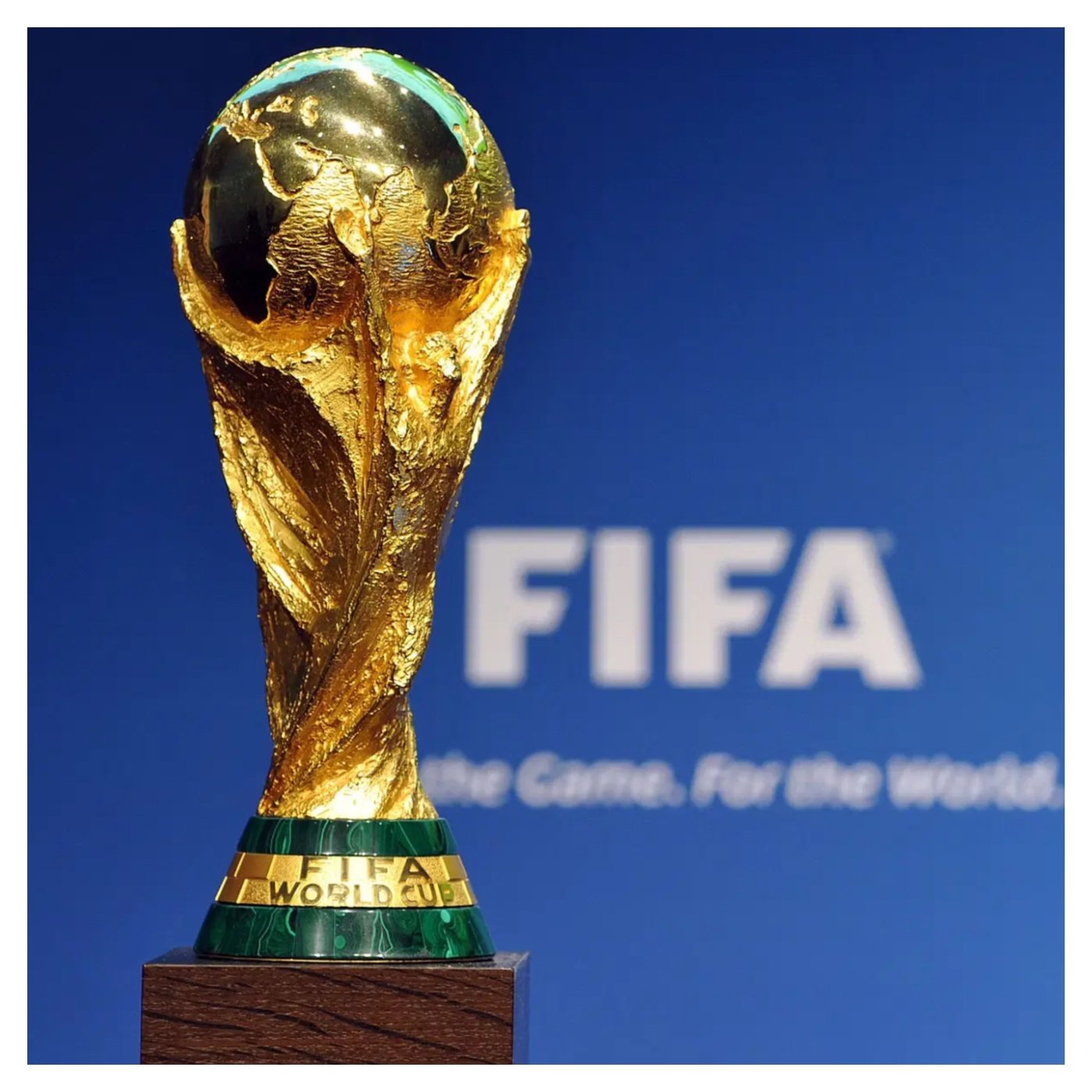

A Kano-based sports analyst, Abdulkarim Tsoho, has warned that the rising cost of attending the 2026 FIFA World Cup could strip the tournament of its emotional appeal, as more football supporters say they can no longer afford to watch the competition live.
Tsoho, speaking in an exclusive interview with DAILY POST said the World Cup has always been built around ordinary fans, but the current ticket pricing and travel costs risk turning the global football showpiece into an event only a few can attend.
“World Cup has always drawn its meaning from ordinary supporters, local fans who save for years, travelling fans who cross continents, families attending their first major match, students, workers, migrants, and diaspora communities who bring noise, colour, rituals and memory into the stadium,” he said.
“When prices rise beyond reasonable reach, the competition risks becoming less democratic and less intimate. The crowd may still be full, but the social mix changes. That means there will be less emotion attached to it,” he emphasized.
His remarks come amid growing criticism from supporters’ groups across Europe and beyond over what they describe as excessive ticket prices for the tournament, which will be hosted by the United States, Canada, and Mexico.
Recently, Football Supporters Europe (FSE) filed a formal complaint against FIFA before the European Commission, accusing the football body of abusing its monopoly in fixing ticket prices without proper consultation with fans.
The complaint, backed by consumer rights group Euroconsumers, argued that although FIFA later released a small number of cheaper tickets priced at about 60 dollars, the seats were extremely limited and difficult to obtain, making the offer meaningless for most supporters.
“FIFA point to their unconfirmed sales figures as validation of their unfair ticket practices, while the reality is they leave loyal fans with no other choice — pay up or lose out,” he said.
Nigerian fans already backing out
For many Nigerian supporters, the cost of attending the tournament is already beyond reach, even before ticket sales fully open.
Speaking to DAILY POST, a Kano-based football fan, Ahmad Bello, said he had planned for years to attend a World Cup but has now abandoned the idea because of the expenses.
“I initially wanted to go because I missed the last World Cup in Qatar due to my wedding, so I planned to attend this one,” he said.
“But with the current economic challenges and the high cost of tickets, flights and accommodation, I decided not to go. It is just too much money to watch a match. I upgraded my TV to 75 inches instead so I can enjoy the games from home.”
Another supporter, Shehu Usman Salihu, said he knew immediately the tournament would be too expensive when the host countries were announced.
“The moment I heard the World Cup would be played in the United States, Canada and Mexico, I knew as an ordinary Nigerian it would be out of my reach,” he said.
For Faisal Billa, the atmosphere of watching with friends at home is now a better option than travelling abroad. “Why will I spend that much money on the World Cup when I can watch it at my local viewing centre?” he said.
“It is always fun watching with my friends. If I travel there, who will I share the experience with? I cannot afford to pay for everyone to go with me.”
Travel cost may be bigger problem than tickets
Tsoho noted that the challenge is not only the price of match tickets but the total cost of attending a tournament spread across three large countries. “Even where supporters find a match ticket, the real cost of attending the 2026 World Cup will often be much higher than the ticket value. Fans must pay for flights, visas, travel between cities, accommodation, food and local transport,” he said.
“Because the tournament will take place across North America, travelling between host cities can be far more expensive than previous World Cups held in one country.”
He added that supporters from Africa, Asia and Latin America could be the most affected, warning that the tournament may still be financially successful but culturally different.
“Financially, FIFA may do very well, but culturally the World Cup risks becoming a luxury spectacle,” he said.
“Football calls itself universal, but universality also means ordinary people must be able to enter the stadium. A World Cup without ordinary fans may still look big on television, but it may feel less authentic.” tsoho emphasized.
2026 World Cup may lose emotional appeal, fans backing out – Tsoho