Cape Town – Africa’s renewal will not be delivered by declarations, nostalgia, or ceremonial Pan-Africanism.
It will depend on whether the continent can build institutions that command public trust, mobilise capital for development, integrate its economies and act with purpose in a world being reshaped by minerals, markets, technology and geopolitical power.
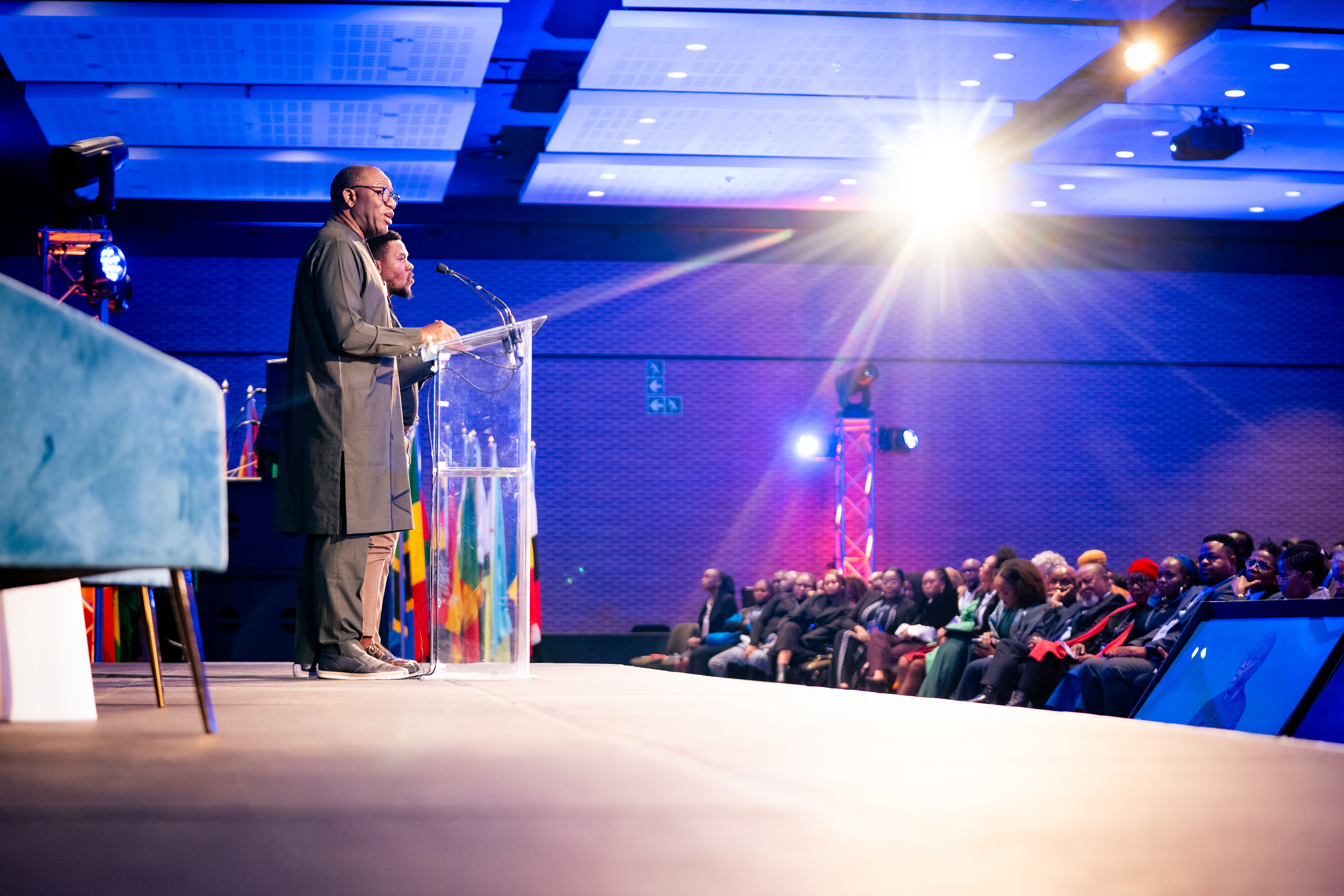
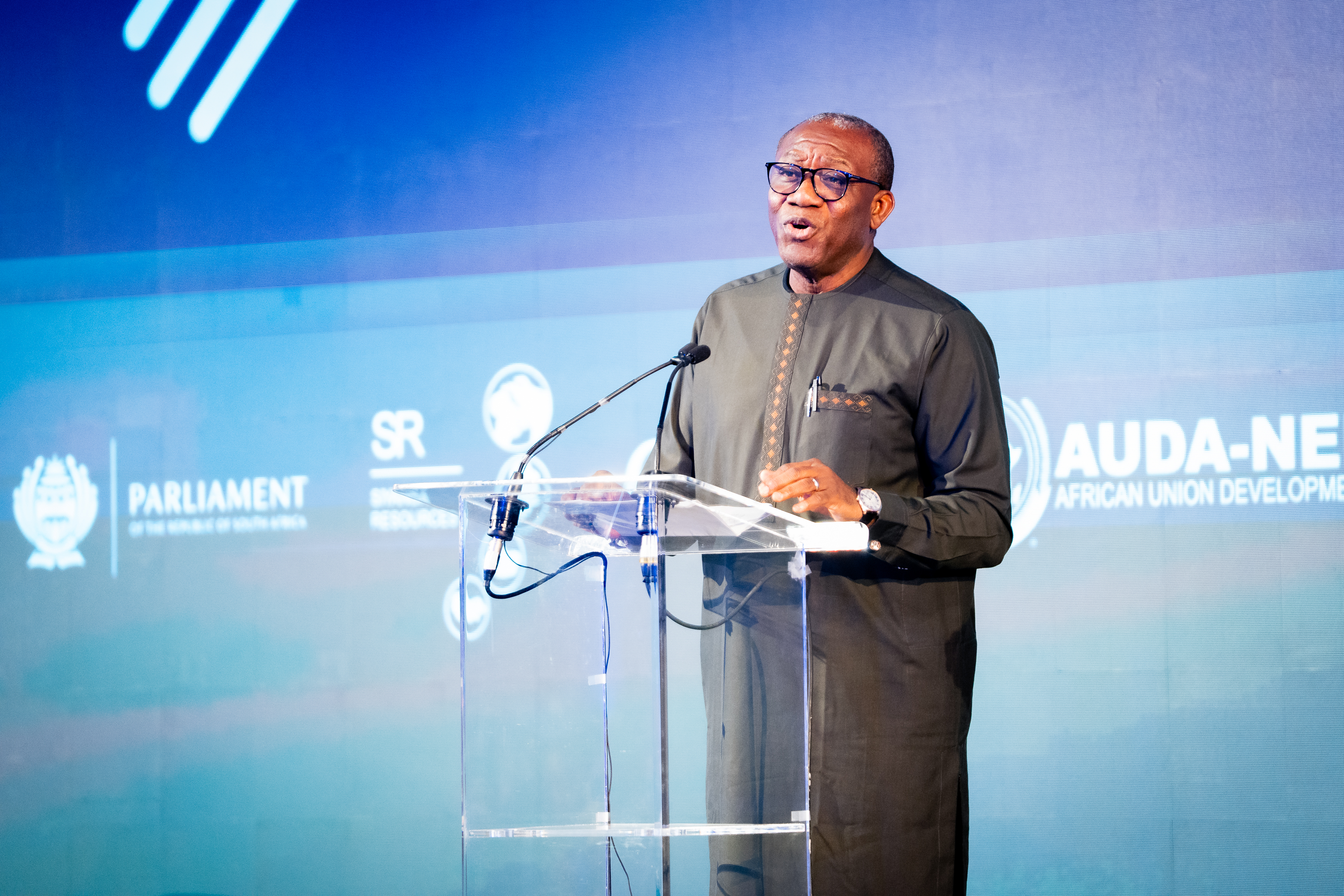
That was the central message of the 16th Thabo Mbeki Africa Day Lecture, held at Century City in Cape Town, where Dr. John Kayode Fayemi, former two-term Governor of Ekiti State in Nigeria and Visiting Professor at the African Leadership Centre at King’s College London, delivered the Guest Lecture.
The lecture, hosted by the Thabo Mbeki Foundation in partnership with the University of South Africa, was held under the theme “Rebuilding African Unity in an Age of Fragmentation: Sovereignty, Solidarity, and the Renewal of Institutions”.
-
-
-
-
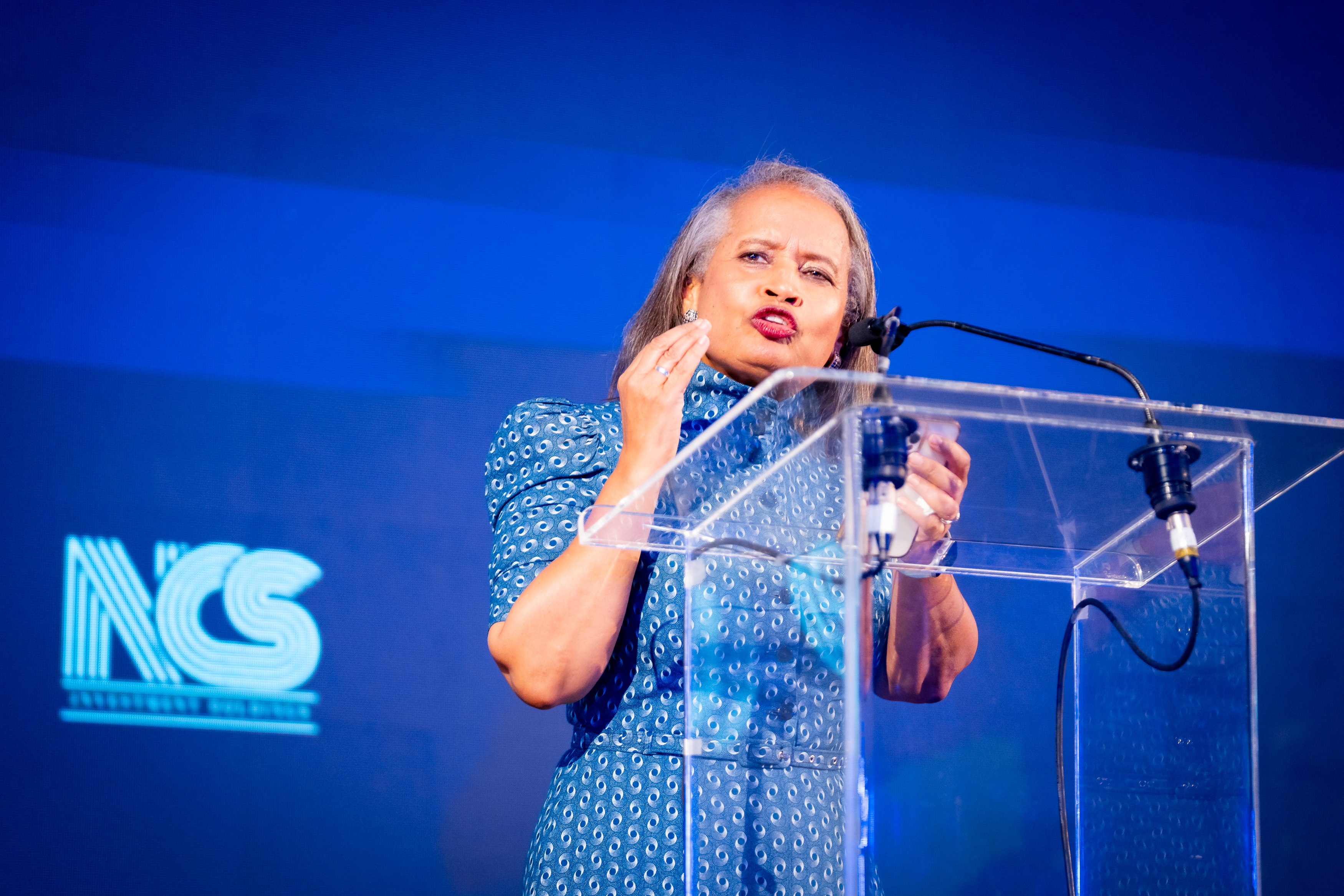
Geraldine Fraser-Moleketi, Chairperson of the Thabo Mbeki Foundation Board of TrusteesCape Town – Africa’s renewal will not be delivered by declarations, nostalgia, or ceremonial Pan-Africanism. It will depend on whether the continent can build institutions that command public trust, mobilise capital for development, integrate its economies and act with purpose in a world being reshaped by minerals, markets, technology and geopolitical power. That was the central message of the 16th Thabo Mbeki Africa Day Lecture, held at Century City in Cape Town, where Dr. John Kayode Fayemi, former two-term Governor of Ekiti State in Nigeria and Visiting Professor at the African Leadership Centre at King’s College London, delivered the Guest Lecture. The lecture, hosted by the Thabo Mbeki Foundation in partnership with the University of South Africa, was held under the theme “Rebuilding African Unity in an Age of Fragmentation: Sovereignty, Solidarity, and the Renewal of Institutions”. Professor Puleng LenkaBula, Principal and Vice-Chancellor of the University of South Africa, opened the gathering by locating Africa’s present choices within the longer movement of history, coloniality and resistance. “If the saying ‘out of nothing comes nothing’ is true, then the future must draw its first and best impulse from the womb of the present,” Professor LenkaBula reflected. It was also the first time the platform was convened in Cape Town, the seat of South Africa’s legislature, an intentional choice that placed Africa’s institutional renewal in direct conversation with the country’s constitutional and democratic centre. Geraldine Fraser-Moleketi, Chairperson of the Thabo Mbeki Foundation Board of Trustees
Professor Puleng LenkaBula, Principal and Vice-Chancellor of the University of South Africa, opened the gathering by locating Africa’s present choices within the longer movement of history, coloniality and resistance.
“If the saying ‘out of nothing comes nothing’ is true, then the future must draw its first and best impulse from the womb of the present,” Professor LenkaBula reflected.
It was also the first time the platform was convened in Cape Town, the seat of South Africa’s legislature, an intentional choice that placed Africa’s institutional renewal in direct conversation with the country’s constitutional and democratic centre.
Geraldine Fraser-Moleketi, Chairperson of the Thabo Mbeki Foundation Board of Trustees, described the Cape Town setting as intentional rather than incidental.
“That we convene here in Cape Town for the very first time in the history of this platform is no mere accident of geography,” Fraser-Moleketi told the gathering.
“It is a deliberate anchoring of our shared African destiny at the southern-most tip of our continent.”
She said bringing the lecture to Cape Town was also a statement that Africa Day belongs to the whole country, and that “the rigorous work of continental introspection” must reach every civic and intellectual centre rather than being confined to one location.
The Foundation’s broader Africa Week programme placed the lecture within a carefully constructed sequence of engagements on Africa’s political, constitutional, and economic future.
Fraser-Moleketi said the programme had included a high-level business breakfast reflecting on 25 years of the New Partnership for Africa’s Development, followed by an academic colloquium in Parliament on South Africa’s constitutional journey and its wider African implications.
Together, she said, the engagements traced the imperative of unity “across our economy, our constitution, our lecture halls, our schools, and the imagination of the next generation”.
“This evening’s lecture is the crucible where these vital threads are drawn into a single cohesive argument,” she said.
Fraser-Moleketi warned that Africa’s most serious fragmentation crisis was not the multiplicity of borders, languages, religions or political traditions, but the collapse of institutional legitimacy.
“Africa has always contained multiplicity. Our unity has never demanded sameness,” she observed.
“The structural crisis we face today is the collapse of institutional legitimacy. It is the slow, corrosive erosion of our citizens’ belief that public power is lawful, fair, competent and accountable.”
That concern ran through Dr. Fayemi’s address.
He located Africa at the centre of the new global contest over minerals, energy transition, and industrial power, but cautioned that mineral wealth without institutional capacity could reproduce old patterns of extraction.
“Our continent possesses vast reserves of the minerals essential for the global green transition: from cobalt in the Democratic Republic of Congo, to lithium in Zimbabwe, platinum in South Africa, and rare earth minerals across various parts of the continent,” Dr. Fayemi observed.
“Africa is indispensable to the sustenance and future of the global economy. In short, the world cannot go green without first going through Africa,” he declared.
His lecture was a call for strategic integration.
For Dr. Fayemi, Africa’s sovereignty in the 21st century cannot be measured only by flags, borders, and diplomatic protocol.
It must be measured by the ability of African states to feed their people, educate citizens, secure borders, manage resources, industrialise, add value and negotiate globally from a position of confidence.
“The future of Africa’s sovereignty lies not in isolation, but in deliberate integration,” he maintained.
“A prosperous and sovereign Africa will be built through interconnected economies, shared infrastructure, coordinated industrial policy, and strategic regional cooperation.”
That, he argued, requires a decisive shift in Africa’s posture towards the world.
“Africa must increasingly move from aid diplomacy to interest-based diplomacy,” Dr. Fayemi insisted.
“We must engage globally, not merely as recipients of external assistance, but as strategic actors shaping outcomes.
“’That ultimately requires institutional competence.”
The lecture also confronted the democratic strain visible across the continent.
Dr. Fayemi warned that constitutional government cannot survive if ordinary citizens experience democracy as elite circulation without justice, security, opportunity or dignity.
“If democracy is to endure in Africa, we must honestly confront the governance and institutional failures that often create fertile conditions for democratic breakdown,” he cautioned.
In many societies, citizens increasingly feel disconnected from political institutions.”
The answer, he suggested, is not strongman politics, military rule, or the romance of charismatic leadership.
It is the patient construction of institutions that outlast individual leaders.
“Development requires leadership vision and institutional continuity,” he explained.
“It requires systems that function predictably, regardless of who occupies political office.”
“The future of the continent will not be secured merely through speeches or charismatic personalities. It will be secured through patience, discipline, and the hard work of building institutions that endure.”
Dr Fayemi tied that institutional argument to the moral claims of Pan-Africanism.
He warned that African unity cannot survive in an atmosphere of xenophobia, suspicion, and hostility among Africans.
“Pan-Africanism was never simply about political coordination among states,” he reflected.
“It was fundamentally a moral project, grounded in the belief that the dignity of one African is tied to the dignity of all Africans.”
He reminded the audience that South Africa’s liberation struggle had been carried as a continental responsibility, with African states, workers, intellectuals, and ordinary citizens making sacrifices in support of freedom.
“South Africa’s liberation was not won by South Africans alone,” he said.
“The anti-apartheid struggle became a continental responsibility across Africa.
“Nations and citizens across the continent made enormous sacrifices in support of South Africa’s freedom.”
For that reason, he warned, hostility towards fellow Africans weakens the very foundation of continental integration.
“If Africans cannot coexist peacefully with one another, the dream of continental integration will remain fundamentally weakened,” he said.
“The African Continental Free Trade Area cannot flourish in an atmosphere of mutual suspicion.
“Regional integration cannot deepen where fear and hostility dominate public life.”
The youth question emerged as another decisive test of Africa’s future.
Dr. Fayemi described young Africans not as a demographic ornament, but as the possible engine of transformation.
“If properly educated, empowered, and productively engaged, African youth could become the engine of an unprecedented continental transformation,” he argued.
He pointed to “a new African civic consciousness” shaped by digital technology, social media, and political awareness, citing Nigeria’s #EndSARS movement, youth mobilisation in Kenya, South Africa, and other countries as evidence that young Africans are asserting themselves as political actors rather than passive observers.
Former President Thabo Mbeki, Patron of the Thabo Mbeki Foundation, brought the discussion back to the material question of poverty, capital, and practical development.
“One of the major challenges on the continent is the eradication of poverty,” President Mbeki stressed.
“We then say Africa needs capital.
“We need capital to work with labour and other resources.
“An obvious source of capital from within the continent is pension funds. They hold billions and billions.”
He argued that Africa cannot dream its way into development while avoiding the hard question of financing infrastructure, productive capacity, and human development.
“We have too many people who are poor, millions of them, and there is no clear perspective on how we are going to lift them out of poverty,” President Mbeki remarked.
“You have to build roads. You have to build factories.
“You have to develop farms. You have to train people and capacitate them through universities and technical colleges.
“All of this requires capital.”
“You can dream about all these things, but if you do not answer this question, the dream remains incomplete: where do you get the money to build the road?”
President Mbeki also pressed the audience to look at the state’s developmental role, including the decline of state corporations.
“To understand development, we must look at state corporations,” he insisted.
“If we are talking about development, we have to examine the role of the state, including what has happened to state corporations over the past few years.
“We have seen the destruction of state corporations, and that destruction continues even as we sit here.”
H.E. Ambassador Selma Malika Haddadi, Deputy Chairperson of the African Union Commission, reinforced the same practical emphasis.
“Rebuilding unity in an age of fragmentation is not about broad declarations,” Ambassador Haddadi said.
“It is about practical steps: reducing delays at borders, coordinating responses to insecurity, ensuring that infrastructure projects are completed, making institutions responsive and accountable, speaking with one voice in multilateral fora, and continuing to strengthen integration and the bonds between our people.”
By the end, the 16th Thabo Mbeki Africa Day Lecture had moved beyond commemoration.
It became a searching continental audit.
Its message was stark: Africa’s renewal will not be proclaimed into existence.
It must be financed, governed, institutionalised, and trusted.
The post Thabo Mbeki Africa Day Lecture: ‘Africa Must Build The Power To Act,’ Says Dr. John Fayemi appeared first on The Bulrushes.