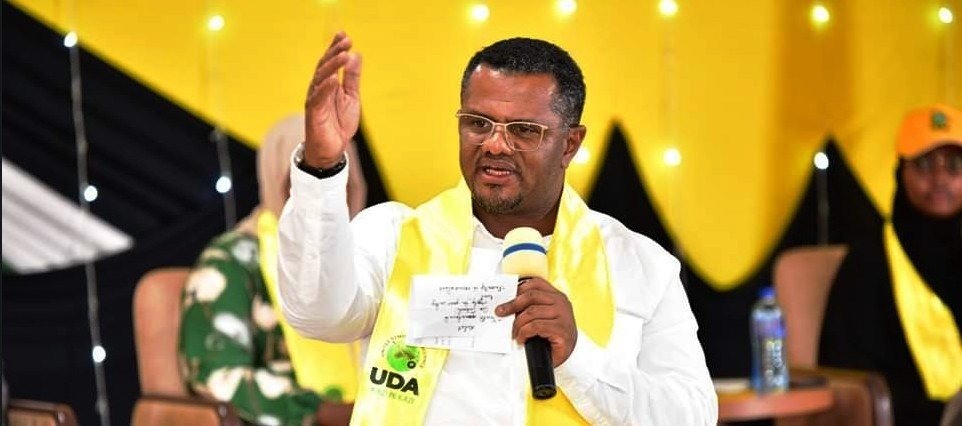
There was a time when Hassan Omar stood out as one of Kenya’s most recognisable defenders of constitutionalism, civil liberties and human dignity. From his days as a fiery student leader at Moi University to his tenure at the Kenya National Commission on Human Rights, Omar cultivated the image of a principled advocate who understood the devastating consequences of impunity, discrimination and political incitement.
That is why the remarks attributed to the United Democratic Alliance Secretary General concerning the Gikuyu community and the politics of land at the Coast have shocked many Kenyans who once admired his moral clarity.
Listening to the video clip circulating online, one could not help but reflect on the tragic irony of a man who once defended victims of ethnic violence now appearing to flirt with the very language that has historically fuelled division in Kenya.
Omar may have since apologised and insisted that his comments were taken out of context and merely reflected long-standing concerns over historical land injustices at the Coast. Yet apologies alone cannot erase the political danger embedded in ethnically coded rhetoric, especially in a country with Kenya’s painful history.
Words matter. They matter even more when uttered by the Secretary General of the governing party in a highly polarised environment ahead of a general election.
Kenya has travelled this dangerous road before.
Ahead of the disputed 2007 General Election, ethnic mobilisation became the currency of political competition. Political elites crafted narratives of exclusion, entitlement and grievance. The infamous “41 against 1” rhetoric was not merely campaign sloganeering; it became a psychological weapon that isolated and demonised the Kikuyu community as political enemies rather than fellow citizens.
The result was catastrophic.
The 2007/2008 post-election violence left more than 1,000 people dead, hundreds of thousands displaced and entire communities traumatised. Neighbours turned against neighbours. Businesses were destroyed. Women were violated. Children were orphaned. The violence exposed how quickly reckless political speech can mutate into organised ethnic hostility.
It is therefore deeply disturbing that Kenya is once again witnessing a rise in anti-Gikuyu rhetoric from sections of the political class, social media influencers, bloggers and partisan operatives. What begins as coded political messaging often evolves into normalised ethnic profiling. The danger lies not merely in one speech, but in the cumulative effect of repeated narratives portraying one community as arrogant, exploitative, entitled or collectively responsible for national problems.
This is precisely how ethnic scapegoating takes root.
What is even more alarming is the conspicuous silence from institutions specifically created to prevent such escalation. Where is the National Cohesion and Integration Commission? Why has the Directorate of Criminal Investigations not demonstrated urgency in examining inflammatory political rhetoric across the political divide? Why do watchdog institutions only appear animated when violence has already erupted?
The failure of institutions to act early against dangerous speech is one of the lessons repeatedly documented in Kenya’s own commissions of inquiry.
The Akiwumi Commission, established to investigate ethnic clashes in the 1990s, concluded that tribal violence in Kenya was not spontaneous. It was often politically instigated, organised and enabled by leaders who manipulated historical grievances and ethnic fears for electoral gain. The commission warned against impunity and the use of ethnicity as a political weapon.
Years later, the Waki Commission reached similarly disturbing conclusions following the 2007/2008 violence. The commission found that hate speech, ethnic mobilisation and political incitement played a central role in fuelling violence. It also highlighted the institutional failure of security agencies and state organs to prevent escalation despite clear warning signs.
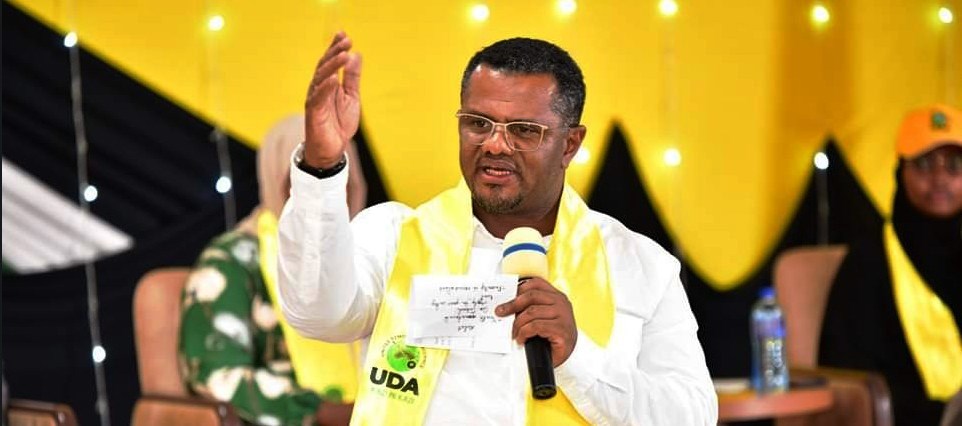
UDA Secretary General Hassan Omar. PHOTO/UGC
Equally important were the findings of the Kriegler Commission, which exposed deep mistrust in Kenya’s electoral system and demonstrated how political polarisation, combined with ethnic mobilisation, created the conditions for national implosion. Kriegler’s work underscored a painful truth: when citizens lose faith in institutions, ethnic identity becomes the fallback political refuge.
That warning remains relevant today.
Kenya cannot afford another election cycle driven by tribal arithmetic, resentment and coded hostility. The country is already struggling with economic hardship, youth unemployment and widening public anger. Injecting ethnic profiling into this volatile atmosphere is not only irresponsible; it is potentially incendiary.
Omar’s transformation is particularly troubling because he knows better. He understands the anatomy of political violence. He understands how inflammatory rhetoric evolves into social hostility and, eventually, physical confrontation. He once stood on the side of accountability when the Kenya National Commission on Human Rights documented atrocities linked to the post-election violence that later drew the attention of the International Criminal Court. He once represented the moral voice warning Kenya against ethnic extremism.
Today, many Kenyans are left asking: what changed?
Perhaps power changes people. Perhaps political survival demands conformity to tribal mobilisation. Or perhaps ideology quietly surrenders to expediency. But history teaches that leaders who ignite ethnic passions rarely control the consequences once the fire spreads.
Kenya’s political leaders must remember that every election season tests the nation’s maturity. Responsible leadership requires restraint, especially from those occupying influential positions in government and ruling parties. Historical injustices, including land grievances at the Coast, deserve honest national dialogue grounded in law, justice and constitutionalism; not ethnic insinuation or collective blame.
No community should be profiled as an enemy within the republic.
The tragedy of 2007 was not merely that violence occurred. It was that Kenya ignored repeated warnings until it was too late. Today, the warning signs are visible once again in political speeches, online platforms and increasingly toxic ethnic discourse.
The silence of institutions charged with preserving national cohesion may prove just as dangerous as the rhetoric itself. Kenya must never again allow politicians to manufacture tribal enemies for electoral convenience. The cost is far too high.