The second-quarter GDP figures should humble all of us, particularly after the unemployment figures released two weeks ago.
The 0.2% contraction shows just how fragile the economy is and how much work still lies ahead.
Trade, manufacturing and mining activity all shrunk during the quarter, with agriculture growing only slightly and electricity and transport providing more upside support.
I have said consistently that the work we have been doing over the last few years to repair the foundations of our economy is necessary but not sufficient for growth.
Reliable electricity and logistics are growth enablers, but businesses need to build confidence in their reliability and in the outlook to really commit to investing.
This is why the focus of Phase 3 of the business-government partnership is on growth.
The structural reforms still need to be concluded, including the independent transmission system operator unbundling, the SA Wholesale Electricity Market launch, and the establishment of the Transport Economic Regulator, but the environment has improved enough to begin shifting focus to the economic activity that reform enables.
Key sectors like mining, agriculture, tourism and infrastructure have latent potential that our loosened electricity and logistics constraints can now begin to unlock.
The partnership is bringing over 30 CEOs to work alongside government to ignite that growth.
For many years, investors have been scared to commit, uncertain whether they can rely on electricity availability or the logistics needed to get their output to markets.
That was entirely rational, but rebuilding confidence takes time and a demonstration that the improved environment is here to stay.
The work we will do with government will build that confidence, alongside supportive trade policy and a sustained effort to cut domestic red tape.
Last week’s figures signal a base from which to grow.
Particularly notable was the weak level of investment, with gross fixed capital formation coming in at 13.6% of GDP, 0.2% less than the previous quarter.
Within that mix, private investment was relatively stable, but investment by the state-owned enterprises and government was weak.
This is partly by design, in that the new electricity-generating capacity and some of our logistics capacity are now being financed through private investment.
But the public sector also has substantial targets for its own investment, spelt out in the annual budget but never delivered.
Those now need to be achieved, improving the capacity of the economy to grow.
To do that, however, the balance sheets of state-owned enterprises need to be capable of financing investment.
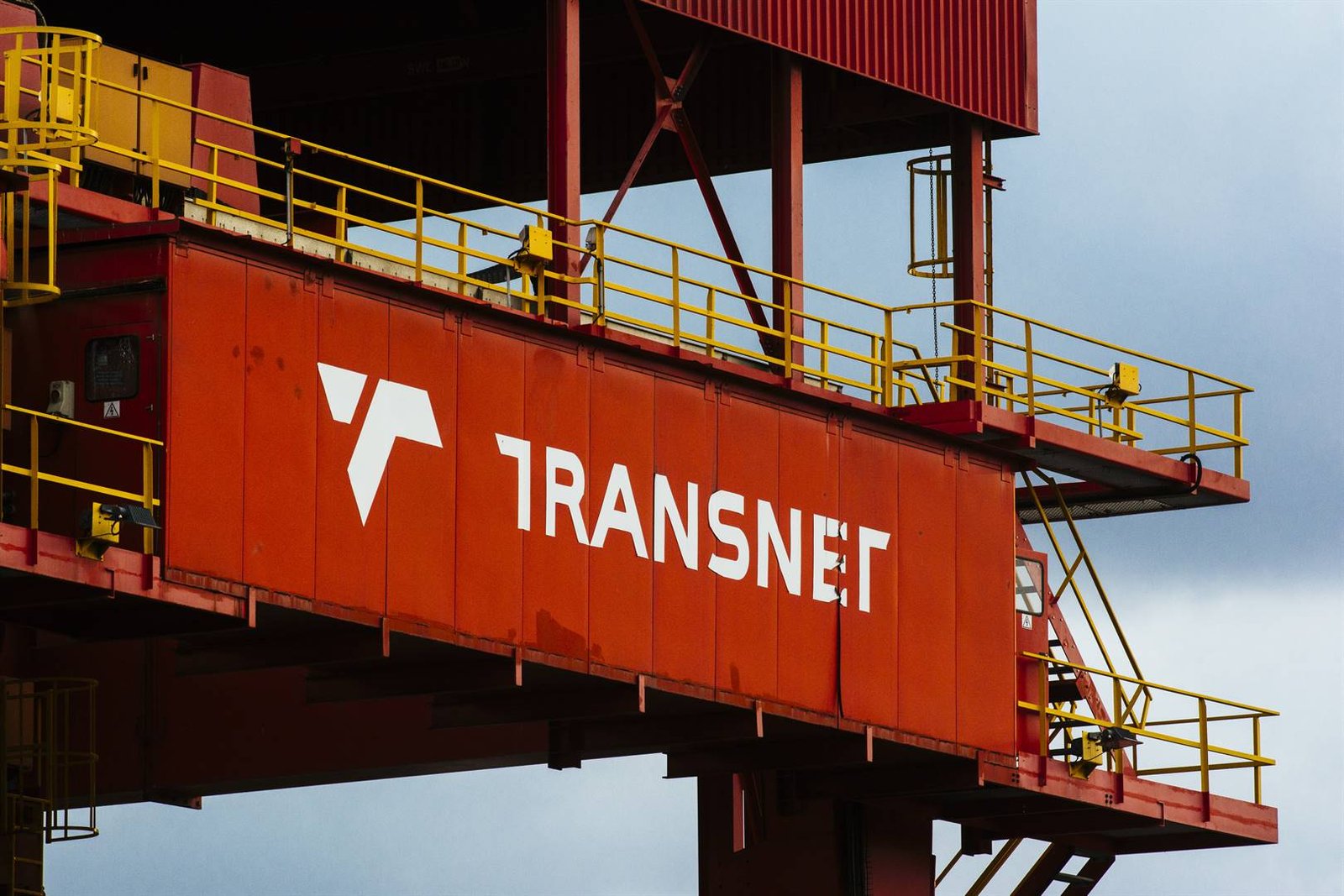
Transnet’s results last week were a positive signal that its finances are improving, which over time will give it the balance sheet to allow it to resume higher volumes of investment.
It reported a R4.6bn profit, compared to a R1.9bn loss the previous year, thanks to the concessioning of the Durban Gateway Terminal, which brought in R12.5bn for Transnet, a clear result of reforms that engage private sector investment.
There were also modest gains in rail volumes, though these remain behind target.
I also congratulate Transnet’s CEO Michelle Phillips and her leadership team for delivering results with a clean audit opinion for the second year in a row, showing the strength of financial controls and reporting at the company.
In prior years, the audit came with an exemption on reporting irregular expenditure, which was removed before last year’s results, so we’ve now had two more meaningful clean audits.
Together with the financial improvement at Eskom, our key network service providers are stabilising their financial positions, which will allow them to raise investment to fund critical new infrastructure and their own long-term financial sustainability.
The GDP figures are a reminder that none of this is automatic. Improved infrastructure and policy reform create the conditions for growth but do not guarantee it.
What triggers growth is investment, and investment requires confidence.
Building that confidence, in business, in investors, in our trading partners, is the work of the next phase. BLSA is committed to that work.
The foundations are in place for us to start building.
++++
I am very pleased to welcome BLSA’s newest board member, Hendrik du Toit, founder and CEO of Ninety One.
Hendrik joins an already formidable board comprising CEOs and chairs of some of South Africa’s leading companies, business leaders who occupy important positions of influence in our economy and who have chosen, out of a deep commitment to and patriotism for this country, to give generously of their time, expertise and resources in service of BLSA’s mission.
Under the leadership of BLSA chairman Adrian Gore and deputy chairman Mpumi Madisa, our board brings together leaders who understand that business must be an active contributor in determining South Africa’s future.
They recognise that business must partner with government to ensure we can change the country’s economic trajectory to deliver inclusive growth.
Read more about our board here.
We are delighted to have Hendrik join this collective and look forward to the experience, insight and leadership he will bring to the BLSA board.
*This column was first published in the Business Leadership South Africa (BLSA) weekly newsletter. The author, Busisiwe “Busi” Mavuso, is BLSA’s CEO. The views Busi Mavuso expresses in this column are not necessarily those of The Bulrushes
The post South Africa’s GDP Contraction Is A Reality Check appeared first on The Bulrushes.