The Trump administration says nearly every child in America now has a Trump Account. Whether the money in those accounts ever adds up to much is a different question.
The Treasury Department announced Oct. 1 that it had finished automatically enrolling eligible children in the tax-advantaged investment accounts, creating accounts for more than 60 million kids who didn’t already have one. Combined with the families who signed up on their own, that brings the total to nearly 70 million accounts, according to the White House.
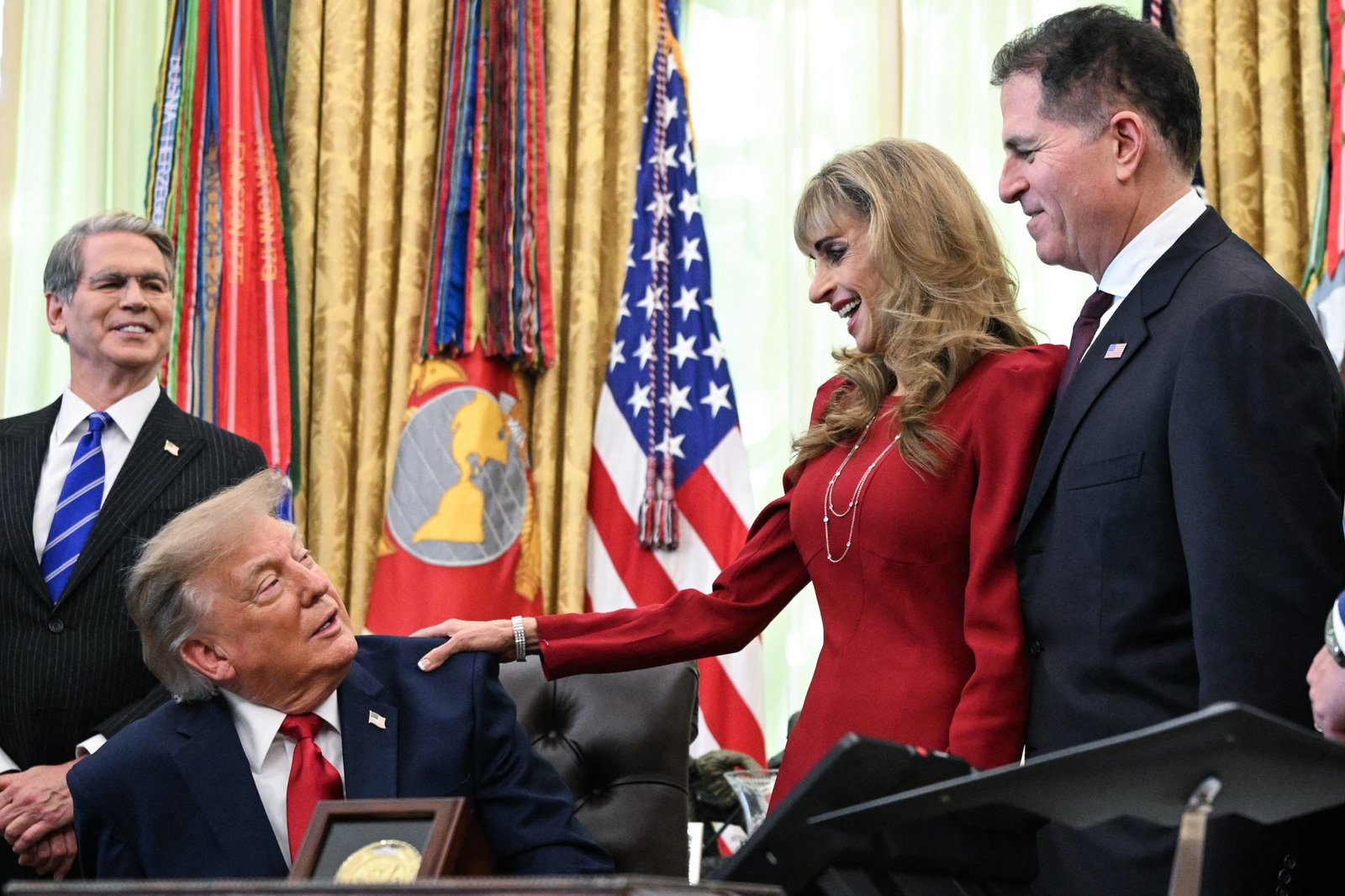
“Today, I’m pleased to announce that every single eligible minor child in America has now been automatically enrolled in a Trump Account,” President Donald Trump said at an Oval Office event on Oct. 7.
But having an account doesn’t mean it’s ready to use. A parent or guardian still has to claim it through the official Trump Accounts app before they can manage it, accept contributions from family and friends, or collect the government’s $1,000 seed deposit for eligible children.
The switch to automatic enrollment followed slow uptake. Before the change, Treasury had processed about 5.6 million sign-up forms, less than a tenth of the roughly 73.4 million children eligible, InvestmentNews reported. Fortune previously reported that some families who signed up early were still waiting on their promised $1,000.
Where the money is coming from
Since the program launched on July 4, more than $4.5 billion has been deposited into Trump Accounts, including $1.3 billion in government seed contributions, more than $600 million from family and friends, and $2.6 billion in philanthropic gifts, according to the White House. Spread across nearly 70 million accounts, that averages out to about $64 per child.
Much of the philanthropic money comes from Michael and Susan Dell’s $6.25 billion pledge, which provides $250 to up to 25 million children age 10 and under who live in ZIP codes with median household incomes below $150,000. More than 70 companies have also signed on to contribute to employees’ children’s accounts, the White House said, following early commitments from firms like JPMorgan Chase and Bank of America.
The administration has pitched the accounts as a path to serious wealth. The calculator on TrumpAccounts.gov projects that a lone $1,000 seed could grow to $243,000 by age 55, and that an account receiving the $5,000 annual maximum could reach $13 million. Those numbers assume the S&P 500 returns more than 10% a year without interruption for 55 years. Financial planners who spoke with Fortune put more conservative estimates at roughly $1.5 million to $2 million by 55 for a maxed-out account, assuming a 7% return.
Stock gifts, with strings attached
Most money in Trump Accounts goes into low-cost index funds. But Treasury said in July it would also accept large philanthropic donations of publicly traded stock, and the IRS released a rule on Sept. 30 setting the procedures. Qualifying stock is transferred to Treasury and allocated to eligible children according to donor instructions and Treasury guidance.
“By accepting contributions of publicly traded stock, Treasury is creating a practical pathway for large-scale private giving to support the next generation,” Treasury Secretary Scott Bessent said in a July statement.
The rules are narrow. Stock donations can come from companies or charities set up by stockholders, not from relatives, and must be spread across at least 5,000 accounts in a qualified geographic area, according to Yahoo Finance. The shares must be held for at least five years before they can be sold. SpaceX president Gwynne Shotwell is among the first to use the option, pledging one share each to more than 2 million children’s accounts.
Single-stock gifts can give children a stake in corporate growth, but they also concentrate risk.
“A child could, hypothetically, receive $10,000 of Company X stock and suddenly at least 67% of the minor’s portfolio is concentrated in Company X,” U.S. Bank wealth management advisor Jonathan Lee told Yahoo Finance.
Who benefits most
Critics argue the program’s biggest winners will be families who can afford to contribute. “The program may be open to every child, but its benefits will flow overwhelmingly to families with the means to contribute thousands of dollars a year,” Stanford economists Neale Mahoney and Adam Shaw wrote in Time last December. Researchers at The New School reached a similar conclusion in an analysis for Fortune, based on 15 years of 529 college savings data.
The White House counters that about 80% of Trump Accounts are linked to families earning less than $200,000 a year.
Who is eligible and how to claim an account
Every child under 18 with a valid Social Security number now has an account. The government’s one-time $1,000 seed contribution, however, is limited to U.S. citizen children born between Jan. 1, 2025, and Dec. 31, 2028, and the account must be claimed for the child to receive it.
Parents and guardians can claim accounts through the Trump Accounts app for iOS and Android; more information is available at TrumpAccounts.gov. Once an account is claimed, family and friends can contribute up to $5,000 a year combined, while employers can add up to $2,500 annually. The government’s $1,000 seed and certain contributions from state and local governments and nonprofits don’t count toward the $5,000 cap.
When a child turns 18, the account essentially becomes a traditional IRA. Withdrawals are taxed as ordinary income, and early withdrawals may face penalties unless they’re used for qualifying expenses such as education or a first home, so families should review the tax rules before deciding how to use the money.
This story was originally featured on Fortune.com