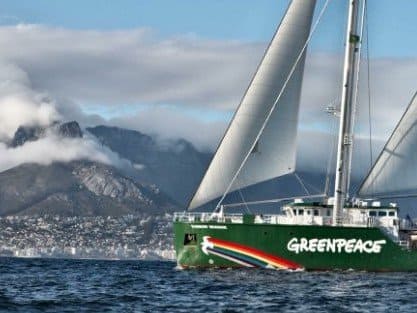
Johannesburg – The Greenpeace Rainbow Warrior ship has docked at the V&A Waterfront in Cape Town, South Africa – a move the African Energy Chamber says “brings with it a quintessential example of salt-crusted irony”.
For its part, Greenpeace says the Rainbow Warrior is primarily used to campaign for ocean protection, fight climate change, and raise public awareness on environmental issues.
During its stop in Cape Town, the vessel, which arrived in Cape Town this week, will host public events, educational workshops, and outreach initiatives aimed at promoting sustainability.
Cape Town,
Greenpeace’s iconic Rainbow Warrior is docking at the V&A Waterfront & you’re invited.
Limited spots available.
Register: https://t.co/HudClepNU8#RainbowWarrior #CapeTown pic.twitter.com/kxn3A2Ofu9
— Greenpeace Africa (@Greenpeaceafric) January 12, 2026
 Register:
 Commenting on the arrival of the Rainbow Warrior ship, the African Energy Chamber on Friday, 16 January 2026, stated that: “Greenpeace, which actively protests against oil companies, will use petroleum-powered cars to get there, wearing synthetic, oil-based clothing while taking pictures and tweeting from phones made from critical minerals and oil – the very products of the industry they want to dismantle”.
The African Energy Chamber added: “Used as a tool to protest the very energy resources that stand to lift Africa out of energy poverty, Greenpeace is offering a ‘once-in-a-lifetime experience’ to tour the ship.
“But as their ship docks in one of Africa’s harbors, one must ask: why does Greenpeace’s narrative for Africa’s energy future demand absolute restraint while its own global operations continue to rely on the very fossil fuels it insists African nations must leave in the ground?”
The African Energy Chamber said while Greenpeace routinely urges African nations to leave their fossil resources undeveloped, its own operations underscore the impracticality of such views.
“The organisation’s flagship vessel Rainbow Warrior is frequently cited as a symbol of clean activism – yet its design tells a more inconvenient truth,” said the African Energy Chamber.
“Despite incorporating wind-assisted sails, battery systems, and efficiency-focused architecture, the ship still relies on diesel-electric engines powered by marine gas oil – a refined fossil fuel – for propulsion, maneuvering, and operational reliability.
“Greenpeace itself acknowledges that wind power merely reduces fuel consumption rather than eliminating it altogether.”
The African Energy Chamber said this reality exposes a clear double standard: while Greenpeace accepts fossil fuels as a necessary operational compromise for its global campaigns, it simultaneously campaigns for Africa to forgo oil and gas development entirely – resources that underpin electricity access, industrialisation, and fiscal stability for hundreds of millions of people.
The African Energy Chamber said evidence from Greenpeace’s own vessel confirms what its policymakers have long argued: fossil fuels remain structurally embedded in modern systems, and demanding that Africa abandon them, while NGOs continue to depend on them, is neither honest nor equitable.
“A wealthy Western NGO parading Africa in a fancy boat, eating caviar and goat cheese, while drinking matcha with almond milk, telling Africans to stop oil and gas is shocking to say the least,” said NJ Ayuk, Executive Chairman, African Energy Chamber.
“It kind of takes your breath away.
“It gives Chutzpah a new meaning.”
The African Energy Chamber said with more than 600 million people living without access to electricity, 900 million people living without access to clean cooking solutions, and millions dying from biomass-associated health risks, the continent cannot afford to leave its oil and gas resources in the ground.
“But organisations such as Greenpeace continue to oppose this strategy, launching attacks on projects, deterring investments, and impacting any meaningful progress to make energy poverty history.
“By blocking seismic surveys in South Africa and lobbying against the East African Crude Oil Pipeline (EACOP), these foreign-funded NGOs are engaging in a form of economic sabotage.
“They are effectively telling Africa: ‘You may have the resources to power your own industrialisation, but you are not allowed to use them’.”
The African Energy Chamber explained that projects such as EACOP offer a lifeline for many communities in East Africa.
The pipeline will not only transport crude from Uganda’s oilfields to international markets via Tanzania, but generate the revenue that can transform local infrastructure, power homes, and develop strong, resilient economies.
The same can be said for South Africa – home to significant offshore and onshore hydrocarbon resources that could, if extracted, stabilise the economy, eliminate load-shedding and power the country for decades to come.
“If fossil fuels remain necessary for Greenpeace to run its own operations, then it is neither credible nor justifiable to demand that Africa leave its resources undeveloped while millions remain without electricity, jobs, or industrial opportunity,” Ayuk noted.
“Africa needs energy to industrialise and create jobs.
“There is more dignity in work than in accepting foreign aid.
“The main goal of Greenpeace and its western funders is to keep Africa underdeveloped and in energy poverty.
“We must not let them.”
Ayuk said the next time you see a Greenpeace boat on the horizon, remember: that ship is a monument to the very industry they want to destroy.
He said they are “enjoying the fruits of the energy industry” while trying to deny those same fruits to a continent that needs them most.
“The African Energy Chamber believes Africans should make their own when it comes to oil development, not foreign NGO’s,” stated Ayuk.
“Most Africans without electricity can’t even afford the Greenpeace boat ride. Think about that.”
The post African Energy Chamber Slams Greenpeace For Sailing Rainbow Warrior Ship To Cape Town appeared first on The Bulrushes.