Moscow – Rosatom’s bioprinting technologies demonstrate significant progress — a bioengineered vessel grown from living cells has functioned inside a living organism for an entire year without complications.
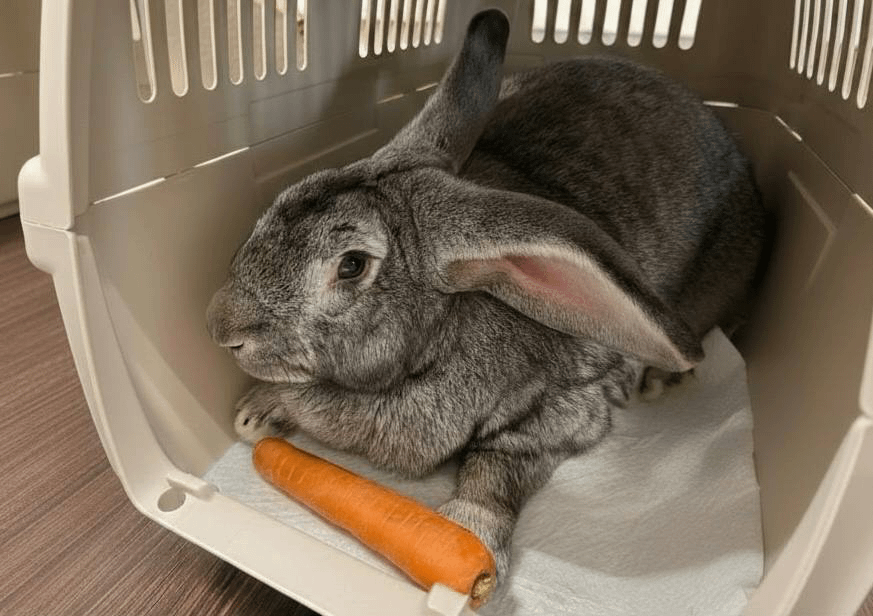
The rabbit received a transplanted vessel that was grown using a biofabricator in February 2025 is alive and healthy.
As part of the experiment, a blood vessel equivalent was grown from the rabbit’s own cells.
Today, this technology makes it possible to create blood vessels up to 10 centimetres long — and this is just the beginning of what could become a breakthrough in transplantology and modern medicine.
Biofabrication is an innovative technology that combines biology, physics, and engineering to create living tissues and organs from cellular materials.
It uses advanced methods such as acoustic fields and 3D bioprinting, and has the potential to revolutionise the field of organ transplantation.
Biofabricators allow for growing biocompatible blood vessel equivalents using patient cells (equivalents are created using either the patient’s own tissue or universal cellular material), while further developments will make it possible to replace damaged tissues and organs in the future.
This is a breakthrough in the field of tissue engineering.
“Today, Rosatom is conducting pioneering research and development for healthcare purposes, bringing the future closer with each step,” Rosatom Director General Alexey Likhachev noted.
“Our scientists are truly remarkable as they are both visionaries and dreamers.
“Their ideas go beyond paper, becoming groundbreaking technologies.
“Their work in additive biotechnology for medical purposes is an example of how scientific thought can become the foundation for technological advancement and benefit humanity.”
Progress in transplantology has global significance — it directly improves the quality of life and increases life expectancy for people around the world.
By 2030, Rosatom scientists plan to move from successfully growing blood vessels to creating more complex organs: the thyroid gland, kidneys, and liver.
This will help reduce waiting lists for organ transplants and allow over 2 000 people to return to normal lives each year.
Rosatom has recently introduced special genetic structures created in the laboratory that allow to “reprogram” human stem cells into universal cells.
They may be used for growing tissues suitable for any patient, as they do not cause immune rejection.
This achievement opens up broad prospects in medicine and is considered one of the most advanced in the world.
The company’s specialists are also developing a laboratory sample of a heart valve.
The tissue-engineered heart valve is a biomedical cell product composed of cells, biocompatible materials, and auxiliary substances.
It is expected to outperform existing mechanical and biological analogues, which have a number of limitations, and pave the way for fully functional biological replacements — offering an effective solution for common heart valve disorders.
The post Breakthrough In transplantology: Rabbit Lives With Transplanted Vessel For A Year appeared first on The Bulrushes.