Samarkand – After investigating vote-rigging within the CITES decision-making framework across three Conferences of the Parties (CoPs) 2019, 2022, and 2025, it has become clear that well-funded animal-rights extremist NGOs, together with some developed-world governments, continue to influence and allegedly bribe financially weaker countries from Africa and South America.
At the close of CITES CoP20 in Samarkand, Uzbekistan, I again asked the CITES Secretary-General Ivonne Higuero to confirm whether vote-rigging exists within the international wildlife-trade body she leads.
Unsurprisingly, her response did not differ from that given at the Geneva CITES CoP18 conference about six years earlier.
At the August 2019 CITES CoP18, speaking through the CITES Secretariat’s then Communications Advisor, David Witbourn, the response was: “We don’t have evidence of vote-rigging. If anyone has evidence, we invite them to approach the CITES Secretariat.”
This time, however, CITES Secretary-General Higuero provided more detail on how such allegations would be handled, stating that “the Standing Committee will handle that matter.”
The Standing Committee comprises CITES member countries, meaning the Secretariat can only act based on the Committee’s findings.
Any action against governments or NGOs would depend on existing CITES articles governing sanctions against offending parties and observers.
No Formal Complaints Lodged
From Secretary-General Higuero’s response, it was clear that no country has ever formally lodged a vote-rigging complaint with the CITES Secretariat.
Many African countries, particularly those whose ivory and rhino horn trade proposals continue to be overwhelmingly rejected, attribute these outcomes to vote-rigging, but raise these claims only with their presidents, citizens, and the media, rather than submitting formal complaints.
As a result, they are effectively barking up the wrong trees, misdirecting their message and drawing public sympathy without triggering any formal investigation.
If their presidents, citizens, and media fully understood this procedural gap, such misplaced sympathy would likely disappear.
Defining Vote-Buying
During my continued engagement with the CITES Secretary-General Higuero at CoP20 in Samarkand, Uzbekistan, I asked her to define vote rigging.
She explained that vote-buying occurs when something of value is exchanged in return for a desired vote.
Mali’s Funding Admission at CoP19
Having established this definition, I raised a question I had long wanted to ask, one relating to CITES CoP19 in Panama, where Mali openly admitted to being funded by an anti-use government and animal-rights NGOs from 2004 to 2022.
In a filmed plenary statement, Mali’s head of delegation thanked the government of Israel, the Franz Weber Foundation, and NGOs, including International Fund for Animal Welfare (IFAW) and Born Free, for funding Mali’s participation at CITES meetings since 2004.
This admission revealed a long-standing pattern: Mali consistently speaks and votes against the ivory and rhino horn trade in line with the positions of its funders.
Mali, along with other funded West African countries, has repeatedly voted against trade proposals.
When Secretary-General Higuero stated that she was unaware of Mali’s long-term funding by the government of Israel and animal-rights extremist NGOs (Franz Weber Foundation, Born Free Foundation, and IFAW, I reminded her that Mali’s admission was made publicly at the CoP19 closing ceremony in Panama City.
It was also livestreamed and remains permanently available on the CITES video platform.
She did not comment further.
Here is the Mali video link: https://we.tl/t-MUAS5cVBm2
How the CITES Secretariat Evaluates Proposals
Responding to my investigative questions about how CITES evaluates proposals before votes, Secretary-General Higuero explained that Parties and the Secretariat rely on established CITES resolutions.
She said proposals must meet specific criteria supported by scientific, trade and population data, including the IUCN Red List, trade data, and FAO assessments for marine species.
The Secretariat also applies the precautionary principle, particularly where data are limited, but population concerns exist.
Where international trade could pose an additional threat to a species, the Secretariat may recommend listing under Appendix II to improve traceability through the CITES permitting system and trade database.
Secretary-General on Vote-Rigging Allegations
Addressing vote-buying more broadly, Higuero stated: “This is quite a sensitive issue. There’s always a lot of talk about it, but I don’t actually know if this is happening. I have never seen any proof.”
She added that rumours have circulated among Parties and observers for years, but remain hearsay.
Any credible evidence, she urged complainant countries, must be submitted to the CITES Standing Committee.
Using an analogy, she described vote-buying as an exchange of compensation for votes, such as providing goods or specifically “chickens to voters” as happened in her country, Panama, during political campaigns in exchange for votes.
However, she repeated that no such evidence has ever been presented to the CITES Secretariat.
Limits of the CITES Enforcement Framework
Crucially, the CITES compliance framework was designed to enforce wildlife trade rules, not to police political conduct such as vote-buying. Disappointingly, CITES contains no explicit provision defining vote-buying as a punishable offence, nor does it prescribe automatic sanctions such as fines or exclusions for such behaviour.
When asked about consequences, officials, including Secretary-General Higuero, have consistently responded in general terms, without specifying concrete penalties.
As a result, even proven vote-buying would likely result in political or reputational consequences rather than enforceable legal sanctions.
This is a matter that wildlife-rich SADC countries, whose legitimate ivory and rhino horn trade proposals have continued to be unjustifiably rejected, should urge the CITES Secretariat and member countries to revisit, in order to ensure that vote-rigging is recognised as a punishable offence.
They should advocate for specific and severe penalties to be explicitly included in the text of the Convention, to serve as a deterrent against vote-rigging.
National-Level Conservation Dialogue Secretary-General Higuero also emphasised that wildlife conservation debates should extend beyond CITES meetings to national-level discussions involving forestry, fisheries, law enforcement, and wildlife authorities, enabling better-informed decisions based on shared data and realities.
Question on Mali Put Directly to CITES Secretary-General
I told Secretary-General Higuero that my conscience would not allow me to leave CoP20 and go back to Africa without asking why Mali’s admission of long-term funding by anti-trade interests remains unaddressed.
“At CoP19 in Panama, Mali thanked the Government of Israel, the Franz Weber Foundation, Born Free, and IFAW for funding its attendance since 2004,” I shared.
“This is on video on the CITES platform. Mali’s speeches and votes mirror those of its funders. What would you conclude from such a relationship?”
Higuero responded that NGOs often work closely with governments on conservation projects and that funding alone does not prove wrongdoing.
She reiterated that any evidence of compensation in exchange for votes must be submitted to the CITES Standing Committee.
Silencing of Sustainable-Use Voices
Elsewhere during CoP20, I investigated attempts by animal-rights extremist NGOs’ representatives to silence researchers promoting sustainable-use models because such evidence undermines their fundraising narratives.
A case in point involved Ms. Lydia Daring Bhebe, a Stellenbosch University-affiliated PhD researcher from the African Wildlife Economy Institute.
She reported being harassed by a well-known South African animal-rights activist who challenged her credentials and photographed her without consent.
Although she proceeded with her presentation, she later described feeling “very uncomfortable,” indicating an infringement on her freedom of expression.
Narrating her experience, Ms. Bhebe said: “He (the animal rights-linked individual from South Africa) questioned whether I represented Stellenbosch University, demanded my name, and photographed me without consent.”
Sustainable-Use Message Delivered Despite Intimidation
Despite this, Ms. Bhebe delivered a powerful message highlighting Namibia’s conservation successes and warning that denying communities legal benefits from wildlife turns conservation success into punishment rather than partnership.
She urged Parties to “let evidence lead, not fear.”
CITES CoP20 Behind-the-Scenes NGO Engagement
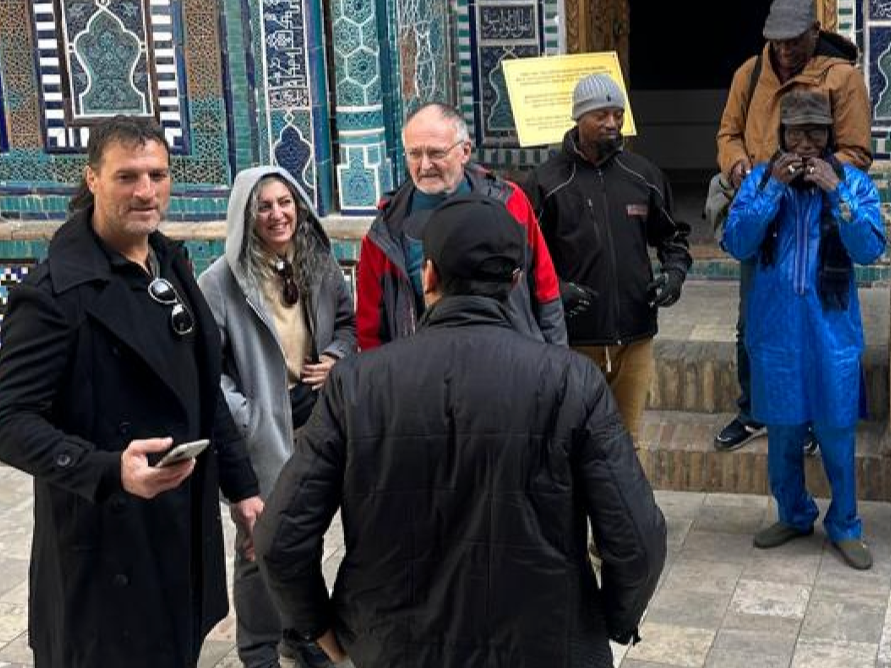
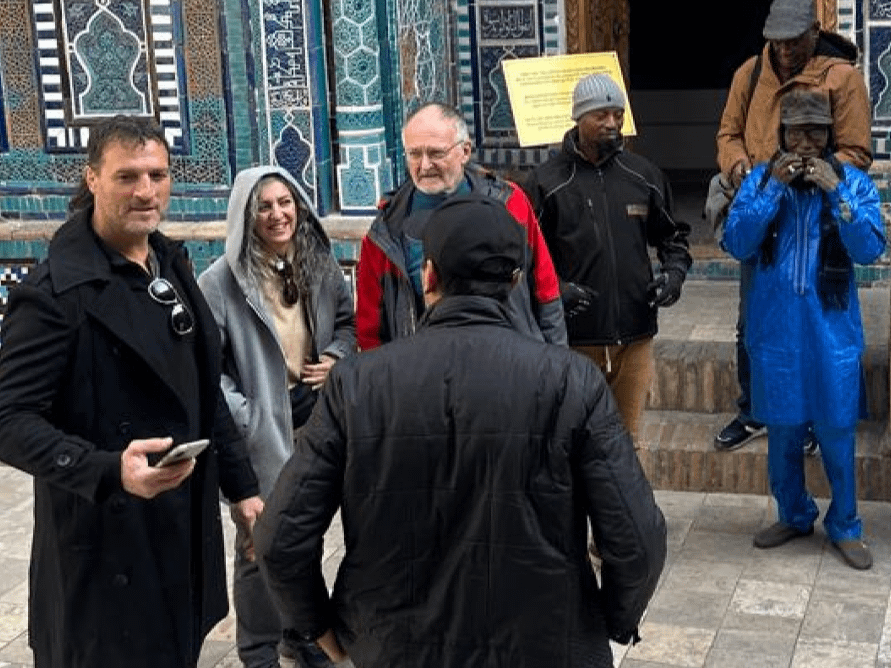
Observers argue that such informal engagements cultivate anti-trade positions away from official scrutiny. The individual in blue later photographed me when he saw me interviewing a fellow Western African, and I just smiled at him.
Absence of Animal Rights Extremist NGOs’ Open Coaching
For West Africans Although open coaching of African delegates during plenary sessions was noticeably absent at CoP20, possibly due to my earlier published investigative reports that put a spotlight on very corrupt and scandalous NGO vote-rigging (CoP19 and CoP20) and the recent African Union call for inter-country solidarity in support of sustainable trade, the animal rights extremist NGOs were still observed engaging and lobbying delegations away from the CITES CoP20 convention centre.
What Is An IFAW Representative Doing Among Delegates of Panama and Bangladesh Away From CITES CoP20 Convention Centre?

What is an IFAW representative doing among the delegates of Panama and Bangladesh during a sightseeing break away from the CITES CoP21 convention Centre?
Is the Panama delegate, Ms. Shirley Binder (left), walking away from IFAW’s attempt to greenwash her into the anti-sustainable-trade culture?
Panama has formally offered to host CITES CoP21 in 2028.
Environment Minister Juan Carlos Navarro announced the bid at the close of CoP20.
The Standing Committee acknowledged the offer with appreciation and forwarded it into CITES’ planning process.
Western Pro-sustainable Use NGOs Lobbied To Join Anti-trade Crew
I was stunned to overhear a telephone conversation in which a representative of a pro-sustainable-use Western NGO was being persuaded to join anti-trade Western animal-rights extremist NGOs.
Fortunately, the targeted European individual declined to join the anti-trade movement.
This incident underscores the need for African countries to continue engaging with pro-sustainable-use Western NGOs in order to retain their future support for SADC countries’ sustainable trade proposals.
Malawi: Vulnerability Through Financial Dependence
Malawi continues to expose its vulnerability to animal rights extremist NGO capture.
With government funding withdrawn for international meetings, wildlife officials struggle to cover basic costs, creating dependence on anti-trade NGOs.
The Director of Malawi National Parks confirmed that the new government no longer funds participation in multilateral agreements.
During CoP20, he expressed concern about lacking funds for his accommodation, transport and food, raising fears that such financial gaps invite influence and possible vote-coaching.
How African States Can Avoid Trade Proposal Rejection
Secretary-General Higuero stressed that African countries’ proposals are often rejected due to inadequate data.
Successful submissions must meet CITES resolution criteria and be supported by robust scientific and trade evidence.
CITES Secretary-General Higuero explained that during the pre-vote period, the CITES Secretariat evaluates proposals to amend the CITES Appendices strictly in line with an established CITES resolution that sets out mandatory criteria for Parties to follow.
These criteria guide both the submission of proposals by countries and the Secretariat’s recommendations to either approve or reject them.
In assessing proposals and deciding on adopting/accepting and rejecting them, the Secretariat examines all available scientific and trade-related data.
Key sources include the IUCN Red List, population and biological information, and international trade data, which is considered particularly important.
For marine species, the Secretariat relies heavily on assessments and data provided by the Food and Agriculture Organization (FAO), especially for commercially valuable fishery species.
Secretary-General Higuero said that CITES primarily assesses whether international trade poses a threat to the survival of a species.
However, where other threats exist, the CITES Secretariat considers whether adding international trade could further 9 exacerbate population declines.
In such cases, these cumulative risks are reflected in the CITES Secretariat’s booklet, which sets out its pre-vote recommendations for or against trade proposals.
She also highlighted CITES’ use of the precautionary principle.
Where data are limited, but population concerns exist, the Secretariat may still recommend listing a species, often in Appendix II, to improve traceability.
Listing enables monitoring through CITES’ permitting system and legal trade database, generating better information on trade impacts.
Secretary-General Higuero said that to improve proposal quality, the CITES Secretariat has introduced new guidance and capacity-building support to help Parties meet the required criteria and data standards.
Conclusion
For animal-rights extremist NGOs, maintaining permanent trade bans remains central to sustaining their lucrative US$1 billion fundraising industry.
Without legal trade, poaching predictably continues, creating crises that extremist NGOs then exploit to solicit donations, while falsely and scandalously blaming elephant- and rhino-range states, countries that host elephants and rhinos, for failing to protect these iconic species.
However, basic economics suggests the opposite outcome: legal, regulated trade would significantly reduce poaching by undercutting and destroying illegal markets.
The uncomfortable truth is that legal trade threatens the survival of a billion-dollar animal rights extremist NGOs’ industry, built on using lies to profit from the innocent people’s unwarranted donations worldwide.
Were the public to fully understand this, donations would likely dry up rapidly, along with the misinformation that continues to harm African people, elephants, and rhinos.
What this means is that truth-telling is the most powerful weapon for dismantling an industry that has long profited from lies, while both African people and their wildlife suffer untold harm.
Accordingly, we must tell the truth to expose the liars and, quite literally, save African people and wildlife.
The world’s biggest international wildlife management political scandal must be exposed as soon as possible, after which the extremist NGOs behind the scandal should be dismissed and defunded. Stop donating out of ignorance and save African people and their wildlife.
Tell the truth and expose the animal rights extremist NGOs’ fundraising scandal on social and mainstream media.
Tell everyone, including your president or prime minister, king, chief, headman, friends, politicians, and even your children.
*About the writer: Emmanuel Koro is a Johannesburg-based international award-winning environmental journalist who writes independently on environmental and developmental issues.
The post CITES CoP20 Investigative Report: Allegations Of Vote Rigging Persist appeared first on The Bulrushes.