The release last week of the BLSA Reform Tracker Quarterly Review showed that there has been broad progress across the government’s reform agenda, with one notable exception: electricity.
While load shedding is thankfully a thing of the past, we must not be complacent.
The agreed electricity sector reform plan includes a fundamental reorganisation of how electricity is generated and distributed in this country, not only to ensure electricity stability, but to introduce fair competition that can start to bring prices down.
We must be expanding generating capacity to support economic growth, while investing in the grid to ensure we can distribute electricity from where it is produced to where it is needed.
This issue was escalated by Eskom’s briefing of the Parliamentary Energy and Electricity Portfolio Committee last week, when executives insisted on an unbundling approach that we believe conflicts with policy.
I am pleased the Committee has also signalled its concerns and called on Eskom to appear before it again to explain itself.
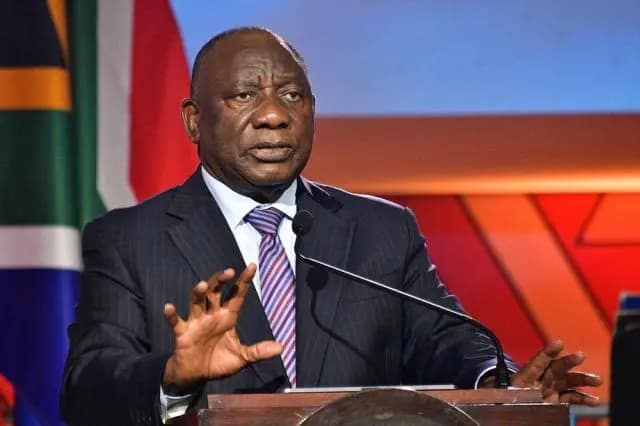
In the wake of the Tracker launch and comments to the parliamentary committee, the CEO of Business Unity South Africa and I jointly wrote a letter to President Cyril Ramaphosa asking him to clarify where he stands on electricity reform.
To us, there is a clear and coherent plan in place that was developed through extensive negotiation by partners, including the National Electricity Crisis Committee, the government’s own Operation Vulindlela reform team and National Treasury, and the National Economic and Labour Council.
Yet in December, the Department of Electricity and Energy approved a revised unbundling plan for Eskom that undermines agreed policy and threatens the outlook for grid investment, particularly.
The current policy envisages that Eskom’s transmission infrastructure is unbundled into an independent Transmission System Operator, which would then have the balance sheet to enable it to raise finance to undertake significant grid infrastructure investment.
However, the plan signed off in December fundamentally changes this, leaving the existing transmission assets to remain within Eskom.
This means the TSO would not have its own grid asset base, severely limiting its ability to raise funds for investment.
This casts a dark cloud over the future of electricity reforms. Grid investment is essential, and it must happen as fast as possible in line with the Transmission Development Plan.
This plan indicates that 14 000 km of new lines are required at a rough estimated cost of R440bn.
The grid is not currently configured to connect new sources of generation, largely where renewable energy generation is most efficient, like solar in the Northern Cape and wind in the Eastern Cape, to where it is used.
This will become more acute as the economy grows and demand increases.
The electricity stability we’ve enjoyed for the last 18 months will become more fragile, and either we will end up with more loadshedding, or we’ll strangle economic growth by killing off investment, or both.
BLSA’s interest is in ensuring we have a business environment that is conducive to economic growth and employment. In line with the agreed policy, business confidence has been rising.
The BLSA Reform Tracker included a survey of BLSA members that found almost two-thirds are positive about the impact of reforms over the next 12 months.
These are major employers and investors in the economy, and that positivity will result in increased appetite to grow.
Among them, fully three-quarters said the business environment had improved as a result of electricity reforms in particular.
The virtuous cycle of investment and growth, which we are trying to trigger, will not start if the government does not follow through and deliver on the agreed policy.
This is why BLSA invested in developing the Reform Tracker to ensure that agreed reforms stay on track.
There is much that is making good progress, including improvements in the logistics system, visa processing rules, labour reforms, affordable housing, electoral reform, and many others.
The regression on electricity stands out in contrast to these successes.
In our view, Section 34A of the Electricity Regulation Amendment Act is clear that the TSO is meant to be the licensed “transmitter” – the entity that plans, manages, and maintains the transmission power system. In practice that requires full control over the transmission system.
The act also makes clear that the TSO must be licensed by Nersa to perform these functions, which in turn implies that it must effectively control the grid it is responsible for.
There is no reasonable interpretation of these requirements other than it must own the grid assets.
If Eskom continues to own the transmission assets, an obvious conflict of interest arises as it will be both the generator and distributor of electricity.
For other generators, this risks prejudicing their access to the grid on fair terms.
For investors who will be needed to pour billions into new grid infrastructure, this would pose a clear risk, resulting in much higher costs to finance expansion.
Eskom argues that its obligations to bondholders imply that it must continue to own these assets.
But this is simply not true.
Bondholders are used to restructurings across the world that ensure state-owned entities adapt to the market realities they face.
There are many ways to achieve the necessary outcomes without prejudicing bondholders.
The same bondholders stand ready to back new grid infrastructure if the planned restructuring is delivered.
There is ample scope to negotiate this, and Eskom’s view to the contrary is incorrect.
As we state in our letter to him, we think it is important that the president, as the ultimate custodian of policy in the country, makes his position clear. Billions of rands of investment and the economic growth and job creation that would follow depend on it.
On Thursday, we will hear the State of the Nation Address, the president’s signature statement on the business of government for the year ahead.
I hope it delivers the clarity we need to maintain confidence and unleash the investment business can make.
*This column was first published in the Business Leadership South Africa (BLSA) weekly newsletter. The author, Busisiwe ‘Busi’ Mavuso, is the CEO of BLSA.
*The views Busi Mavuso expresses in this column are not necessarily those of The Bulrushes
The post Electricity Reform Backsliding Threatens Grid Investment – President Must Clarify Policy appeared first on The Bulrushes.