
Cairo – The first-ever BRICS Literature Award has been presented to Egyptian writer and novelist Salwa Bakr.
She became the main laureate of the prestigious international prize, established in 2024 to support dialogue between cultures and promote traditional values through literature.
The winner received a cash prize of 1 million rubles (about 600,000 Egyptian pounds).
RELATED: BRICS Literature Award Longlist Announced At Forum In Brazil – The Bulrushes
The award ceremony took place on 24 January 2026 in one of the international halls of the 57th Cairo International Book Fair.
The book fair held at the Egypt International Exhibition Center (EIEC) runs from 22 January to 3 February 2026.
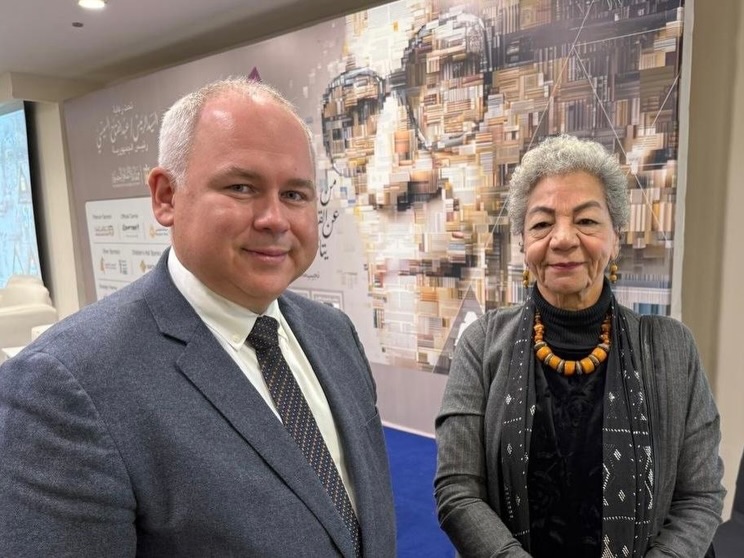
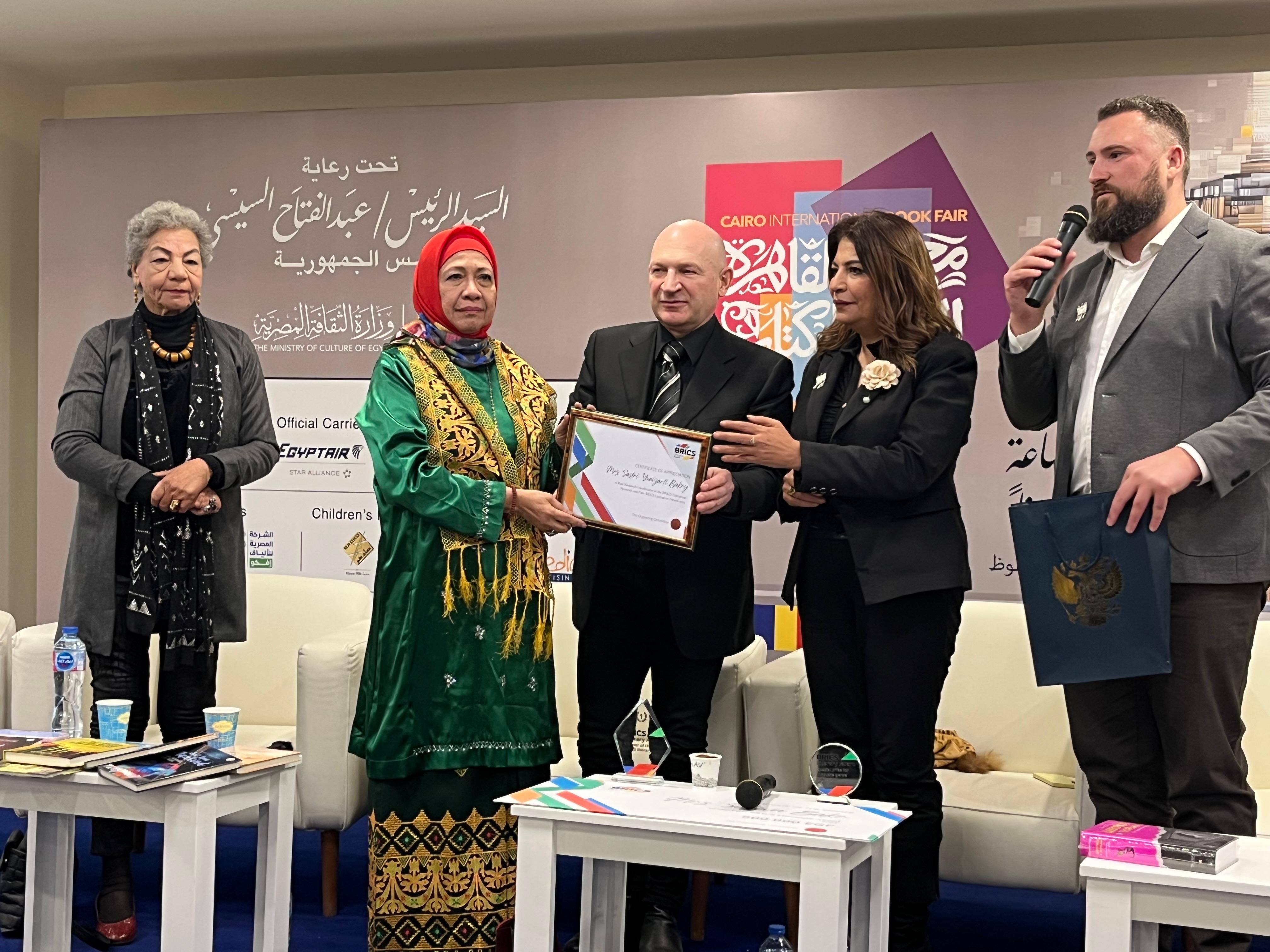
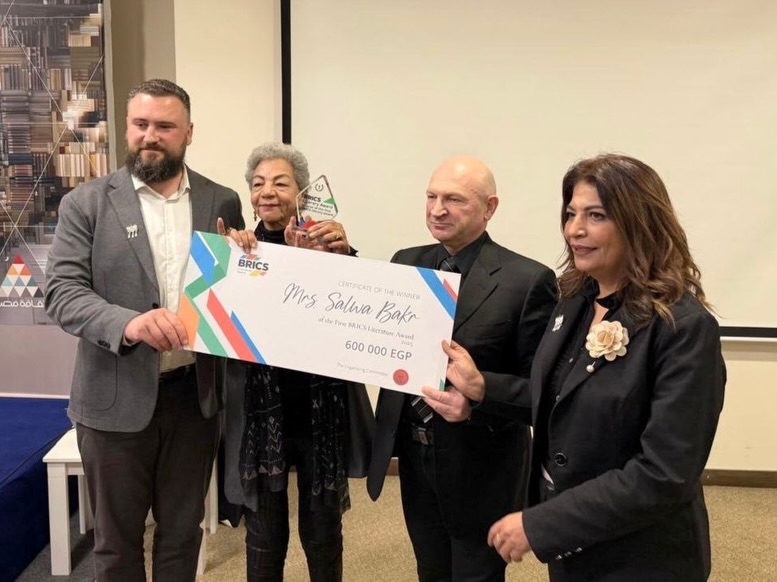
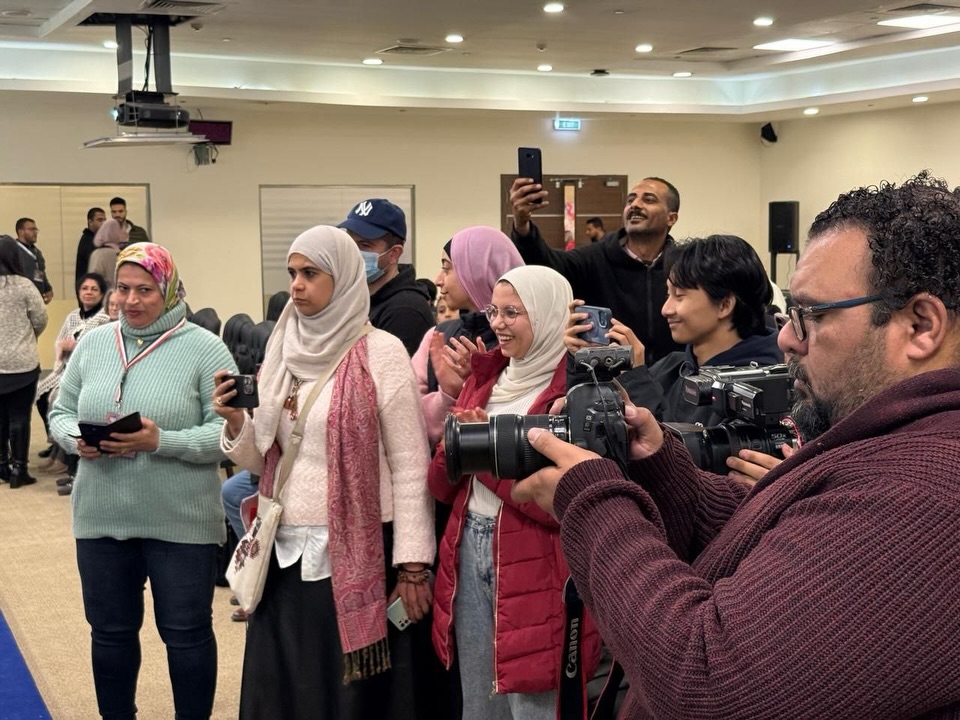
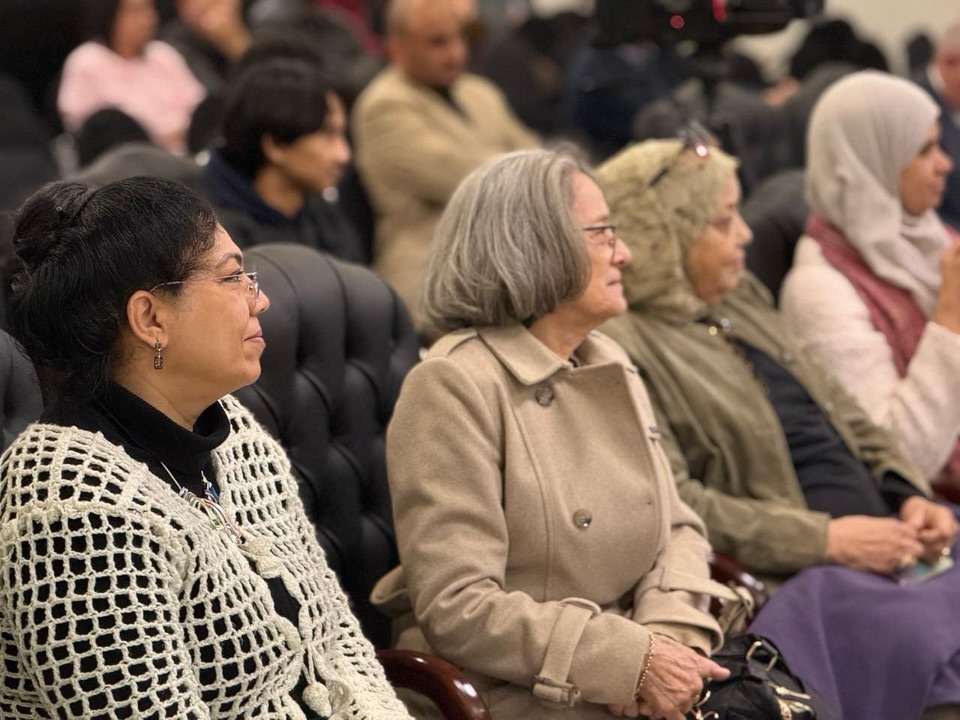
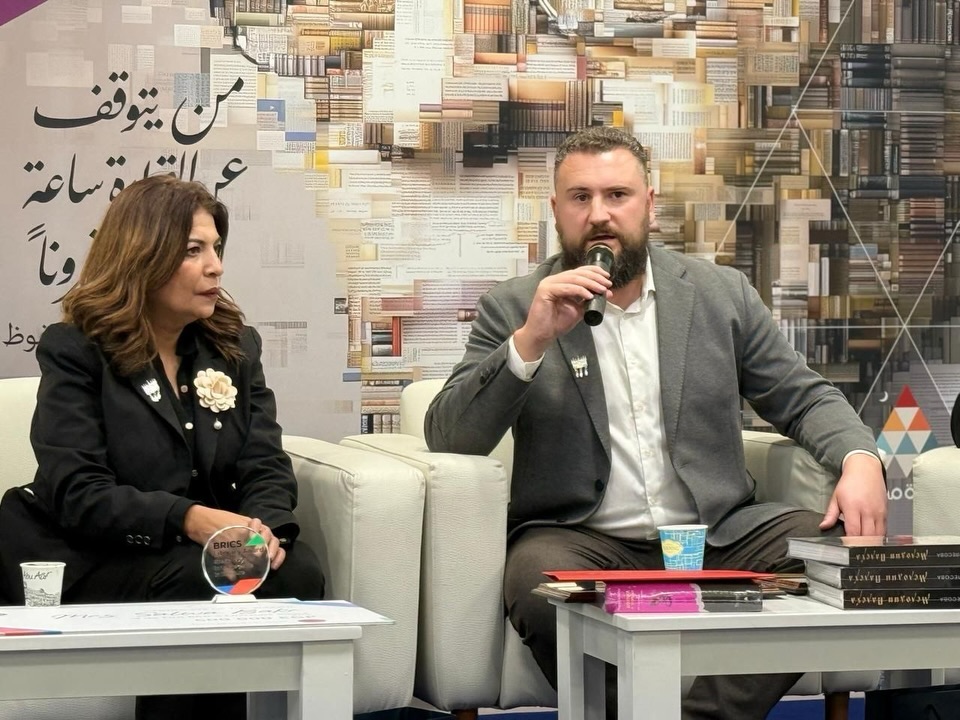
Award ceremony and participants
The BRICS Literature Award was presented to Salwa Bakr by the Executive Director of the BRICS Literature Award and Director of the Eurasian Foundation for Humanitarian Values, Aleksandr Ostroverkh-Kvanchiani.
The ceremony was also attended by Co-chair of the BRICS Literature Network Writers’ Association Vadim Teryokhin; Member of the Parliament of Egypt, one of the founders of the award, and a member of the Organising Committee from Egypt, Doha Mostafa Assi; and Indonesia’s national coordinator for the BRICS Literature Network, Sastri Bakri.
Participants noted that awarding the first BRICS Literature Award to Salwa Bakr strengthens the cultural dimension of cooperation among member states.
The award also underscored the importance of Egyptian literature in shaping a global humanistic space.
Salwa Bakr: BRICS literature as part of a global humanistic culture
Salwa Bakr emphasised that she feels proud to have become the first laureate of the BRICS Literature Award.
In her view, this award is fundamentally different from other international literary prizes, as it is founded on a deeper and distinct vision.
According to the writer, BRICS, being above all a civilisational alliance, has for decades been shaping a global humanistic culture:
“Ancient Egypt was developing literature at a time when Europe was living through the Dark Ages, whereas Russian culture and Russian literature are the deepest in terms of their impact on the world,” said Salwa Bakr.
“Our consciousness has been nurtured by the great Russian literary heritage of Chekhov, Dostoevsky, Maxim Gorky, and a whole constellation of outstanding writers, alongside writers from India, China, Brazil, and other countries.”
Salwa Bakr is known as one of the leading contemporary authors writing in Arabic.
She is the author of seven novels, seven short story collections, and a play.
Her works have been translated into a number of languages, including European ones.
Statements from the award’s founders and organisers
Member of the Egyptian Parliament, writer, and one of the founders of the BRICS Literature Award, Doha Mostafa Assi, emphasised the significance of Salwa Bakr’s victory for Egyptian literature:
“For Egypt, it is a great honour that it is our writer who becomes the first laureate of the BRICS Literature Award,” said Assi.
“This is not just news about a prize — it is a signal that contemporary Egyptian prose is being heard and understood far beyond our country.
“Salwa Bakr is an author with a very distinctive, free voice, one that reveals to readers the real, living Egypt.
“Her victory shows that within BRICS the conversation is not limited to politics and economics; here a shared cultural space is taking shape, where our stories, our languages, and our values are heard on equal terms.
“I am sure that this first success will be followed by new names and new achievements of Egyptian literature within BRICS.”
According to Aleksandr Ostroverkh-Kvanchiani, the BRICS Literature Award offers a unique opportunity to present the diversity of the literary traditions of the BRICS countries on the international stage:
“The BRICS Literature Award is an opportunity for writers to enter into a living dialogue with readers around the world, to introduce them to the culture of their own country and to gain new recognition,” said Ostroverkh-Kvanchiani.
“The award helps to identify new literary names worthy of attention, and also provides for the translation, publication, and promotion of works into the languages of the BRICS countries.
“We are discovering authors who deserve a global audience, while at the same time building for them a real route to advancement — within the BRICS space and in states that are ready to share our values.”
Russian State Duma deputy, member of the Committee on International Affairs and head of the Award Secretariat, Dmitry Kuznetsov, noted that the BRICS Literature Award is already backed by concrete publishing decisions:
“The BRICS Literature Award has already become a tool for stimulating translation,” said Kuznetsov.
“Soon, Zakhar Prilepin’s publishing project ‘KPD’ within the AST holding is to publish this year’s winner, Salwa Bakr, in Russian.
“We must return to one another the richness of our cultures, and the overarching goal of the award remains the search for shared values of the global majority, in order to strengthen and develop our cooperation.”
Selection procedure and jury’s decision
The laureates were determined based on the vote of an international professional jury.
The selection procedure took place in several stages.
A long list of 30 candidates was announced in September 2025 in Brazil. After a month of voting, 10 finalists remained, who were presented in Jakarta (Indonesia).
The name of the first laureate of the BRICS Literature Award was announced on 30 November 2025 in Khabarovsk.
Based on the results of the international jury vote, the winner was Salwa Bakr, representing Egypt and Arabic-language literature.
Special Prize: «For Innovation in Literature»
In addition to the main award, the jury presented a special prize, “For Innovation in Literature”, to Indonesian writer Denny JA.
He was recognised for the development and promotion of the genre of the poetic essay, which combines imagination, facts, and documentary materials.
This genre is regarded as an innovative form of literature that unites artistic and research approaches and opens up new possibilities for interpreting contemporary reality within the BRICS countries and beyond.
First season results and development of the BRICS Literature Network
Co-chair of the BRICS Literature Network Writers’ Association Vadim Teryokhin summed up the results of the first season of the award and outlined the prospects for the development of the network:
“We hope that for Salwa Bakr and Denny JA this award will become the beginning of a long and successful journey in the world of literature, as well as a prologue to recognition not only in the BRICS countries but throughout the world,” said Teryokhin.
“Their books will be translated into 10 languages, which will allow millions of new readers to discover these names.
“In the first season of the award, the BRICS Literature Network has turned into a real platform for dialogue.
“Each member country has contributed its voice to the discussion on the paths of development of world literature, and many friendly states that are not formally part of BRICS but share our values are already taking an interest in our initiative.
“This creates a foundation for the further expansion of the network and for deeper mutual enrichment of literatures through the artistic word.”
The post First BRICS Literature Award Presented To Egyptian Writer Salwa Bakr In Cairo appeared first on The Bulrushes.