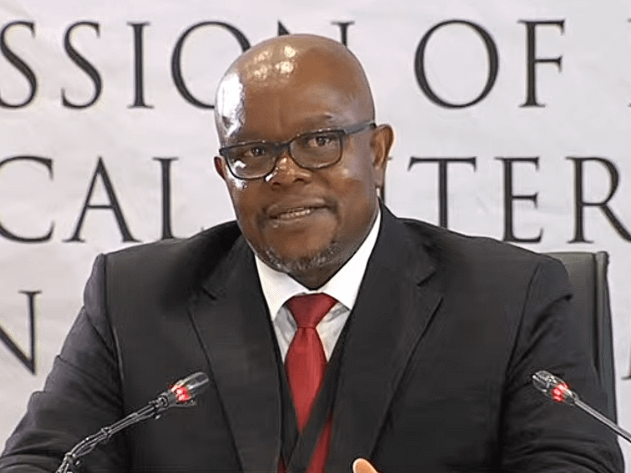
Johannesburg – To mark World AIDS Day 2025, the Treatment Action Campaign (TAC) is calling on the South African government to urgently fix the ongoing crisis in our clinics.
“Without addressing the persistent challenges at the frontline of the HIV response, people will continue to be lost from care at unacceptable rates,” the TAC warned in a statement released on Sunday, 30 November 2025.
In February 2025, the government announced plans to get 1.1 million more people living with HIV onto or back on treatment.
This was in response to South Africa falling far behind global targets to ensure 95% of people diagnosed with HIV are on ARVs.
TAC has been supporting the “Close the Gap” campaign in communities across the country.
“We’ve brought thousands of people back to facilities to help them start or restart their ARVs,” said Daniel Mathebula, leading TAC’s involvement.
“But if the health department doesn’t fix conditions at the clinic that made people avoid going in the first place, how long until the people who have been found stop going back?
“We are mopping up, but we haven’t switched off the tap”._
The failures in the health system are well documented by Ritshidze.
A new Ritshidze World AIDS Day report was released today.
The data is based on surveys with 33 819 people using the public healthcare system collected between October and November 2025 – across 360 facilities in 19 districts in seven provinces.
The report reveals the state of our HIV response almost a year on from the drastic funding cuts made by the United States government and the reduction in PEPFAR support across the country.
What does the latest round of Ritshidze’s community-led monitoring tell us?
Critical staffing shortages: 56% of facilities monitored reported reduced capacity since January, 8% more compared to 48% in our April to June 2025 data. 82% of facilities reported critical staffing shortages, and 61% of patients agreed.
While 11% of people said staff shortages were worse after January 2025, the majority reported that critical staffing shortages actually pre-dated the PEPFAR crisis.
Lengthy delays continue to frustrate people: Waiting times remained particularly long in districts like Bojanala, Lejweleputswa, Mangaung, Thabo Mofutsanyana, Buffalo City, the City of Tshwane, and Capricorn.
Other districts have seen their waiting times increase after the PEPFAR disruptions, with the biggest increases in Mopani, Ngaka Modiri Molema, Sedibeng, Buffalo City, and Ehlanzeni.
At least 52% of patients thought waiting times were long, with 70% blaming staff shortages.
26% blamed increased congestion for longer delays than usual.
Disastrous state of paper filing systems, adds to delays: Another reason for the increased delays is the worsening in the state of clinic filing systems – as many as 90% in a bad condition in Mangaung, 89% in Buffalo City, 70% in the City of Tshwane, 69% in Johannesburg, and 67% in King Cetshwayo – leading to people waiting longer to receive their files. 43% of people surveyed blamed the longer waiting times on it taking longer to find their files than usual.
More people reported getting a 3 month supply of ARVs: 13% more people reported getting a 3 months supply of ARVs compared to April to June 2025, surpassing levels before the PEPFAR disruptions.
However, fewer than 60% of people reported getting a 3 month supply in Mangaung, Bojanala, and eThekwini. eThekwini also continued to have high reports of people only getting a 1 month supply.
Fewer sites report challenges with HIV testing, but still low numbers tested: 12% of facilities reported challenges with HIV testing following the PEPFAR disruptions, down from 20% in April to June 2025.
However, many people going to the clinics are not being tested – only 63% not on ART reported being offered a test, making finding the 1.1 million people who need to start or restart treatment an even harder task.
Lack of care and support persists: While there has been a slight improvement in friendliness of services for the general population, this has not reached levels before PEPFAR disruptions – with the fewest reports of staff always being friendly in Mangaung (11%), Lejweleputswa (29%), Ekurhuleni (37%), Gert Sibande (39%), and Ehlanzeni (40%).
People who use drugs, sex workers, and the LGBTQIA+ community continue to face dismissive and hostile conditions.
At least 19% of people living with HIV said staff shouted at them if they were late for/missed an appointment – up from 12% before PEPFAR disruptions, and 24% said they were sent to the back of the queue to wait until all other patients had been seen first as punishment – up from 12% before PEPFAR disruptions.
-Increase in denial of services: Clinic staff continue to turn people away. 464 people told us they or someone they knew had been denied services without a transfer letter in the last three months (up from 320 in April to June 2025) – something that is not required by ART guidelines to start or restart your ARVs – with Mangaung, Buffalo City, Ekurhuleni, and Gert Sibande the worst offenders.
The report said 777 people (up from 665 in April to June 2025) told us they or someone they knew had been denied services without an ID.
Critical HIV prevention tools either missing, withheld, or not offered to those who could benefit: 28% of sites not providing external condoms in Lejweleputswa, 21% in Ekurhuleni, and 20% in the City of Tshwane. Only 53% of sites provide lubricants.
PrEP in all sites, but not offered to key groups including sex workers, people who use drugs, and trans and queer people most at risk.
Six-monthly lenacapavir injections hold the power to defeat HIV transmission, but without addressing the state of our clinics, lenacapavir will never get in the hands of those who need it, especially members of key populations.
“We need the government to fix the Patent Laws and ensure affordable access, including local South African manufacturers to step in to produce generic versions for sustained use in the future,” the statement said.
“This is a snapshot of core reasons why people struggle to stay on ARVs, or avoid getting an HIV test or accessing HIV prevention. Instead of feeling more in control of your own health, clinic visits can be frustrating and time-wasting.
“All of this drives people out of the health system, undermining the ‘Close the Gap’ campaign’s goals.”
Longer ARV refills make it easier to stay on treatment, but progress is very slow.
One way to support getting more people to start/restart treatment, and importantly, stay on it, is to reduce the number of times people have to visit the clinic.
TAC and Ritshidze have been pushing for people to be given a six-month supply of ARVs at a time for many years, based on clear evidence of success from many other countries.
This would reduce unnecessary clinic visits for clinically stable people who have a very low risk of disengagement.
“I would appreciate receiving a six-month supply of ARVs. Going to the clinic every month or two is difficult,” said a person living with HIV from KwaZulu-Natal.
“I have to miss work, wait long hours, and sometimes don’t receive the service I need, only to be told to return the next day.”
Another person on treatment in Limpopo explained: “I’m currently forced to apply for sick leave each time I go to collect my treatment because I know I won’t be able to collect and then go to work due to the queues there.
“Having six months’ worth of treatment will help reduce the number of days I take off work”.
Another person living with HIV in the Free State said: “I would like to get a six-month supply so I won’t have to go to the clinic as often.
“There will be more space then, for people who actually need to consult. Most of the time, we go to the clinic when we are not even sick.
“If they gave us a six-month supply we wouldn’t go as often, so there would be less congestion at the clinic”.
On World AIDS Day last year, the Minister of Health and Deputy President made a commitment to ensure that at least 30% of people eligible would be receiving a six-month supply by mid-2025.
“With almost six million people living with HIV on ART today, this means at the very least an estimated 750 000 to one million people,” said the TAC.
“Yet a very low target was set of only 200 000 people to be enrolled by the end of March 2026.”
The TAC said by the end of October, fewer than 25 000 people had started.
Speaking at a community meeting in Makgwabe, TAC’s Ndivhuwo Rambau said: “We are extremely concerned about the slow progress in enrolling people on a six-month supply.
“While we understand the need to start in phases, only letting 10 facilities per province start is inequitable and far too slow.
“Those clinics are unlikely to even meet the very low targets that have been set.”
Limpopo is the only province that has not yet started rolling out the desired six-month supply.
“Why can’t we get a six-month supply in our clinics in Limpopo?” asked Mashudu Nethengwe, a TAC branch member from Bungeni, Limpopo.
“It’s not fair. I desperately want it. It would make it so much easier to stay on treatment, but it’s not available yet.
“All clinics that want to give us a six-month supply of ARVs should be able to start right away, in all provinces, including Limpopo”.
Fix our clinics, save our lives
“This World AIDS Day, we are calling for the Deputy President and Minister of Health to take leadership – and hold provinces accountable to actually fix the crisis in our health system,” said Anele Yawa, TAC’s General Secretary.
“Nothing will change if district and provincial health officials are in denial about the issues we keep on raising.
“They must use Ritshidze’s reports as an early warning system to quickly respond to the challenges we see on the ground.
“Some provincial health departments do take our reports seriously, like the Free State, who took the time to develop action plans based on our findings.
“However, others don’t, like Limpopo, who played hide and seek, ignoring our efforts to engage.”
“If the government is serious about getting 1.1 million people to start/restart and stay on treatment, then there must be meaningful engagement and commitment, not only on paper or as lip service, but that we can see take effect in our clinics.”
The TAC demanded that the Deputy President and Minister of Health hold provinces accountable to offer a six-month supply of ARVs to everyone eligible.
The TAC said doing so would shorten waiting times and reduce opportunities to deny people entry to clinics simply because they don’t have paperwork, IDs, or are a member of a particular population group.
“We also demand the urgent addition of more frontline healthcare workers in our clinics,” the TAC said.
“The United States funding cuts exposed our country, with the loss of thousands of healthcare workers.
“It is time for the government to also close the gap on human resource shortages, to improve clinics and health services for everyone.”
The Ritshidze State of Health report is available here: https://ritshidze.org.za/wp-content/uploads/2025/11/Ritshidze-National-State-of-Health-December-2025.pdf
http://www.tac.org.za
http://www.ritshidze.org.za
The post ‘Fix The Crisis In Our Clinics And Give Us 6-Month ARV Refills,’ Demands TAC appeared first on The Bulrushes.