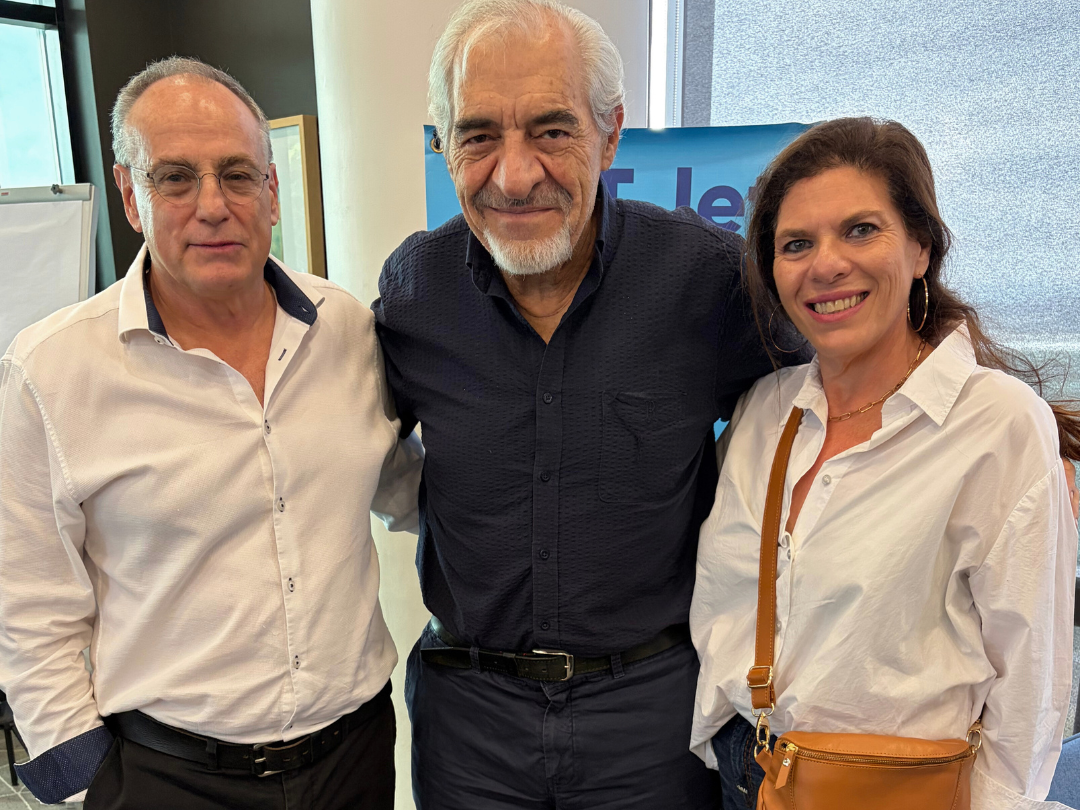
Johannesburg – On the surface, Ian Fuhr is best known as the founder of Sorbet – one of South Africa’s most recognisable and beloved beauty brands.
His story was also shared in an intimate “In The Boardroom” conversation hosted by ORT Jet, where he was interviewed by David Zidel, offering rare insight into the philosophy behind his extraordinary journey.
But to reduce his story to business success alone would be to miss the essence of what truly defines him.
Ian is not simply an entrepreneur; he is an architect of culture, a champion of servant leadership, and a man who has spent decades redefining what it means to build a business in a deeply complex society.
His journey, marked by risk, rebellion, and reinvention, begins not with certainty, but with disruption.
Raised in an entrepreneurial family, Ian was exposed early to the mechanics of business through his father, a founding director in retail.
Yet his own path defied expectation.
He dropped out of university, pursued music, and stumbled, almost accidentally, into retail at a time when South Africa itself was in turmoil.
In the late 1970s, at just 22 years old, Ian launched a discount retail store inspired by American models he barely understood.
Armed with instinct rather than experience, he priced goods recklessly low, drawing overwhelming crowds and creating chaos that required police intervention.
What should have been a breakthrough moment quickly became a harsh education.
He found himself isolated – young, inexperienced, and profoundly disconnected from both his staff and the customers he was trying to serve.
It was in this moment of crisis that the most defining relationship of his life emerged.
Turning to a mentor, Ralph Mabaso, Ian began to confront the vast cultural and racial divide that shaped his business environment.
When he later discovered that Ralph was encouraging a boycott of the very store he worked in, Ian chose not to react with authority, but with curiosity.
The explanation he received would fundamentally alter his worldview: “Freedom first, work second.”
That single insight forced Ian to confront a reality far removed from his own upbringing.
He began immersing himself in the lives of his staff, visiting townships, listening deeply, and witnessing the lived experience of apartheid.
What followed was not just personal awakening, but a complete redefinition of leadership.
Authority gave way to empathy. Control gave way to connection. And business, he realised, could no longer exist in isolation from humanity.
Over time, Ian’s career would take unconventional turns from music production to consulting on race relations in corporate South Africa.
It was here that he pioneered “industrial theatre,” using storytelling and performance to tackle sensitive issues like racism in the workplace.
By making difficult conversations accessible and human, he demonstrated a powerful truth: culture is not a byproduct of business – it is its foundation.
This philosophy would eventually find its fullest expression in 2005, with the launch of Sorbet.
At the time, Ian knew little about the beauty industry.
But what he lacked in technical knowledge, he replaced with clarity of purpose.
He was not building a beauty business; he was building a culture.
From the outset, Ian made an unconventional decision: he would personally conduct induction training for every single employee.
More than 3 500 individuals passed through his sessions, where the focus was never on sales targets or technical skills, but on empathy, dignity, and human connection.
Employees were not taught to serve customers; they were taught to care for people.
The impact was profound.
In Sorbet stores across the country, transactional interactions transformed into meaningful relationships.
Clients became “guests.”
Therapists became confidants.
In one particularly moving example, a woman undergoing cancer treatment turned not first to family, but to her therapist for emotional support.
These moments were not incidental; they were the direct result of a deliberately engineered culture.
For Ian, this reinforced a belief that has become his signature philosophy: the purpose of business is not to make money, but to serve.
Profit, he argues, is simply the byproduct of meaningful service delivered consistently and authentically.
This belief also shaped how he approached transformation in a country still grappling with its past.
By the time he exited Sorbet in 2019, 95% of its skincare therapists were black, an extraordinary shift in an industry that had historically excluded them.
But for Ian, this was never about quotas or compliance. It was about dignity, access, and creating spaces where people felt they truly belonged.
Central to this approach is his concept of “Cultureneering” – a framework that positions culture as a deliberate, strategic force within organisations.
At its core is a simple but powerful idea: when employees feel trusted, respected, and valued, they deliver exceptional service.
And when service is exceptional, businesses thrive.
Yet Ian’s work extends beyond the walls of any single organisation.
In recent years, he has turned his attention to the broader social fabric of South Africa, exploring how business can play a role in healing deep-rooted divisions.
Through his book The Human Bridge, he challenges leaders to confront the country’s history with honesty and courage, and to use their platforms to foster understanding and connection.
Even now, he continues to build and has ventured into a new business, Popsicle Professional Nails, applying the same principles that defined his earlier success while remaining committed to innovation and growth.
The Popsicle motto is we make nails that tell your story!
At Popsicle, they don’t just paint nails; they spark joy and confidence. From playful products to feel-good nail bar experiences, they’re there so every Pop Star (that’s you!) can shine in their own way.
What makes Ian’s story so compelling is not the scale of his achievements, but the consistency of his message. Across decades, industries, and challenges, one idea remains constant: people come first.
In a world often obsessed with metrics, margins, and market share, Ian offers a different blueprint – one rooted in purpose, empathy, and service.
His legacy is not just the businesses he has built, but the lives he has touched and the conversations he has started.
Because in the end, as Ian has shown time and again, the true measure of success is not what you earn, but how you serve.
For more information about ORT SA, please go to: https://www.ortsa.org.za/.
The post The Soul Of Service: How Ian Fuhr Built An Empire On Purpose, Not Profit appeared first on The Bulrushes.