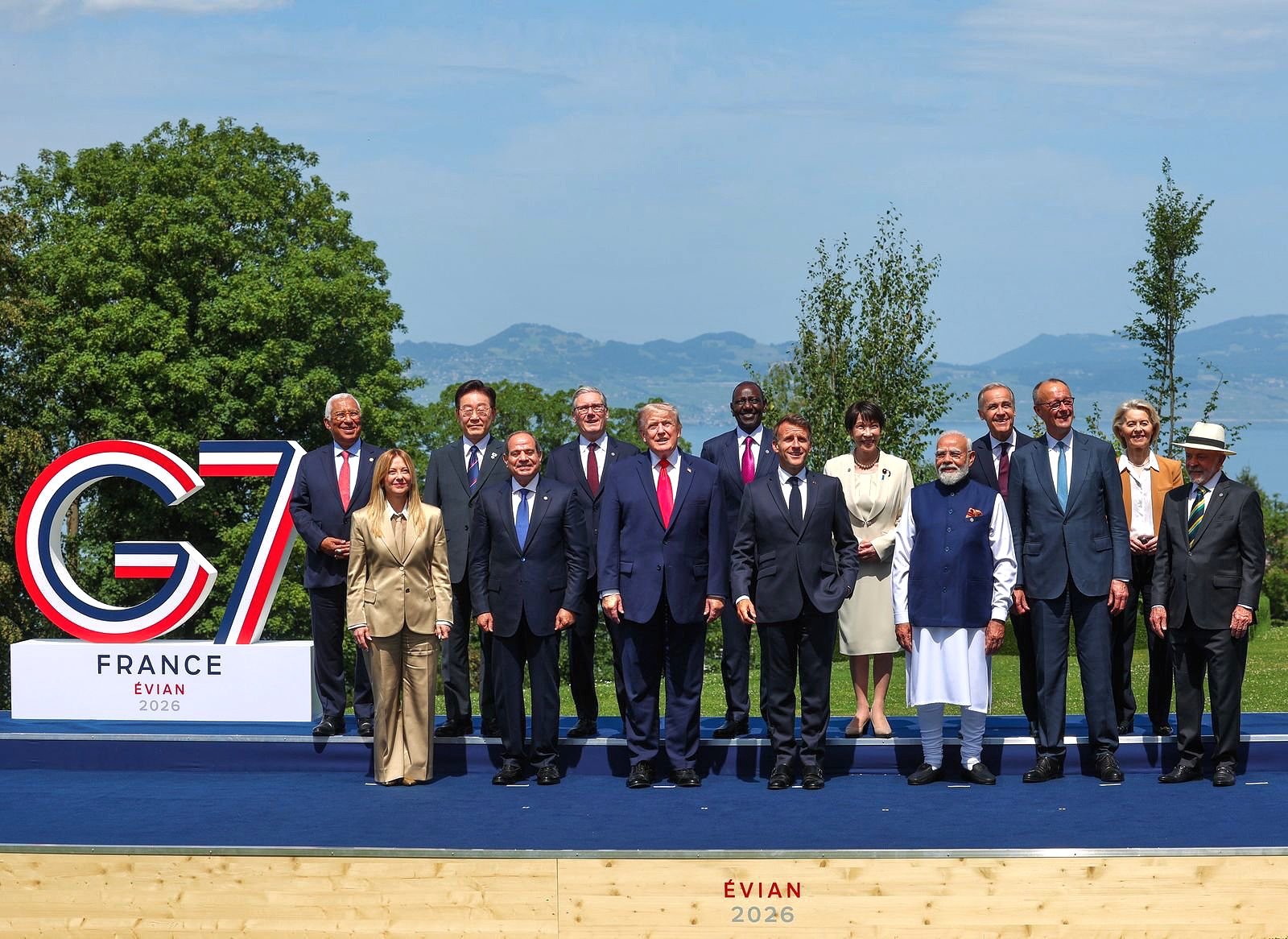

The 52nd G7 Summit in France concluded on Wednesday with leaders issuing a shared position on geopolitical issues in Ukraine, the Middle East, and the Indo-Pacific.
The Heads of State reiterated their unwavering support for Ukraine in defending its freedom, sovereignty, and territorial integrity, and solidarity with the Ukrainian population.
Commending Ukraine for its progress on the battlefield in recent months, the G7 agreed to increase the delivery of air defence capacities, additional systems and interceptors, and long-range capabilities
The alliance promised to boost Ukraine’s energy resilience, extend licenses to allow for an increase in its military production, and intensify the pressure on the Russian war economy.
On the Middle East situation, the G7 expressed pleasure with the news of a deal between the United States and Iran, praising the efforts of President Donald Trump and mediating countries.
The leaders say the pact provides an historic opportunity to prevent Iran from acquiring any nuclear weapons and tackling the threats related to its regional and ballistic activities.
The G7 insists the right of transit without restrictions or tolls is the bedrock of international trade, adding that the France-UK-led defensive initiative can help restore normalcy in the Hormuz Strait.
The bloc believes a robust and comprehensive diplomatic follow-on agreement to the Memorandum of Understanding, brokered by Pakistan, can bring peace and security for all in the region.
“We underline the need for negotiation to this end to address the threats posed by Iran,” the joint statement reads. “We reaffirm that Iran will never obtain a nuclear weapon.”
The G7 called for an immediate ceasefire in Lebanon, declaring support for the leadership’s efforts to achieve the disarmament of Hezbollah and protect Lebanon’s territorial integrity and sovereignty.
The leaders want an end to the violence in the West Bank, vowing to hasten humanitarian and reconstruction efforts in Gaza, as well as the swift implementation of relevant political and security measures.
The G7, however, echoed its opposition to any unilateral attempts to change the status quo in the East and South China Seas and across the Taiwan Strait, urging peaceful resolution through dialogue.
The body also reaffirmed its commitment to the “complete denuclearization” of North Korea programs, and to collectively address North Korea’s “cryptocurrency thefts and cybercrimes.”
In attendance were Presidents Emmanuel Macron (France), the host; President Donald Trump (US), Prime Minister Mark Carney (Canada); PM Giorgia Meloni (Italy); PM Sanae Takaichi (Japan), PM Keir Starmer (UK), and Chancellor Olaf Scholz (Germany).
Invited Leaders: PM Narendra Modi (India), Presidents Luiz Lula da Silva (Brazil), Volodymyr Zelensky (Ukraine), Yoon Suk Yeol (South Korea), Abdel Fattah el-Sisi (Egypt), William Ruto (Kenya), Mohamed bin Zayed Al Nahya (UAE), Emir Tamim bin Hamad Al Thani (Qatar), and top EU officials.
G7 reaffirms Ukraine support, backs US-Iran deal, Lebanon ceasefire