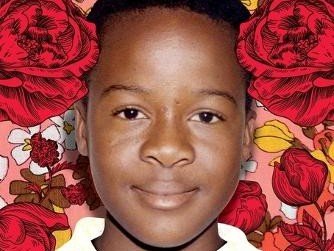
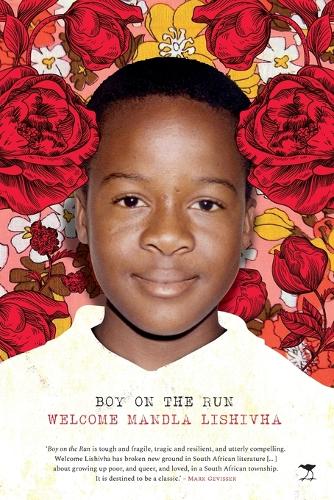
It took me three months to finish reading the book “Boy on the Run”. I blame the bloody FIFA World Cup.
There I was, supposedly reading, while grown men with impressive muscles spent hours chasing a ball across perfectly manicured grass. Priorities collapsed.
Literature suffered. Welcome had to wait.
When football finally loosened its grip on me, I returned to the book and, more importantly, to Soshanguve.
Soshanguve is not simply a setting in this memoir. It is an organising memory.
Welcome writes the place through its people, its local nomenclature, its jokes, its rhythms, its friendships and its codes.
He does not flatten it into that vague literary invention called “the township”.
The streets, schools, families and social worlds have texture because they are named and remembered.
You can hear the kasi in the prose, and that gives the memoir a distinctive voice from the beginning.
Memory is, for me, the strongest part of the book.
Welcome remembers not only events but gestures, embarrassment, desire, family rituals and those small childhood moments that make sense only much later.
The early episodes around dress, gender, family and play are recalled without the adult narrator forcing neat explanations onto the child he once was.
The effect is persuasive because memory is allowed to remain human: vivid in places, partial in others, but always emotionally true to the life being reconstructed.
The writing itself is simple, but effective. It is not always elegant, nor does it try to impress the reader with elaborate sentences.
That is one of its strengths. Welcome writes to be understood.
The prose moves easily, the scenes are clear, and the people remain recognisable.
Because the book generally avoids ornament for ornament’s sake, the moments when the writing slows down and reaches for something deeper carry far greater force.
None is more powerful than the murder of his mother. Here Welcome shows real prose discipline.
His mother is murdered by her boyfriend, who then kills himself, and it is the kind of tragedy a less restrained writer might use to hold the reader emotionally hostage.
Welcome does not.
He allows memory, detail, and the terrible fact of what happened to do the work.
The scene is tender precisely because he refuses melodrama.
What impressed me even more is what happens after that scene: the book continues.
The murder remains part of Welcome’s life, as grief does, and the tragedy resurfaces throughout the memoir. But he refuses to make it the organising principle of his entire existence.
His mother’s murder is something that happened to him; it is not everything that he is.
That distinction gives the book dignity and prevents grief from swallowing every other part of the story.
And there is much more story.
We travel from Soshanguve into university life, Wits, Rhodes, journalism, student politics and activism.
We encounter the charged atmosphere of the “Rhodes Must Fall” era and the arguments, ambitions and contradictions that came with student movements.
The book moves through institutions and cities, but it keeps returning to the question of where one belongs and who, in the end, gets to make a home around you.
Friendship is one of the memoir’s great themes.
If queerness is a thread running through “Boy on the Run”, friendship runs alongside it with equal force.
Friends become witnesses, accomplices, advisers, shelter and mirrors.
They provide language for experiences that had previously existed only as feelings.
They make possible that extraordinary relief of meeting another person and realising: ah, so I am not alone.
For a young queer boy growing up in a world eager to tell him what a boy ought to be, that recognition matters enormously.
Yes, “Boy on the Run” is a queer memoir. There is no point pretending otherwise.
Queerness appears early, before Welcome necessarily has the vocabulary for it, and it runs through childhood, adolescence, university, friendship, romance and adulthood.
There are sexual encounters, desires and disasters.
Some of those disasters are wonderfully ordinary: fear intervenes, confidence collapses, bodies do not cooperate, and people discover that desire does not come with an instruction manual.
This is where Welcome succeeds where another queer memoir I attempted some years ago failed spectacularly.
I never finished that book. It became gay sex on steroids.
One sexual encounter seemed to go on for three pages, and by the end I knew more about the mechanics of sex than I did about the people involved.
I stopped reading.
Welcome refuses that temptation. Perhaps higher education in journalism teaches discipline after all.
“Boy on the Run” is not a campaign manuscript for queerness either.
Welcome does not spend the book pleading for his humanity or submitting evidence to some imaginary heterosexual tribunal.
He simply lives. That is far more powerful.
His queerness exists alongside friendship, belonging, loneliness, education, politics, work, ambition, grief, family and the community that raised him.
It is part of the person, not a substitute for the person.
Violence, however, is impossible to ignore. Gender-based violence runs beneath the memoir with terrifying persistence.
His mother is murdered.
Welcome also survives homophobic violence, including the threat of a mob at a stadium before a good Samaritan intervenes.
At university he wakes to the realisation that he has been violated.
These moments are frightening because the book does not sensationalise them; violence arrives as violence often does, suddenly, intimately and with consequences that the survivor must carry long after the scene itself has ended.
Yet Welcome refuses victimhood as a permanent address. He is hurt. He is frightened. He grieves. T
hen he continues to live. He reads, studies, walks, organises, argues, falls in love, moves, works and writes.
That persistence is one of the memoir’s quiet achievements.
The boy keeps running, although by the end one begins to wonder whether running is still the right word for what he is doing.
Perhaps he is simply moving through life on his own terms.
The title, therefore, takes on meaning as the memoir progresses. At first, running can be read as escape: from grief, fear, violence, loneliness and versions of the self not yet fully understood.
Later, movement becomes something closer to agency.
The boy who runs away gradually becomes the man who goes somewhere.
The distinction is important because the memoir does not end in a triumphant cure for the past.
It shows instead how a life expands around what cannot be undone.
Welcome also understands community without romanticising it.
The community raises you, feeds you, gives you language, relatives, neighbours, friends and a sense of place.
The same community can police masculinity, punish difference and become dangerous. Both things can be true.
That complexity gives the memoir credibility.
There is no simple township-as-hell narrative here, just as there is no sentimental township-as-ubuntu paradise.
Soshanguve can wound and hold him at the same time.
That refusal of shorthand is what I admire most.
Too much writing about African lives, especially African queer lives, reaches for easy symbols.
Sex becomes shorthand for queerness. Poverty becomes shorthand for blackness.
Violence becomes shorthand for township life. Tradition becomes shorthand for Africa.
Welcome refuses those shortcuts and insists on a human being whose life contains more than any single category can carry.
It aligns with a line I often use about my own writing: I am here to disrupt the neat narrative of a native as a sex-mad maniac who prays to the ancestors and dabbles in witchcraft.
“Boy on the Run” disrupts a related neat narrative. Sex is present, but it is not the whole story.
Queerness is present, but it does not swallow the person. Violence happens, but it does not have the final word.
His mother is murdered, but she is remembered for having lived, not merely for having died.
That may be the book’s most beautiful achievement.
“Boy on the Run” is ultimately a memoir about memory: what we retain, what refuses to leave us, what we run from and what we carry because losing it would constitute another kind of death.
It is about a mother, friendship, becoming, community and the stubborn ordinary miracle of continuing.
What a beautiful and timely memoir.
*Bhekisisa Mncube is an author, columnist and manuscript assessor for a leading South African publisher. He has a keen interest in culture, politics and literature
It took me three months to finish reading the book “Boy on the Run”.
I blame the bloody FIFA World Cup.
There I was, supposedly reading, while grown men with impressive muscles spent hours chasing a ball across perfectly manicured grass. Priorities collapsed.
Literature suffered. Welcome had to wait.
When football finally loosened its grip on me, I returned to the book and, more importantly, to Soshanguve.
Soshanguve is not simply a setting in this memoir. It is an organising memory.
Welcome writes the place through its people, its local nomenclature, its jokes, its rhythms, its friendships and its codes.
He does not flatten it into that vague literary invention called “the township”.
The streets, schools, families and social worlds have texture because they are named and remembered.
You can hear the kasi in the prose, and that gives the memoir a distinctive voice from the beginning.
Memory is, for me, the strongest part of the book.
Welcome remembers not only events but gestures, embarrassment, desire, family rituals and those small childhood moments that make sense only much later.
The early episodes around dress, gender, family and play are recalled without the adult narrator forcing neat explanations onto the child he once was.
The effect is persuasive because memory is allowed to remain human: vivid in places, partial in others, but always emotionally true to the life being reconstructed.
The writing itself is simple, but effective. It is not always elegant, nor does it try to impress the reader with elaborate sentences.
That is one of its strengths. Welcome writes to be understood.
The prose moves easily, the scenes are clear, and the people remain recognisable.
Because the book generally avoids ornament for ornament’s sake, the moments when the writing slows down and reaches for something deeper carry far greater force.
None is more powerful than the murder of his mother. Here Welcome shows real prose discipline.
His mother is murdered by her boyfriend, who then kills himself, and it is the kind of tragedy a less restrained writer might use to hold the reader emotionally hostage.
Welcome does not.
He allows memory, detail, and the terrible fact of what happened to do the work.
The scene is tender precisely because he refuses melodrama.
What impressed me even more is what happens after that scene: the book continues.
The murder remains part of Welcome’s life, as grief does, and the tragedy resurfaces throughout the memoir. But he refuses to make it the organising principle of his entire existence.
His mother’s murder is something that happened to him; it is not everything that he is.
That distinction gives the book dignity and prevents grief from swallowing every other part of the story.
And there is much more story.
We travel from Soshanguve into university life, Wits, Rhodes, journalism, student politics and activism.
We encounter the charged atmosphere of the “Rhodes Must Fall” era and the arguments, ambitions and contradictions that came with student movements.
The book moves through institutions and cities, but it keeps returning to the question of where one belongs and who, in the end, gets to make a home around you.
Friendship is one of the memoir’s great themes.
If queerness is a thread running through “Boy on the Run”, friendship runs alongside it with equal force.
Friends become witnesses, accomplices, advisers, shelter and mirrors.
They provide language for experiences that had previously existed only as feelings.
They make possible that extraordinary relief of meeting another person and realising: ah, so I am not alone.
For a young queer boy growing up in a world eager to tell him what a boy ought to be, that recognition matters enormously.
Yes, “Boy on the Run” is a queer memoir. There is no point pretending otherwise.
Queerness appears early, before Welcome necessarily has the vocabulary for it, and it runs through childhood, adolescence, university, friendship, romance and adulthood.
There are sexual encounters, desires and disasters.
Some of those disasters are wonderfully ordinary: fear intervenes, confidence collapses, bodies do not cooperate, and people discover that desire does not come with an instruction manual.
This is where Welcome succeeds where another queer memoir I attempted some years ago failed spectacularly.
I never finished that book. It became gay sex on steroids.
One sexual encounter seemed to go on for three pages, and by the end I knew more about the mechanics of sex than I did about the people involved.
I stopped reading.
Welcome refuses that temptation. Perhaps higher education in journalism teaches discipline after all.
“Boy on the Run” is not a campaign manuscript for queerness either.
Welcome does not spend the book pleading for his humanity or submitting evidence to some imaginary heterosexual tribunal.
He simply lives. That is far more powerful.
His queerness exists alongside friendship, belonging, loneliness, education, politics, work, ambition, grief, family and the community that raised him.
It is part of the person, not a substitute for the person.
Violence, however, is impossible to ignore. Gender-based violence runs beneath the memoir with terrifying persistence.
His mother is murdered.
Welcome also survives homophobic violence, including the threat of a mob at a stadium before a good Samaritan intervenes.
At university he wakes to the realisation that he has been violated.
These moments are frightening because the book does not sensationalise them; violence arrives as violence often does, suddenly, intimately and with consequences that the survivor must carry long after the scene itself has ended.
Yet Welcome refuses victimhood as a permanent address. He is hurt. He is frightened. He grieves. T
hen he continues to live. He reads, studies, walks, organises, argues, falls in love, moves, works and writes.
That persistence is one of the memoir’s quiet achievements.
The boy keeps running, although by the end one begins to wonder whether running is still the right word for what he is doing.
Perhaps he is simply moving through life on his own terms.
The title, therefore, takes on meaning as the memoir progresses. At first, running can be read as escape: from grief, fear, violence, loneliness and versions of the self not yet fully understood.
Later, movement becomes something closer to agency.
The boy who runs away gradually becomes the man who goes somewhere.
The distinction is important because the memoir does not end in a triumphant cure for the past.
It shows instead how a life expands around what cannot be undone.
Welcome also understands community without romanticising it.
The community raises you, feeds you, gives you language, relatives, neighbours, friends and a sense of place.
The same community can police masculinity, punish difference and become dangerous. Both things can be true.
That complexity gives the memoir credibility.
There is no simple township-as-hell narrative here, just as there is no sentimental township-as-ubuntu paradise.
Soshanguve can wound and hold him at the same time.
That refusal of shorthand is what I admire most.
Too much writing about African lives, especially African queer lives, reaches for easy symbols.
Sex becomes shorthand for queerness. Poverty becomes shorthand for blackness.
Violence becomes shorthand for township life. Tradition becomes shorthand for Africa.
Welcome refuses those shortcuts and insists on a human being whose life contains more than any single category can carry.
It aligns with a line I often use about my own writing: I am here to disrupt the neat narrative of a native as a sex-mad maniac who prays to the ancestors and dabbles in witchcraft.
“Boy on the Run” disrupts a related neat narrative. Sex is present, but it is not the whole story.
Queerness is present, but it does not swallow the person. Violence happens, but it does not have the final word.
His mother is murdered, but she is remembered for having lived, not merely for having died.
That may be the book’s most beautiful achievement.
“Boy on the Run” is ultimately a memoir about memory: what we retain, what refuses to leave us, what we run from and what we carry because losing it would constitute another kind of death.
It is about a mother, friendship, becoming, community and the stubborn ordinary miracle of continuing.
What a beautiful and timely memoir.
*Bhekisisa Mncube is an author, columnist and manuscript assessor for a leading South African publisher. He has a keen interest in culture, politics and literature
The post ‘Boy On The Run’: Memory, Grief And The Stubborn Business Of Living appeared first on The Bulrushes.