New York – Spain defeated Lionel Messi’s Argentina 1-0 in extra time to claim the 2026 FIFA World Cup, with Ferran Torres scoring the decisive goal at MetLife Stadium (temporarily renamed New York New Jersey Stadium).
The victory marked Spain’s second title but was overshadowed by persistent allegations of bias favouring Argentina, political interference, and organisational controversies in the tournament’s expanded 48-team format.
(Source: brecorder.com)
The final itself was a tense, cagey affair.
Spain dominated possession and created chances, while Argentina relied on resilient defending and counter-attacks.
A goal disallowed for Spain in extra time added to the drama before Torres’ strike in the 106th minute sealed the win.
Post-match scenes were emotional: a tearful Messi received consolation from Spain’s teenage sensation Lamine Yamal, whose embrace went viral.
(Source: cnbctv18.com)
The moment carried deep symbolism. Nearly 19 years earlier, in a 2007 UNICEF charity photoshoot at Camp Nou, a 20-year-old Messi bathed baby Yamal (then six months old) for a Catalan calendar.
The image, resurfacing during the tournament, framed the final as a poetic passing of the torch: Messi, 39, seeking a second title in what many believed was his farewell; Yamal, 19 and wearing Barcelona’s iconic No. 10, embodying the future.
Their pre-match handshake and post-final hug provided one of the tournament’s few wholesome highlights amid the acrimony.
(Source: nytimes.com)
Yet the sporting narrative was dominated by claims that FIFA had cleared a path for Messi.
In the group stage, Messi escaped a card for a dangerous tackle against Algeria, catching an opponent high on the calf with studs.
Referee Szymon Marciniak issued only a free-kick, with VAR declining intervention despite widespread calls for a red.
Algeria complained formally, alleging leniency toward the superstar.
(Source: nytimes.com)
Further controversies followed in the knockouts.
Egypt protested a disallowed goal via VAR in their last-16 defeat, with coach Hossam Hassan decrying “injustice” and bias to prolong Argentina’s run.
Switzerland’s Murat Yakin slammed a VAR reversal that sent off Breel Embolo after an equaliser.
Opponents highlighted inconsistent foul calls, overturned decisions, and a draw structure that seemingly favoured Messi’s side, avoiding tougher early matchups.
Terms like “VAR-gentina” trended as conspiracy theories proliferated, though FIFA maintained decisions followed protocol.
(Source: nytimes.com)
The 48-team format—the largest World Cup yet, co-hosted by the United States, Canada, and Mexico—featured 12 groups of four and a 32-team knockout stage (top two per group plus eight best third-placed teams), yielding 104 matches.
Proponents praised the expanded access for smaller nations and global reach.
Critics, however, noted diluted group-stage quality, player fatigue, and heightened refereeing pressure in a more complex bracket.
While it produced exciting stories, inconsistencies in officiating amplified scrutiny.
(Source: squawka.com)
Political involvement intensified the turmoil. U.S. President Donald Trump intervened directly, calling FIFA President Gianni Infantino multiple times to request a review of American striker Folarin Balogun’s red card and mandatory suspension after a foul in the round of 32.
FIFA’s disciplinary committee suspended the ban under a discretionary clause, allowing Balogun to play.
The decision provoked global backlash, with UEFA labeling it an unacceptable breach of independence.
Trump publicly hailed it as correcting an “injustice,” but it eroded trust in officiating across the tournament, including Argentina’s matches.
(Source: nytimes.com)
Border and logistical issues added fuel
Somali referee Omar Artan, named CAF’s top official, was denied U.S. entry under travel policies, preventing him from becoming the first Somali World Cup referee and drawing accusations of politicisation that disadvantaged African participants.
(Source: dawn.com)
The Iran national team reported poor treatment, including visa hurdles for staff and an unwelcoming environment, contributing to broader grievances from several delegations about uneven conditions under the multi-nation hosting model.
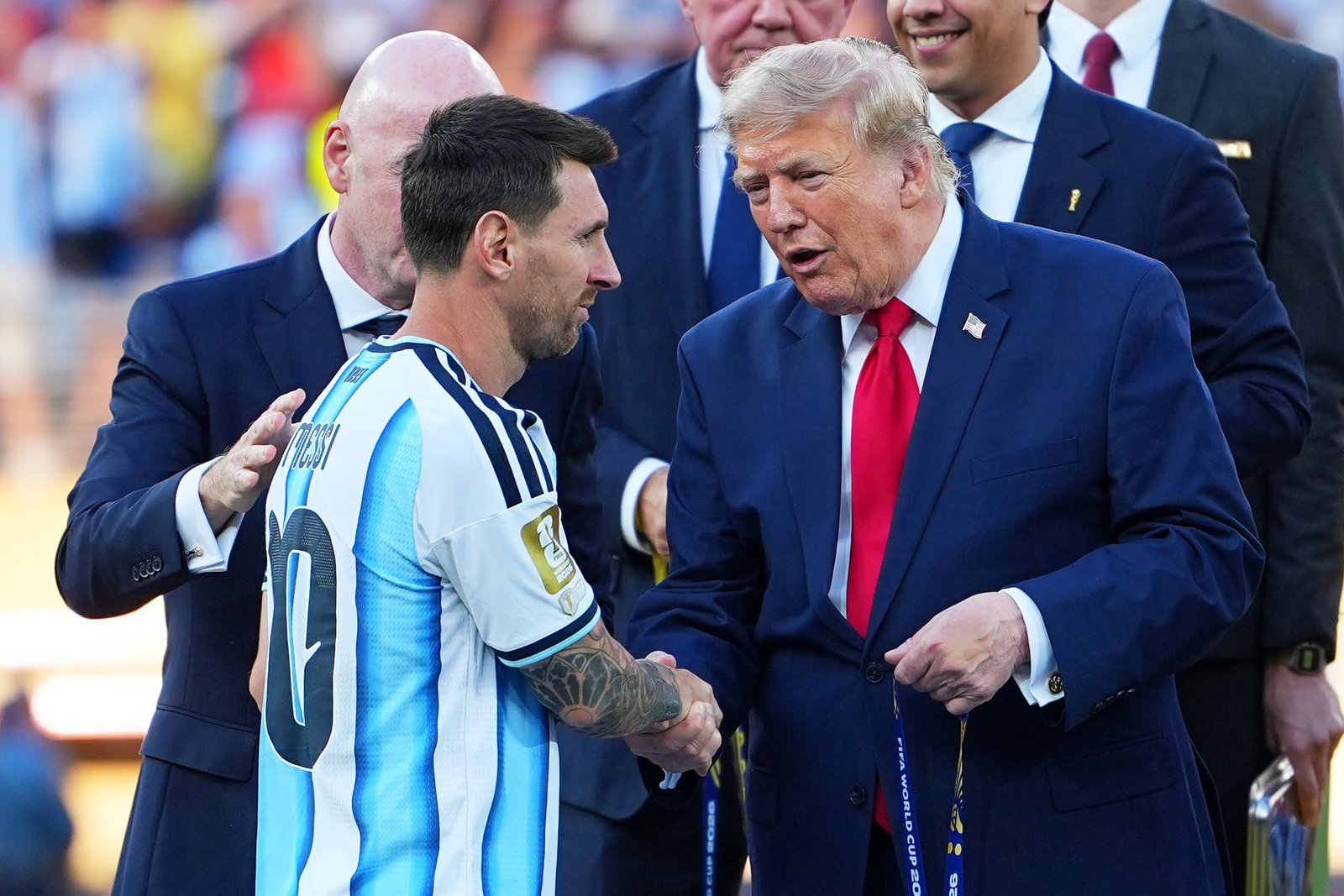
Trump’s presence at the final, joining Infantino for the trophy presentation, drew boos from sections of the crowd, underscoring tensions between politics and sport.
nytimes.com
Despite the off-field noise, Spain’s victory was celebrated for its merit.
Built on tactical cohesion, defensive solidity, and youthful brilliance—exemplified by Yamal—the team overcame defending champions Argentina.
Torres’ winner capped a tournament in which Spain often looked the most complete side.
For Messi, it was a painful end to a storied career. For Yamal, it was confirmation of his superstar trajectory.
FIFA now confronts urgent questions: refereeing reforms, VAR transparency, draw integrity, and safeguards against political influence.
The 2026 World Cup delivered spectacle and expanded participation, but its legacy risks being defined by distrust rather than glory.
As football reflects, ensuring the game’s integrity must take precedence over any single narrative or star.
Disclaimer: This article was compiled using the AI tool Grok on X and may contain inaccuracies
The post Controversy Mars Spain’s Triumph: 2026 World Cup Final Delivers Drama On And Off The Pitch appeared first on The Bulrushes.