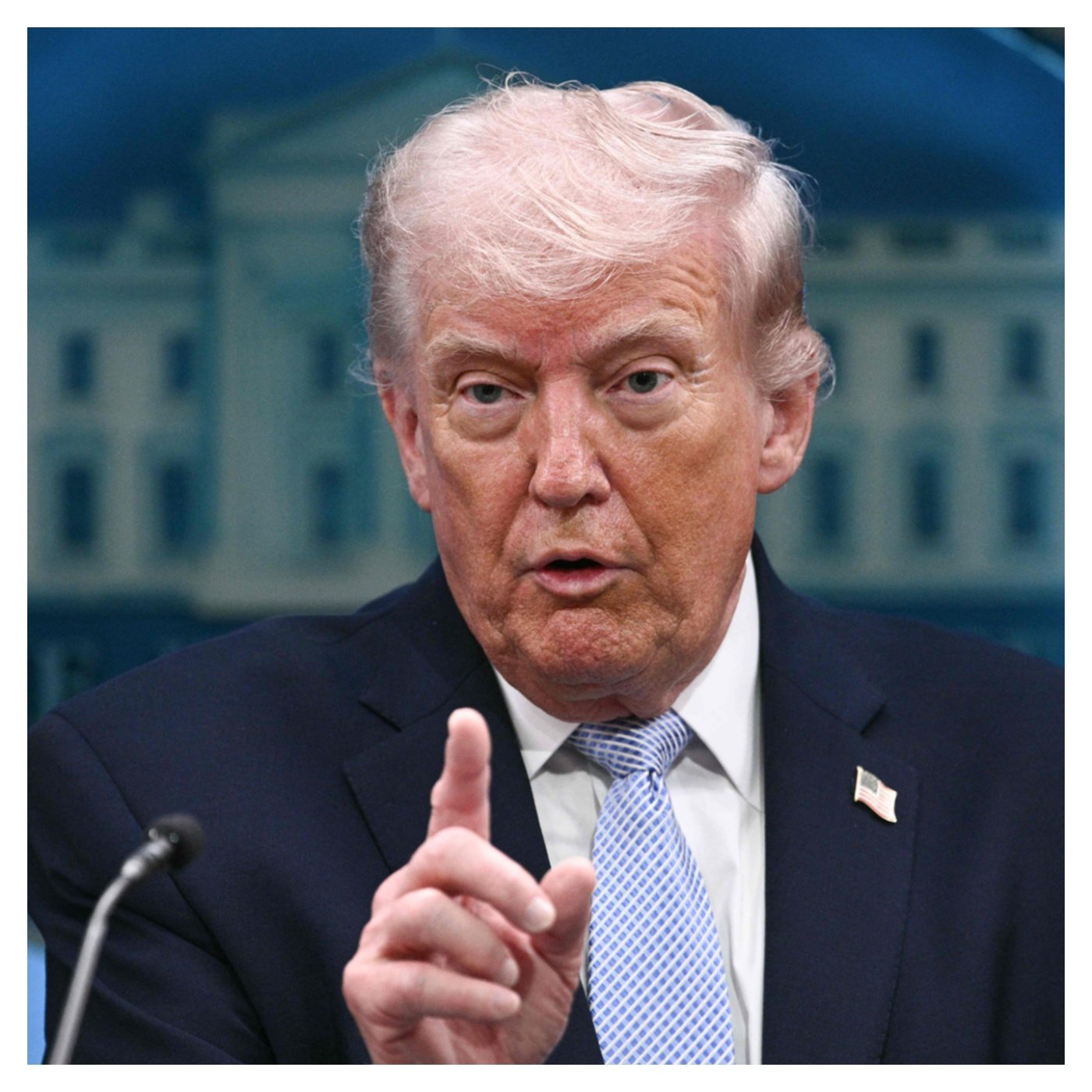

President of the United States of America, Donald Trump has once again criticized Germany’s Chancellor, Friedrich Merz, asserting that he ought to concentrate on “repairing his broken country” and working towards resolving the Russia-Ukraine conflict, while dedicating less time to “interfering” in Iran.
“The Chancellor of Germany should allocate more time to ending the war with Russia/Ukraine (where he has been completely ineffective!),” Trump stated in a social media post.
Merz should prioritize “fixing his broken country,” he continued, “particularly in areas of Immigration and Energy, and spend less time meddling with those who are addressing the Iran Nuclear threat, thus making the world, including Germany, a safer place!”
Trump’s recent remarks followed a day after he indicated that the US military presence in Germany was under review, with a potential “reduction” of troops being contemplated.
Between 36,000 and 39,000 US personnel are stationed in Germany, primarily at its two largest bases in Stuttgart and Ramstein – significantly fewer than during the peak of the Cold War.
Trump’s statements seem to have been triggered by Merz’s unusually forthright comments earlier this week, in which the Chancellor remarked that the US was being “humiliated” by Iran and criticized Washington for lacking an exit strategy from the war.
On Thursday, Merz attempted to adopt a more conciliatory approach during a visit to a German military base in Münster, highlighting the significance of relationships with NATO and the US, while condemning Iran for its refusal to engage in peace talks.
Without directly referencing Trump, Merz expressed his belief in a NATO-led resolution to the conflict in the Middle East, alluding to a “reliable transatlantic partnership.”
German officials were eager to mitigate the dispute. Throughout Thursday, they emphasized that the threats from the US regarding troop withdrawal from German territory were not new – Trump had made similar statements during his first term in office – and they were prepared for such discussions.
During a visit to Morocco, German Foreign Minister Johann Wadephul remarked that not only had Trump made similar statements in the past, but so had Presidents Biden, Obama, and Clinton.
Wadephul noted that Barack Obama had clearly indicated a shift in the concentration of US troops towards the Pacific region. “That might yet happen. Let’s take a look at that together, calmly and thoroughly,” he stated. He further added, “We are prepared for that, we are discussing it closely and in a spirit of trust in all NATO bodies, and we are expecting decisions from the Americans regarding this.”
He mentioned that a “shifting of forces” was already underway, and the German military was gearing up for these changes. “We must take on more responsibilities; we need to develop stronger capabilities,” he emphasized.
However, he also expressed skepticism about the US withdrawing from the Ramstein airbase in southwestern Germany, as it serves an “irreplaceable function for both the United States and ourselves.”
Claudia Major, a prominent expert on transatlantic security at the German Marshall Fund, commented that Trump’s effort to “use Ramstein as leverage” was not unprecedented. “It connects with the discussions we had regarding Greenland, when Europeans were deliberating on how seriously to regard Trump’s threats,” she explained.
While the communications from the US were described as “very unsettling… and we question the extent of their reliability,” she noted that Europeans must learn to reduce their dependence on US support. However, she cautioned that this would likely result in “less security and more instability for all parties involved.”
Roderich Kiesewetter, the defense policy expert for Merz’s Christian Democrats, advised against overreacting to Trump’s remarks. “Troop reductions were announced some time ago and are not surprising,” he conveyed to German media. “The key is that they are executed in an orderly and consensual manner.”
Iran: Focus on fixing your broken country – Trump slams German Chancellor Merz
