Fortune released its 29th annual Most Powerful Women in Business list this week, honoring 100 female executives shaping key sectors of the global economy, including finance, retail, energy, technology, manufacturing, and media.
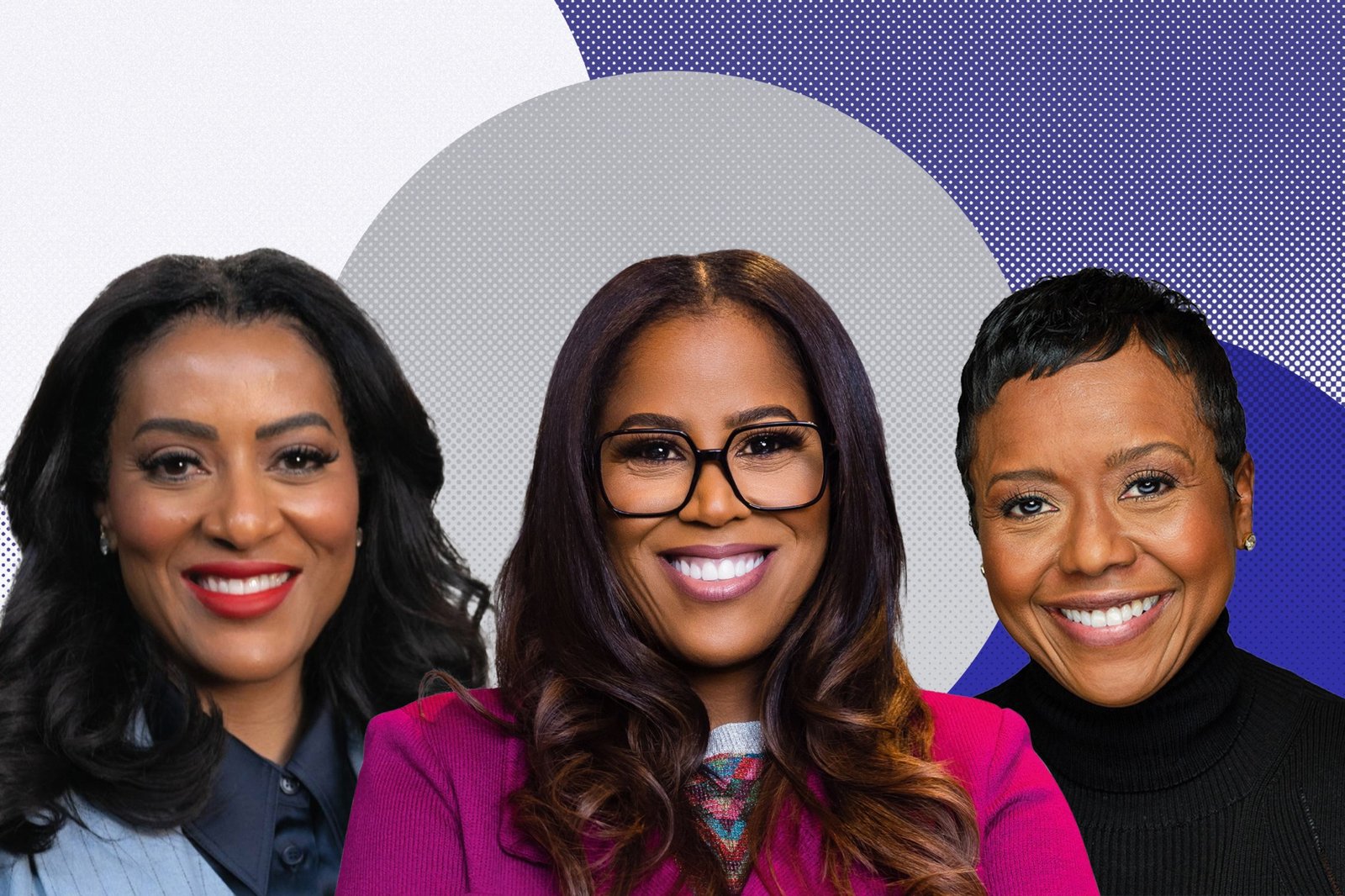
Among this year’s honorees are Black women leading major companies and institutions across retirement services, investment management, retail, chemicals, manufacturing, and energy infrastructure—industries that sit at the center of global capital flows and essential supply chains: Thasunda Brown Duckett, Mellody Hobson, Mpumi Madisa, Mary Vilakazi, Latriece Watkins, Karen S. Carter, and Joi Harris.
While Black women remain underrepresented in the highest levels of corporate leadership, this year’s group occupies roles with significant operational and financial scale, overseeing businesses that manage trillions in assets, run complex global manufacturing systems, and power critical infrastructure networks.
Meet the women:
Thasunda Brown Duckett (No. 7), president and CEO, TIAA
Thasunda Brown Duckett is president and CEO of TIAA, one of the largest retirement-focused financial services firms in the United States, overseeing more than $1 trillion in assets and serving millions of customers.
Duckett is one of only two—soon to be three—Black women currently serving as a Fortune 500 CEO.
She took on the role in 2021 after a long career at JPMorgan Chase, where she spent 17 years in senior leadership positions, including CEO of Chase Consumer Banking and CEO of Chase Auto Finance. Those jobs put her in charge of large-scale operations spanning deposits, lending, and consumer financial services.
On last year’s Fortune 500 list, the company generated $46.9 billion in revenue.
Mellody Hobson (No. 53), co-CEO, Ariel Investments Co-CEO
Mellody Hobson is co-CEO of Ariel Investments, where she leads one of the largest Black-owned investment firms in the United States and shapes its long-term strategy across institutional and individual investing.
She joined Ariel in the early 1990s and rose through the organization over more than two decades, building experience in equity research, portfolio management, and client strategy as the firm expanded its footprint in global markets. Recently, she’s staked out a leadership position in women’s sports, launching the $1 billion sports investment vehicle Project Level.
Hobson was the first Black woman to chair a Fortune 500 board when she became board chair at Starbucks (she left the board in 2025). She still sits on the board of JPMorgan Chase, contributing to governance at one of the world’s largest financial institutions.
Mpumi Madisa (No. 79), CEO, Bidvest
Mpumi Madisa is CEO of Bidvest, one of South Africa’s largest diversified business groups, with operations spanning services, distribution, freight, and industrial products.
She joined Bidvest in 2003 and spent more than a decade rising through the organization across procurement, services, and operations, steadily expanding her leadership across both commercial and operational functions before becoming CEO in 2019.
Mary Vilakazi (No. 83), CEO, FirstRand
Mary Vilakazi made history in April 2024 when she became the first woman to serve as CEO of FirstRand Group, one of Africa’s largest financial institutions.
Before climbing the ranks at MMI Holdings and eventually becoming CEO of FirstRand, Vilakazi was one of PwC’s youngest global partners at just 27.
Latriece Watkins (No. 87), president and CEO, Sam’s Club
Latriece Watkins, a newcomer to the list, is president and CEO of Sam’s Club, Walmart’s membership-based warehouse retailer, a role she assumed on Feb. 1.
She brings nearly three decades of experience at Walmart, where she has held leadership roles across merchandising, store operations, real estate, human resources, and Sam’s Club. Prior to becoming CEO, she served as executive vice president and chief merchandising officer for Walmart U.S. Read Fortune’s feature about Watkins here.
Karen S. Carter (No. 88), COO and CEO-elect, Dow
Karen S. Carter is a newcomer to this year’s Fortune Most Powerful Women in Business list following her appointment as CEO of Dow, where she will be one of the few Black women leading a Fortune 500 company. She assumes the role in July 2026, succeeding longtime CEO Jim Fitterling.
A more than 30-year veteran of Dow, Carter has held leadership roles across operations, human resources, sales, marketing, and business strategy, giving her broad experience at the $40 billion materials science giant.
Joi Harris (No. 99), president and CEO, DTE Energy
Joi M. Harris is president and CEO of Michigan energy provider DTE Energy, where she assumed the role in September 2025 after previously serving as president and chief operating officer. She’s one of two (with Carter, soon to be three) Black women serving as Fortune 500 CEOs right now. A newcomer to the Most Powerful Women list, she has spent more than three decades at the company, building her career across gas operations and infrastructure systems since joining in 1991. DTE is at the center of complex economic and energy issues like the power needs of data centers.
Collectively, this year’s Black women honorees reflect a cross-section of industries that underpin the global economy—from retirement security and investment management to industrial manufacturing and energy infrastructure. While their paths differ, each leads organizations defined by scale, complexity, and operational reach.
This story was originally featured on Fortune.com