INFOGRAPHIC/EYEWITNESS MEDIA GROUP
By PATRICK MAYOYO
President William Ruto’s decision to initiate a national conversation aimed at shaping Kenya’s long-term development blueprint beyond Vision 2030 deserves recognition as a historic opportunity for the country to confront the deeper questions that have shaped its political journey since independence.
Beyond the promises of economic transformation, this moment offers Kenyans a rare platform to examine the foundations of governance itself; how power is acquired, how it is exercised, who benefits from it and whether the political system truly reflects the diversity of the nation.
At the heart of this conversation are two fundamental questions that Kenya has struggled to resolve: the winner-takes-it-all nature of presidential politics and the persistent reality that the highest office in the land has largely remained within the political orbit of two communities, the Kikuyu and the Kalenjin.
These are not merely questions about individuals or electoral contests. They go to the core of Kenya’s democratic experiment, touching on political inclusion, national identity, equality and the meaning of representation in a multi-ethnic society.
As the country moves towards the 2027 General Election, an uncomfortable but necessary debate is emerging. Is it sustainable for a nation of more than 50 million people, with more than 40 ethnic communities, to continue operating a political system where presidential power appears concentrated among a small number of communities?
For decades, politicians have often avoided this question because it exposes the most sensitive fault lines in Kenyan politics. Yet ordinary citizens are increasingly raising it openly — in communities, workplaces, places of worship, universities and across digital platforms.
The issue is not about denying any community’s right to seek national leadership. Rather, it is about examining whether Kenya’s political architecture provides equal opportunity for all citizens to compete for and access the highest levels of power.
Indeed, many of the country’s governance challenges; including political exclusion, electoral tensions and the tragic violence that followed the disputed 2007 presidential election have been linked to unresolved questions surrounding the distribution and control of political power.
Therefore, as Kenya designs its post-Vision 2030 future, the national conversation must extend beyond economic growth targets and infrastructure projects. A credible development blueprint must also confront the quality of governance, institutional accountability, the rule of law, citizen participation and the fair distribution of national opportunities.
Ultimately, Kenya’s future cannot be built solely on economic ambition. It must also be founded on a political system where every citizen feels represented, every community feels included and power is viewed not as the possession of a few, but as a shared national responsibility.
Some Mt Kenya voters are even arguing that the region should deliberately stay out of the presidential contest in 2027 as a form of political atonement for the overwhelming support it gave President Ruto in 2022.
Whether such a position is politically wise is another matter. What is undeniable, however, is that the debate has moved beyond the traditional language of political alliances and entered the more profound territory of who feels entitled to govern Kenya, who feels excluded from power and whether the presidency belongs to communities or citizens.
The controversy is not without historical foundation. Kenya’s own government promotional material has described the country as having 44 tribes, although other official government sources use different counts and classifications of ethnic communities.
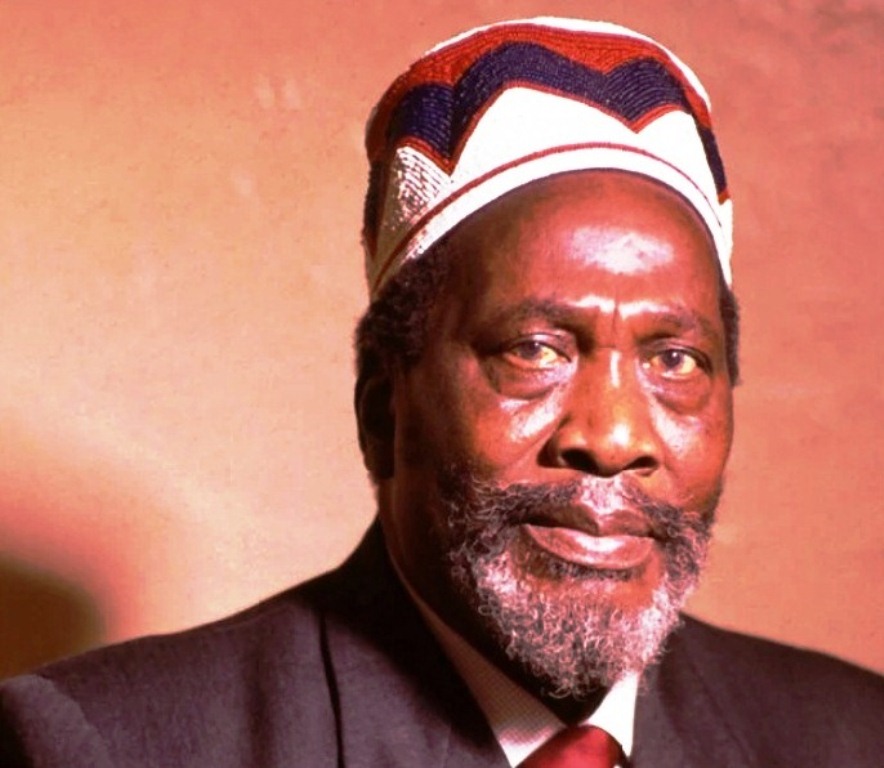
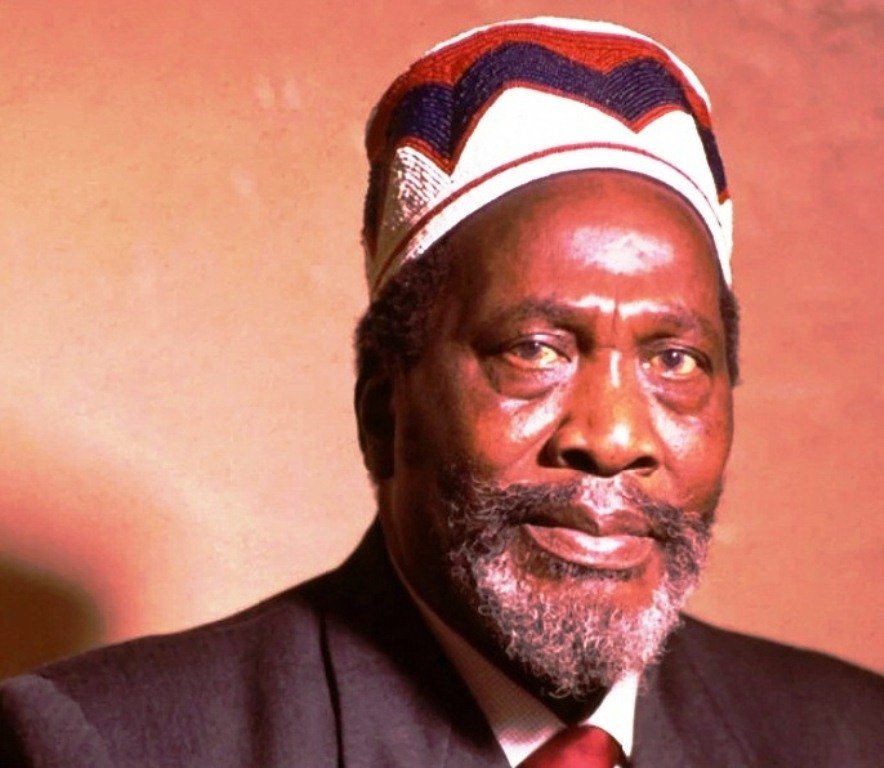
Independence President Jomo Kenyatta. PHOTO/UGC.
The important point is not the precise number. The important point is that Kenya is an extraordinarily diverse country, yet its presidency has been occupied since independence by Jomo Kenyatta, Daniel arap Moi, Mwai Kibaki, Uhuru Kenyatta and William Ruto; a succession in which the presidency has alternated between Kikuyu and Kalenjin leadership.
Jomo Kenyatta, a Kikuyu, became Kenya’s first President in 1964 and remained in office until his death in 1978. He was succeeded by Daniel arap Moi, a Kalenjin, who ruled for 24 years. After Moi’s retirement in 2002, the presidency returned to a Kikuyu through Mwai Kibaki, who served for ten years, followed by Uhuru Kenyatta for another ten. In 2022, William Ruto returned the presidency to Kalenjin leadership.
Consequently, by August 2027, 64 years after independence, Kenya’s highest political office will have been occupied exclusively by leaders from these two communities, assuming the constitutional electoral timetable remains unchanged.
This historical pattern is striking not because Kikuyus or Kalenjins have somehow committed the offence of producing presidents, but because repeated dominance can eventually create the perception that the highest office of the republic is socially inherited rather than genuinely open to all.
That perception is politically dangerous. It was precisely this concern that former President Uhuru Kenyatta raised before the 2022 election when explaining his decision to support Raila Odinga.
His argument, in essence, was that he did not want the presidency to appear to be the preserve of two communities. The argument deserves serious consideration, even by those who disagree with his political choices.
More recently, Siaya Governor James Orengo has also framed the 2027 debate around the need to break the idea that State House belongs to particular communities.
Orengo has backed Nairobi Senator Edwin Sifuna’s presidential ambitions, while Sifuna’s political movement has increasingly presented his candidacy as an attempt to create a new national political alternative.
Yet there is an important distinction that Kenya must not lose sight of: breaking ethnic domination must not become another form of ethnic exclusion.
That is where the debate becomes complicated. The presidency belongs to citizens, but perceptions of exclusion matter. The strongest argument against ethnic rotation is a compelling democratic one. The presidency of Kenya does not belong to Kikuyus, Kalenjins, Luos, Luhyas, Kambas, Somalis, Kisiis, Maasais or any other community. It belongs to the Kenyan people.
The Constitution is explicit on political rights. Every adult citizen has the right to vote and to be a candidate for public office, subject to the constitutional requirements. The Constitution does not impose an ethnic quota on the presidency. A presidential candidate must be a citizen by birth, satisfy the relevant qualifications and secure the required geographical and national support.
Therefore, it would be fundamentally undemocratic to tell a Kenyan candidate: you cannot run because someone from your community has already been President.
A Kikuyu candidate should not be punished for the political success of Jomo Kenyatta, Mwai Kibaki or Uhuru Kenyatta. Likewise, a Kalenjin candidate should not be disqualified morally or politically because Moi and Ruto have occupied State House. Democracy is about individual political rights, not collective guilt.
But there is an equally powerful counterargument. Formal equality is not always the same as perceived equality. A country can proclaim that every citizen has an equal right to contest an election while its political culture repeatedly produces the same groups at the top.
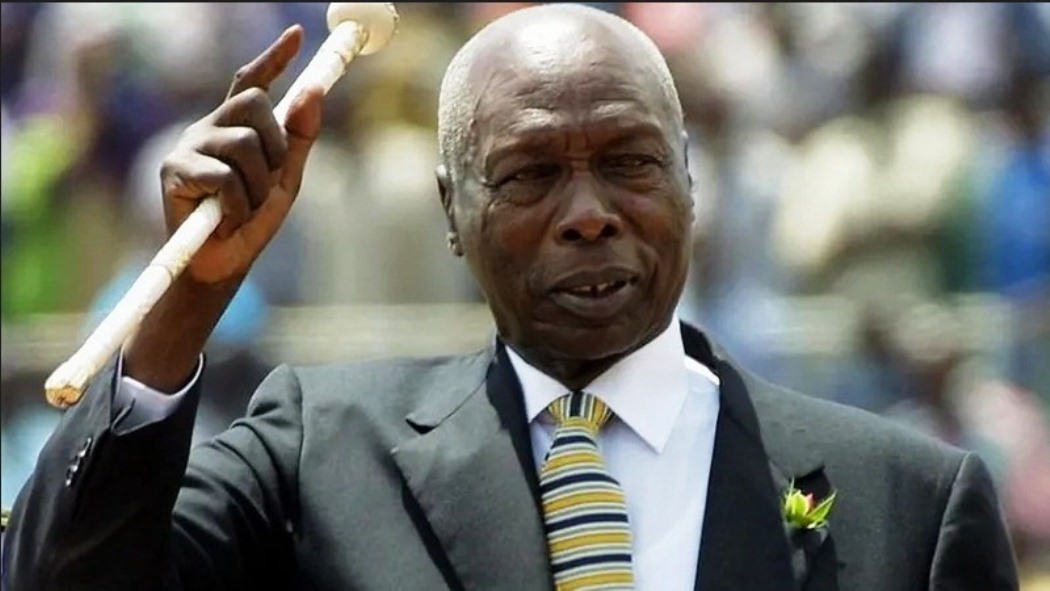
Kenya’s second President Daniel arap Moi. PHOTO/UGC.
If this happens for decades, citizens from other communities may begin to conclude that the competition is technically open but politically structured in favour of established ethnic coalitions. That is when democracy begins to lose something more important than an election: public confidence in the fairness of the political system.
The danger is not that every Kikuyu or Kalenjin citizen benefits from presidential power. That would be an absurd generalisation. Millions of Kikuyus and Kalenjins struggle with unemployment, high living costs, taxation, inadequate public services and corruption just like millions of Kenyans from every other community. The real problem is the political symbolism.
When communities repeatedly see members of only two communities occupying the presidency, they can begin to associate national power with ethnicity. And once State House becomes psychologically identified with ethnic ownership, presidential elections stop being contests over competing visions of Kenya and become contests over which community gets access to the national machinery next.
That is profoundly corrosive. The greatest danger is not ethnic presidency, it is ethnic citizenship Kenya’s most serious problem, therefore, is not that Kikuyus and Kalenjins have produced presidents.
It is the possibility that Kenyans may begin to believe that the presidency is the principal instrument through which their communities can secure dignity, influence, economic opportunity and protection. That is a dangerous political equation.
If citizens believe that our person must be in State House so that our people can benefit, then elections become existential battles. Losing an election ceases to mean losing political office for five years. It begins to mean that one’s community has been defeated.
History has already demonstrated how dangerous such thinking can become. The disputed 2007 presidential election was followed by devastating violence that killed more than 1,000 people and displaced hundreds of thousands.
The crisis exposed the frightening extent to which political competition could become intertwined with ethnic identity. It also contributed to a national reckoning that ultimately produced the 2010 Constitution and its stronger emphasis on devolution, rights and institutional checks.
The lesson from 2007 should never be forgotten: when political power is perceived as ethnic property, political defeat can become a communal humiliation.
That is why the 2027 debate deserves greater seriousness than the usual electoral calculations. Kenya needs inclusion, not merely rotation. This is where the concept of consociational democracy, associated particularly with political scientist Arend Lijphart, becomes relevant.
Lijphart’s argument is especially useful for deeply divided societies. Rather than assuming that democracy must always mean winner-takes-all majoritarianism, consociational democracy seeks institutional mechanisms that enable different social groups to participate meaningfully in governance. Its four classic elements are grand coalition, proportionality, mutual veto and segmental autonomy.
The idea is not simply that every community must take turns occupying State House. That would be an extremely crude interpretation of consociationalism. The deeper principle is that no major section of society should feel permanently excluded from the state.
Belgium offers one example of how a deeply divided society can construct institutions around power-sharing, coalition-building and accommodation between linguistic communities.
The objective is not to determine which community deserves the presidency next. It is to prevent permanent domination and encourage political negotiation. Kenya should absorb that lesson without mechanically copying Belgium.
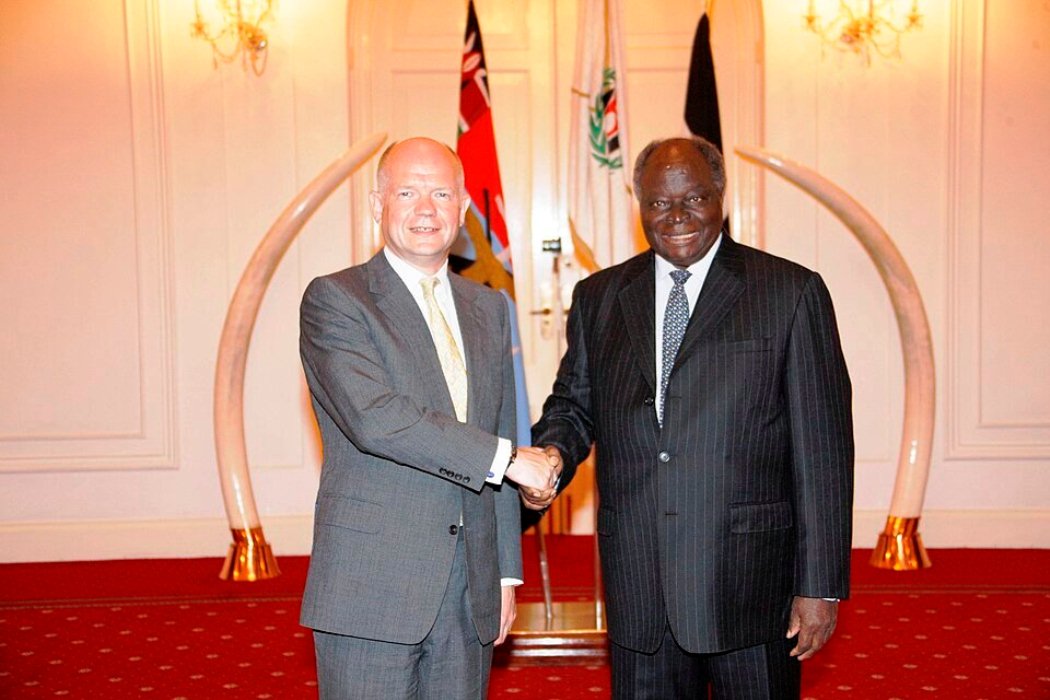
The country does not need a constitutional rule stating that the presidency must rotate among ethnic groups. Such an arrangement could actually make ethnicity more important, not less. It could transform the presidency into a scheduled ethnic entitlement: it is now our turn. That would be a dangerous development.
Instead, Kenya needs institutions and political practices that make every community believe it can participate meaningfully in national power regardless of who wins the presidency.
This is where the work of Nigerian political scientist Rotimi T. Suberu becomes instructive. His analysis of Nigeria’s federal character principle examines how institutional arrangements can mitigate ethnic inequality and promote inclusion.
Crucially, the lesson is not merely to distribute jobs among ethnic groups; it is to construct institutions that reduce the feeling of permanent exclusion. That distinction is vital for Kenya.
The answer to ethnic dominance cannot be ethnic entitlement. The 2027 election risks becoming another referendum on ethnic arithmetic unless political leaders deliberately change the conversation.
Already, political formations are positioning themselves for the contest. Sifuna’s camp has declared its intention to pursue a presidential bid, while Orengo has backed him and argued for an alternative political direction. At the same time, President Ruto enters the next election as an incumbent seeking another mandate.
The danger is that the political class will reduce all this to a crude mathematical formula: Kikuyu plus Kamba plus Luhya plus Luo equals victory; Kalenjin plus this community plus that community equals another victory.
If that happens, Kenya will have learnt nothing. A presidential election should not be a census conducted with ballot papers. The more dangerous consequence is that politicians will continue telling communities that they need their person in State House in order to protect themselves from other communities. This rhetoric creates political fear, and fear is one of the most powerful tools of ethnic mobilisation.
A politician who cannot persuade voters with a programme can always persuade them with an enemy. That is why the 2027 campaign must be subjected to a much higher standard.
Kenyans should ask: What will you do about unemployment? What is your plan for public debt? How will you reduce the cost of living? How will you reform the police? What will you do about corruption? How will you strengthen the judiciary and Parliament? What will you do about inequality? How will you create opportunities for young people?
And then comes the most important question of all: Will your government belong to Kenyans, or to the coalition that helped you win?
For decades, the central challenge facing Kenya’s presidency has been the persistent transformation of national power into a vehicle for ethnic patronage. Successive administrations have too often treated victory at the ballot box not as a mandate to serve the entire republic, but as an opportunity to reward political allies and their tribal constituencies.
The result has been a perception that key state positions; from Cabinet Secretaries and Principal Secretaries to parastatal leadership and heads of public institutions, are prizes reserved for communities aligned with the winning coalition.
This has entrenched the damaging belief that the presidency exists primarily to empower “our own” rather than to serve all Kenyans, giving rise to the deeply corrosive politics of “it is our time to eat.”
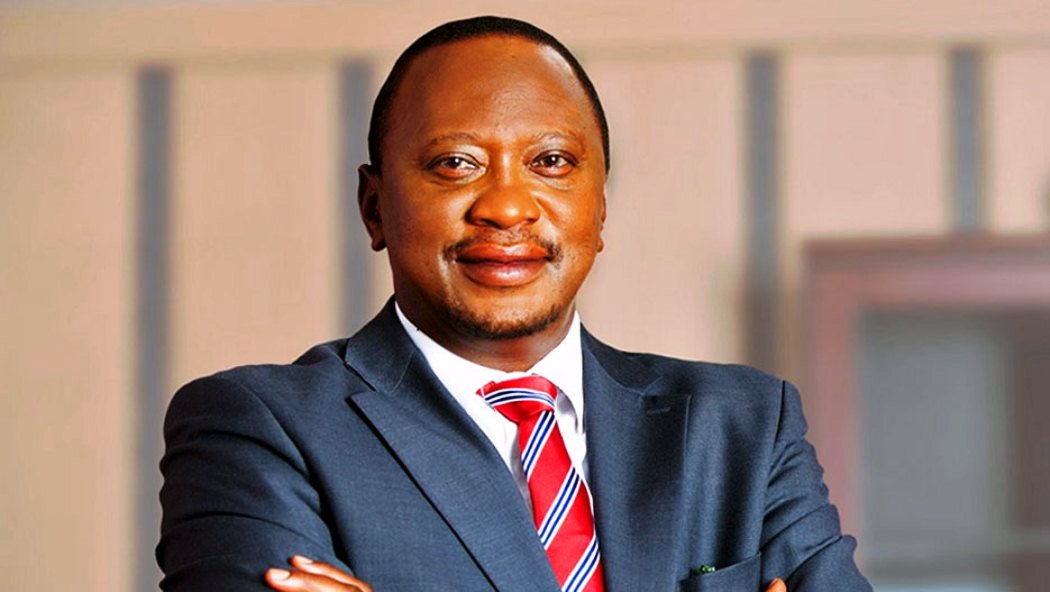
Retired President Uhuru Kenyatta who was the country’s 4th President. PHOTO/UGC.
The defining question for the 2027 General Election should therefore not simply be who captures State House, but what kind of nation Kenya wants to become. The election presents an opportunity to move beyond the narrow and exclusionary interpretation of power that has dominated our politics for decades.
The winner-takes-all model embedded in Kenya’s political system must give way to a more inclusive framework of governance, one where the presidency represents the collective aspirations of citizens rather than the interests of the ethnic communities that form the winning coalition.
A modern nation-state cannot be built on the logic of political exclusion. The legitimacy of any government must be measured not only by how it rewards those who supported it, but by how it protects and incorporates those who did not. The strength of a democracy lies in ensuring that every Kenyan feels represented, regardless of their voting choice, region, or community background.
For this reason, the 2027 election must not be reduced to a contest between political coalitions seeking to distribute government as a collection of “shareholder” benefits, a concept that gained prominence after the 2022 General Election.
Kenya cannot continue to operate as though political victory grants ownership rights over the state. A government is not a private enterprise belonging to its supporters; it is a public institution entrusted to serve the entire population.
The coalition that wins the 2027 General Election must therefore embrace a new philosophy of leadership: one that deliberately brings together talent, experience, and representation from across the country, including communities that voted against it.
That is the essence of building a nation-state. Excluding citizens from government because of their political choices only deepens division, while inclusion strengthens national unity.
Ultimately, the future of Kenya’s democracy depends on redefining the meaning of power. The presidency must cease to be viewed as the property of a tribe, a coalition, or a political class. It must be recognised for what it truly is, a constitutional responsibility held in trust for every Kenyan citizen.
The suggestion by some Mt Kenya voters that the region should refuse to produce a presidential candidate in 2027 deserves examination, but not romanticisation.
It is understandable as political remorse. Many voters who supported Ruto in 2022 may now feel disappointed by the direction of government and may want to demonstrate that their community can no longer be taken for granted.
But deliberately withdrawing from the presidential race because one’s community produced previous presidents would establish a dangerous precedent.
If ethnic rotation becomes the rule, what happens when a community is told that it is no longer its turn? What happens to a talented candidate who has the qualifications, national support and constitutional right to run?
Kenya would merely replace one injustice with another. The objective should therefore not be “Kikuyus should step aside” or “Kalenjins have had enough time.”
The objective should be much more ambitious: No Kenyan should ever feel that his or her community must control State House in order to belong to Kenya. That is the real national project.
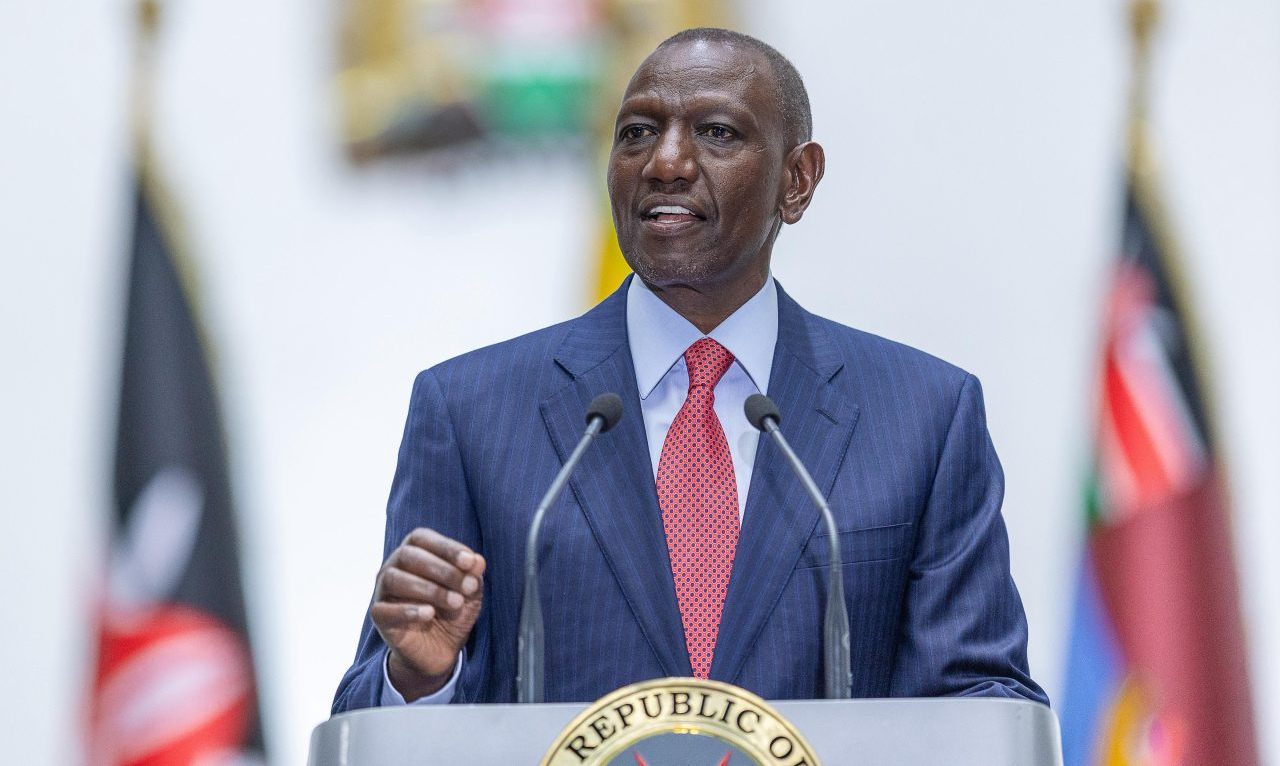
Kenya’s 5th President William Ruto who is seeking a second term in 2027. PHOTO/PSCU.
Nevertheless, the argument that Kenya should simply ignore the historical pattern because elections are free is also insufficient. Democracy is not merely the right to vote every five years.
It is also the development of a political culture in which citizens trust that institutions are impartial, leadership is accessible and public resources are not the private property of those who win elections.
A political system can therefore be constitutionally democratic while remaining socially exclusionary. That is why Kenya should examine the concentration of presidential power together with ethnic politics.
The presidency has historically carried enormous political, economic and symbolic power. When the stakes of winning State House are extremely high, communities naturally become more anxious about who controls it.
The solution is therefore not simply to change the ethnicity of the president. It is to reduce the capacity of the presidency to determine who gets what.
Devolution was a major step in this direction. Stronger Parliament, an independent judiciary, professional public institutions, transparent procurement, equitable development and accountable county governments are equally important.
If a Luo, Luhya, Kamba, Kisii, Somali, Maasai, Mijikenda, Meru or any other Kenyan can become President without his community believing that its survival depends on his victory, then Kenya will have defeated tribalism more effectively than any ethnic rotation arrangement ever could.
Ultimately, the question confronting Kenya in 2027 is not simply whether the next President should be Kikuyu, Kalenjin or come from another community. That is too narrow a question for a country approaching seven decades of independence.
The bigger question is whether Kenya can finally build a political system in which ethnicity ceases to determine the psychological ownership of the state.
If a Kikuyu wins fairly, he or she should be President of Kenya. If a Kalenjin wins fairly, he or she should be President of Kenya. If a Luo, Luhya, Kamba, Kisii, Somali, Maasai, Meru, Mijikenda or candidate from any other community wins fairly, that person should equally be President of Kenya.
But victory must no longer mean that one community has captured the state. That is the distinction Kenya must make.
The country should not be looking for an ethnic turn-taking arrangement. It should be looking for a national political order in which no community has to wait for its turn because no community owns the presidency in the first place.
The 64-year pattern of Kikuyu-Kalenjin presidential dominance is therefore neither a crime committed by those communities nor a historical accident that Kenya should simply ignore. It is a political fact with consequences for how citizens perceive belonging, opportunity and power.
And if the pattern continues, the danger is not that Kenya will suddenly cease to be democratic. The more subtle and more serious danger is that Kenyans will continue participating in democratic elections while increasingly believing that the real competition is not about ideas, but about which ethnic coalition gets to control the state next.
That is the trap Kenya must escape. The 2027 election should therefore not be a contest over whose tribe deserves State House. It should be a test of whether Kenya has matured beyond the politics of ethnic possession.
The country does not need a Kikuyu President, a Kalenjin President, a Luo President, a Luhya President or a Kamba President. Kenya needs a Kenyan President.
And, more importantly, Kenya needs a state in which every citizen can say that even when their candidate loses, their country has not.