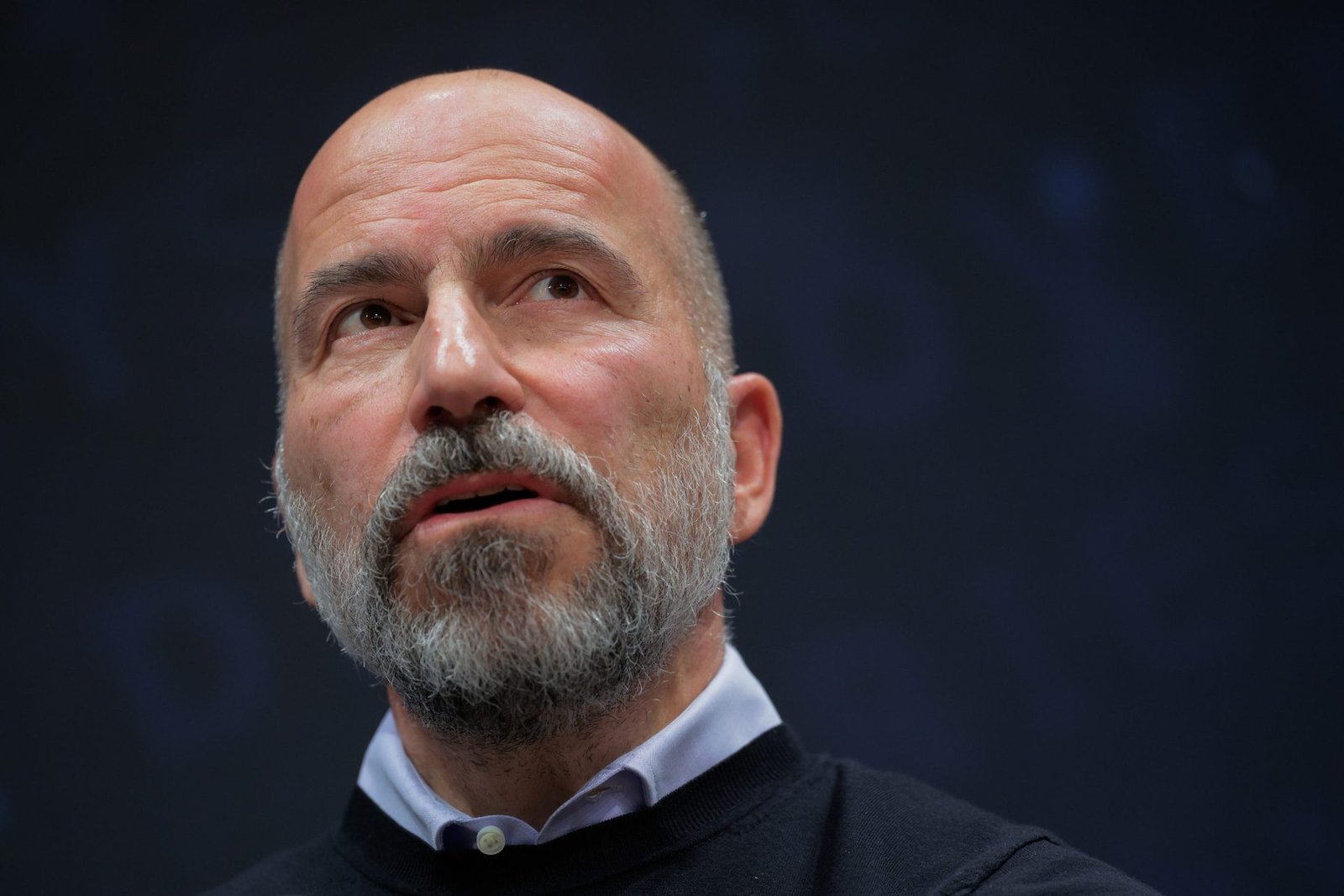
On Wednesday, Uber CEO Dara Khosrowshahi announced the company will be cutting 3,300 jobs, a tenth of its workforce worldwide. It’s the biggest cuts since Covid, when the ride-share app cut 14% of its workforce, amounting to 3,700 jobs.
“This wasn’t a decision we made lightly, because it will have a real impact on our teammates and friends who have worked hard for Uber,” Khosrowshahi wrote in a letter to employees. “It’s important to say that these changes are about how we’re organized and what we’re prioritizing, not about anyone’s contributions to Uber, which we will always value.”
Khosrowshahi said that the cuts were not because of a downturn in the economy—in fact he acknowledged Uber “has grown by orders of magnitude” in the past five years. Instead, it was simply because Uber had gotten too big to manage, and the cuts would help the company run it “faster and smarter.”
Uber made a 20% reduction in the number of employees who were seven layers or more removed from the CEO. The company also cut the number of “micro-teams” (those with only one or two direct reports) by half, and combined each delivery operations team in the restaurant, retail and direct sectors into one big team.
“The outcome is a simpler org chart geared toward building versus managing,” he wrote. “Running these three businesses separately made sense in their early days, but that structure is no longer serving us at scale.”
Khosrowshahi said the decision was informed by conversations with employees who indicated that the company spent too much time coordinating instead of “building, shipping or serving customers.”
Uber shares were up 1.61% at $76.45 on closing time.
Khosrowshahi said the expected savings from making Uber leaner will be reinvested “in growth, innovation, and the capabilities that will matter most over the coming years,” one of which is putting more self-driving cars on the road in Uber’s network.
“Our opportunity from here is enormous: we have the chance to bring Uber to hundreds of millions more people; to invest even more in drivers, couriers and merchants; and to innovate across our core businesses and build the autonomous future,” Khosrowshahi wrote.
Uber’s president and chief operations officer Andrew MacDonald said that nobody will own a car in the next 15 to 20 years because it’s a depreciating asset that sits idle most of the time, and that other forms of transport like self-driving cars and bikes will fill the void.
“I think autonomous vehicles will be part of that,” MacDonald said last month.
Uber’s ongoing $10 billion bet on self-driving cars
Uber originally launched its autonomous vehicle unit Advanced Technologies Group in 2020—an over $7 billion valuation that accounted for more than 10% of its $61 billion market cap at the time. But Uber ended up selling the research unit of it to a startup by the end of the year, recognizing that it didn’t have the money to develop its own robotaxis.
But the company didn’t give up on self-driving cars, pivoting to deploying them with partners like Rivian, Baidu, and Pony.ai in the Uber network. The ride-share app now expects to commit $10 billion to help bring them to market at scale, with 120,000 cars committed by partners.
Khosrowshahi described the goal on the Q2 2026 earnings call as making Uber the “world’s leading commercialization platform for autonomous vehicles.”
“Those results give us the ability to continue investing from a position of strength,” Khosrowshahi said. “We also continue to invest behind one of the largest opportunities in Uber’s history: autonomous vehicles.”
This story was originally featured on Fortune.com