Pretoria – The University of Pretoria (UP) has announced that researchers have developed a low-cost screening device to expand access to voice care in South Africa.
The university on Tuesday, 21 April 2026, stated that a groundbreaking, low-cost, smartphone-compatible device was being tested as part of ongoing research.
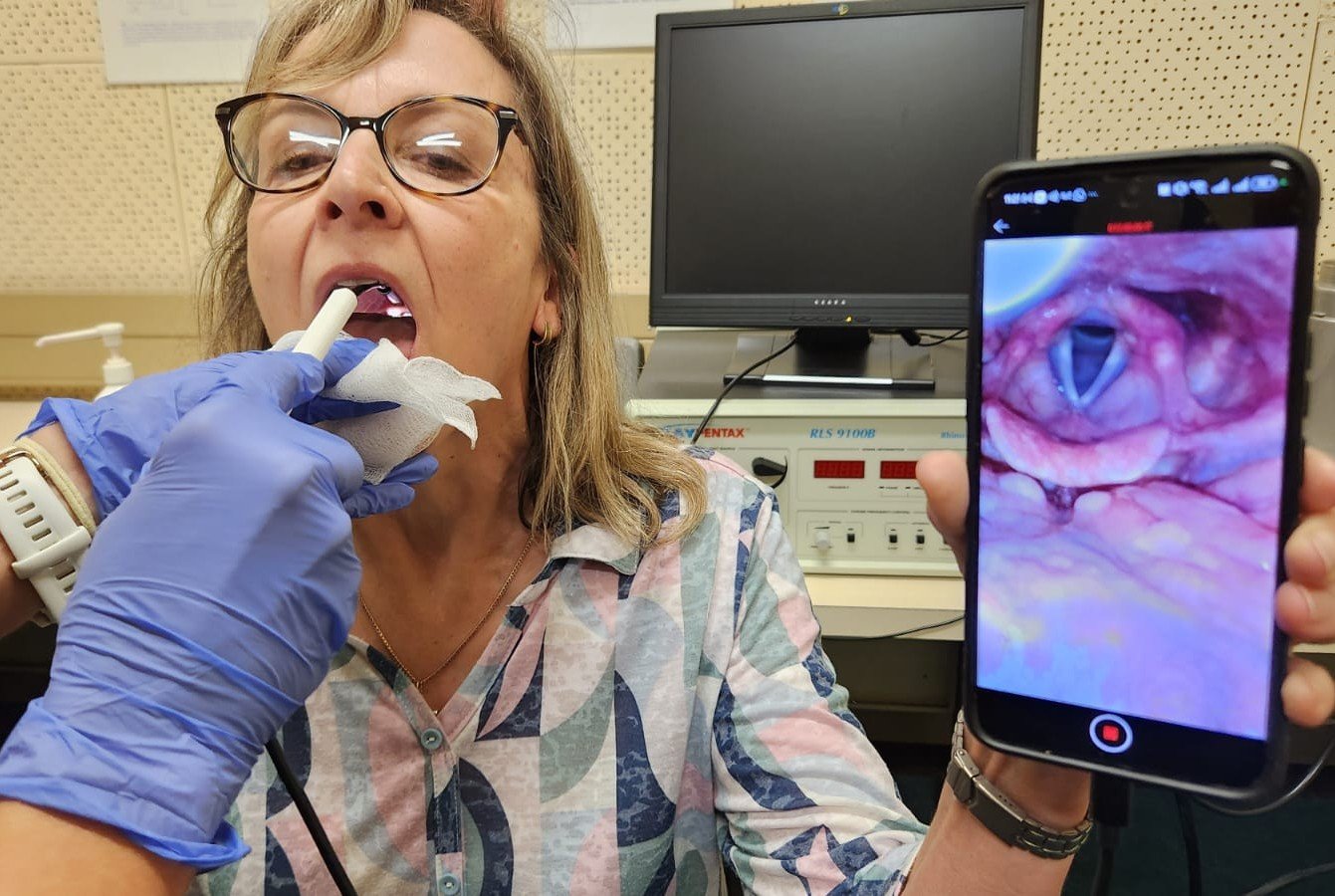
The device enables clinicians and trained users to take a close-up look at the voice user’s vocal cords.
“Our aim was to develop a solution that is more portable, more affordable, and easier to integrate into different healthcare contexts,” stated Dr. Maria du Toit, a Lecturer in Speech-Language Pathology and member of the research team.
The university revealed that voice disorders were more common than many people realise.
International estimates suggest that up to one in five people will experience a voice problem at some point in their lives, with a higher risk for those who rely heavily on their voices for work, such as teachers, healthcare workers, and call centre agents.
Last week on World Voice Day, Thursday, 16 April 2026, researchers at the University of Pretoria (UP) invited the public to take part in free voice checks using the new, locally developed device.
UP explained that the device enables clinicians and trained users to take a close-up look at the voice user’s vocal cords by capturing high-resolution images and video using widely available mobile technology.
Traditionally, this type of examination – known as laryngoscopy – requires expensive equipment and specialist doctors, making it difficult to access in many parts of South Africa.
“Your voice is something you use every day – whether for work, social interactions, or simply being heard,” said Professor Jeannie van der Linde, who is leading the research team and is Head of UP’s Department of Speech-Language Pathology and Audiology in the Faculty of Humanities.
“Yet many people ignore early warning signs of vocal problems.”
Professor Van der Linde added: “International estimates suggest that up to one in five people will experience a voice problem at some point in their lives, with a higher risk for those who rely heavily on their voices for work, such as teachers, healthcare workers, and call centre agents.
“Despite this, access to specialised diagnostic services remains limited, particularly outside major urban centres.”
The research and device are part of a broader effort to rethink how vocal health services are delivered in South Africa.
“Our aim was to develop a solution that is more portable, more affordable, and easier to integrate into different healthcare contexts,” said Dr. Maria du Toit, a Lecturer in Speech-Language Pathology and member of the research team.
“Many people ignore early signs like hoarseness or vocal fatigue, often because they don’t have easy access to assessment services,” Dr. Du Toit said.
“If we can identify these issues earlier, we can intervene sooner and potentially prevent more significant problems from developing.”
The development of the device forms part of ongoing efforts within the department to explore how mobile and digital technologies can be used to increase the availability of vocal health assessment and care.
Dr. Roxanne Malan, a postdoctoral fellow, speech therapist, and research team member, highlights the importance of designing technology that balances functionality with affordability and ease of use.
“We wanted to ensure that the device is not only clinically useful but also practical in a range of settings, including those with limited resources,” she says.
“The goal is to make vocal health screening more widely available without compromising on quality.”
The technology, which has not been named yet, is being developed at UP and is currently undergoing testing to compare its performance with gold-standard laryngoscopy.
“We started feasibility testing in June 2025, and preliminary tests have been very positive, demonstrating that the device is usable and produces high-quality images of the relevant structures,” Dr. Malan said.
“It consists of a low-cost, off-the-shelf borescope – typically used industrially – adapted with a 3D-printed handle to ensure optimal placement of the scope in the patient’s mouth, as well as the correct angle for visualisation.
“We have also assessed its safety for human use and its ability to be properly disinfected.”
In addition to testing the device, the World Voice Day initiative sought to increase general awareness about the importance of vocal health.
“Your voice is central to how you communicate, work and engage with others,” Dr. Du Toit said.
“Taking care of it should be seen as an essential part of overall health, not something to think about only when there is a problem.”
Dr. Malan said the team’s vision is for the scope to be readily available as a screening device in public hospitals and clinics all over South Africa and other low- and middle-income countries.
“But we still foresee numerous phases of testing to ensure that it can be used by a range of healthcare professionals, and that it makes a significant difference in the target healthcare sectors.
“We will name and launch it at a stage when this has been done.”
Dr. Du Toit said members of the public can support the research by booking their free voice health check.
“By attending, you’re not only taking care of your own vocal health… you’re helping researchers develop solutions that could make voice care more easily available to thousands of people who currently don’t have access to these services.”
The post UP Researchers Develop Low-Cost Voice Screening Device appeared first on The Bulrushes.