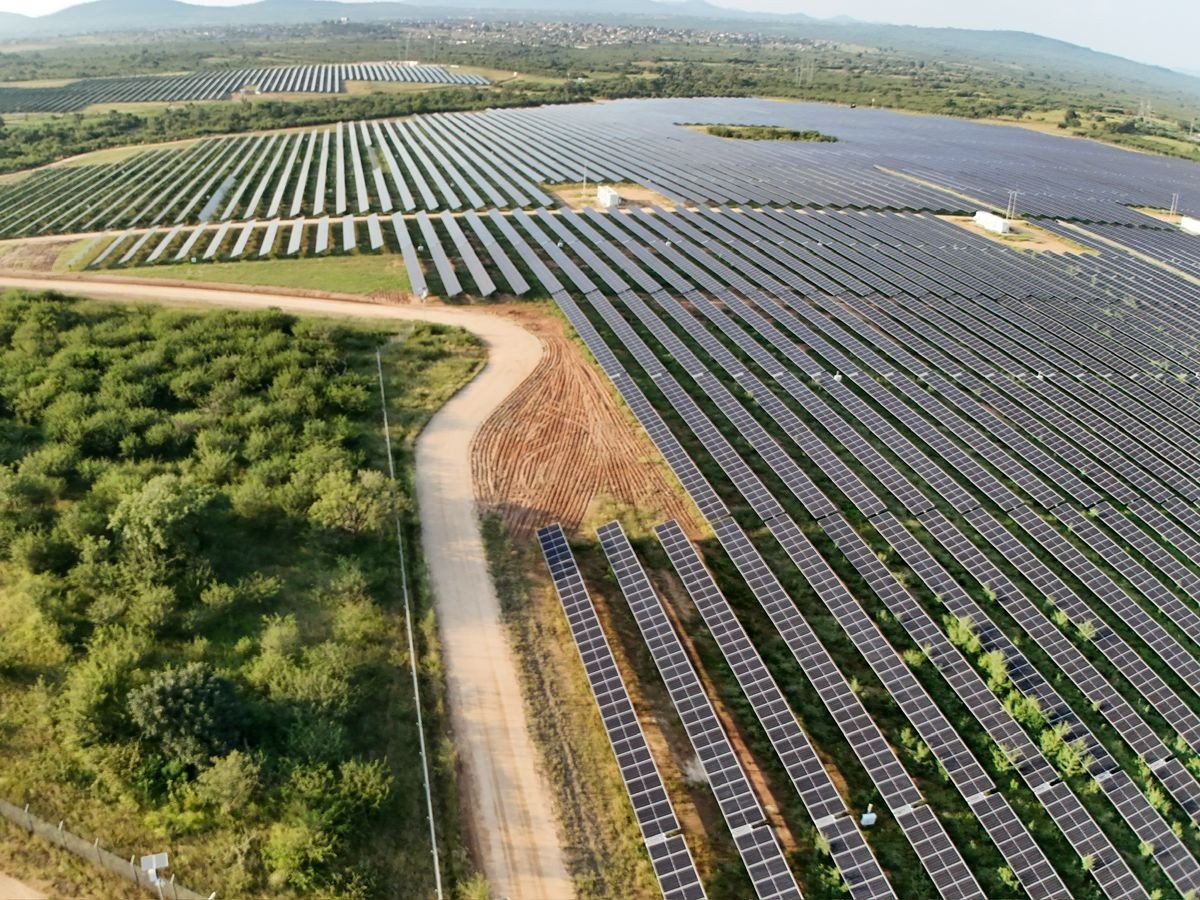
Bolobedu – As Voltalia marks the inauguration of the Bolobedu Solar Power Plant in Limpopo Province, the 148MW facility enters a new phase as an operating renewable energy asset supplying Richards Bay Minerals (RBM), a subsidiary of Rio Tinto.
Its commissioning signals the transition from project commitment to practical delivery, demonstrating how long-term renewable energy investments can support South Africa’s energy transition while creating sustained economic, social and environmental value in developing regions.
Bolobedu is one of the largest South African renewable power plants dedicated to the energy needs of a single corporate client and will supply approximately 300 gigawatt-hours (GWh) of renewable energy annually to RBM’s operations in KwaZulu-Natal.
RBM’s offtake agreement with Voltalia represents a significant step in the company’s commitment to sustainable mining and will contribute to the long-term sustainability of the business, including its Zulti South project, which is expected to extend the mine’s life by approximately 30 years.
The clean energy advantage
By generating clean electricity with low environmental impact, the plant contributes to long‑term sustainability and climate resilience.
Its land‑use strategy incorporates biodiversity‑conscious planning, ensuring that renewable energy development coexists responsibly with the surrounding environment.
Under the power wheeling agreement with Eskom, the annual injection of 300 GWh of power into the national electrical grid reduces pressure on the utility’s strained infrastructure.
In terms of the agreement, once this energy is exported to the grid, Eskom measures the energy injected and the energy consumed by RBM before reconciling the transaction financially, based on the approved schedule of standard prices.
This project reduces RBM’s annual greenhouse gas emissions by at least 10%, or about 237 000 tonnes of CO2e per year – equivalent to removing some 50 000 cars from the country’s roads.
Voltalia notes that the Bolobedu project illustrates its commitment to accelerating the decarbonisation of industries and supporting an inclusive energy transition in the country, while also supporting local communities.
Employment and skills development
During construction, the project created about 800 jobs, with a strong emphasis on local hiring.
Beyond short‑term employment, the project delivered lasting skills development in electrical installation, civil works, safety systems and solar plant operations.
Voltalia ensured that local workers were trained on the job in engineering support, solar panel installation and health, safety and environmental awareness.
More than half of the residents employed during the construction phase were youth workers.
According to the renewable energy company, these capabilities now reside within the community, strengthening the region’s technical base and enabling local workers to participate in future renewable energy and infrastructure projects.
The operational phase continues to support permanent roles in plant management, maintenance and security, thus ensuring ongoing employment and skills retention.
B-BBEE participation in the Bolobedu Solar Farm
The project company has 35% Black women ownership, comprising:
Renewable Solutions (Pty) Ltd – 21%
Growth Arm (Pty) Ltd – 14%
VLT RSA Invest/Voltalia – 65%
Renewable Solutions and Growth Arm are both 100% Black-owned and 100% Black-women-owned entities.
The 21% Renewable Solutions participation is also recognised as Black New Entrant participation for purposes of the project’s B-BBEE commitments.
It is important to note that the B-BBEE partners are not passive financial investors.
Both shareholders are represented directly on the Board of Bolobedu Solar Farm PV, with Mikateko Gail Nelwamondo and Phumzile Mthombeni both serving as directors of the project company.
This gives the B-BBEE partners direct participation in the governance and oversight of the project.
Catalysing broader economic activity
“The Bolobedu Solar Power Plant has become an anchor for wider economic activity in the region,” stated Voltalia Country Manager Louise Paulsen.
“Local suppliers were integrated into the procurement pipeline, stimulating small business growth and enabling entrepreneurs to participate in the renewable energy value chain.
“Voltalia notes that transport operators, construction firms, security companies and hospitality providers have all benefited from the project’s presence.”
This secondary economic activity has helped diversify the local economy, creating new opportunities in a region where unemployment and under‑investment have historically been high.
Attracting foreign direct investment
The project enhances Limpopo’s profile as an emerging destination for clean‑energy development, positioning the province to attract further international interest in solar, storage and hybrid energy systems.
The agreement with Rio Tinto aligns with Voltalia’s strategic partnership with the International Finance Corporation (IFC), concluded last year, which is designed to speed up the development of sustainable energy projects in the African mining sector.
Utility-scale projects such as the Bolobedu solar farm will be vital to South Africa achieving its target of adding 28.7 GW of new solar PV capacity by 2039, including 10.3 GW between 2026 and 2030.
The post Voltalia’s 148MW Solar Power Plant Delivers Economic, Social, Environmental Benefits appeared first on The Bulrushes.