Johannesburg – South African consumers are under pressure, and they know it.
Everyday costs have crept higher, discretionary spend is more considered, and the margin for impulse has narrowed.
Yet one behaviour has not disappeared. People are still choosing to go out.
What has changed is how.
Dining is no longer a casual background activity.
It has become intentional. Fewer outings, more meaning.
Less frequency, higher expectation.
The question consumers are asking is no longer “can I afford this?” but “does this feel worth it?”
That shift is quietly reshaping the restaurant landscape.
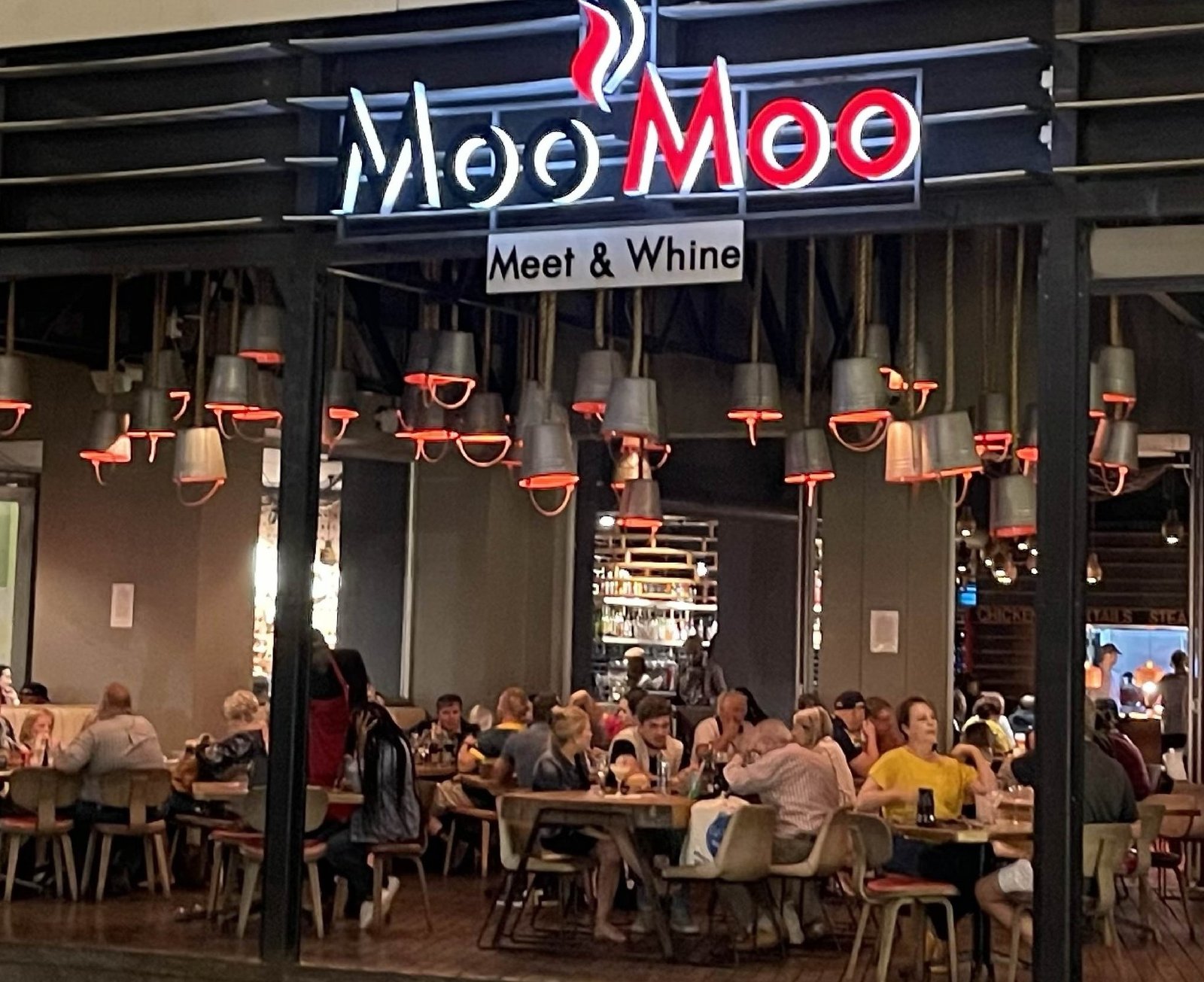
At Moo Moo Menlyn Mall, the pattern is clear. Bookings are rarely incidental. Tables are reserved for specific moments. Birthdays, family gatherings, business wins, and reunions that have been delayed for too long. Even weekday evenings now carry intent. People are not simply passing time, they are marking it.
This is where steakhouse dining retains its relevance.
Steak carries a particular psychological weight. It signals reward. It suggests quality. It carries a sense of occasion that few other dining categories consistently replicate.
When consumers choose it, they are not only buying a meal, they are choosing a moment that feels justified.
In a tighter economy, that justification matters more than ever.
Consumers are not withdrawing from spending entirely.
They are reallocating it. Smaller, frequent purchases are being reduced to make space for fewer, more considered experiences.
A shift towards “fewer, better” rather than “more, often.”
This is evident in environments like Menlyn, where retail and dining intersect.
A steak dinner is often part of a broader occasion, a day out, a milestone, or a deliberate break from routine.
The value is no longer only in the meal itself, but in what the moment represents.
Group dining has remained particularly resilient.
Shared experiences carry greater perceived value, where cost is justified not just by consumption, but by connection and memory.
Trust is another defining factor.
In uncertain conditions, consumers are less willing to risk disappointment. Every spend carries more weight.
As a result, familiar brands with consistent delivery are increasingly viewed as safer choices.
For Moo Moo, this reinforces its positioning.
The brand is not built on novelty. It is built on consistency, quality, and a clear understanding of expectation.
In a cautious economy, that clarity becomes a competitive advantage.
As Moo Moo Menlyn Mall owner Jimmy Eracleous notes: “We are seeing guests become far more intentional about when they choose to dine out.
“Moo Moo is increasingly part of those moments where people want reliability, comfort, and a space that feels appropriate for the occasion.”
What is emerging is a more refined picture of consumer behaviour.
This is not a story of reduced demand, but of recalibration.
Consumers are still engaging with hospitality, but on more deliberate terms.
They are choosing experiences that feel earned rather than automatic.
The return of confident dining is not loud or excessive. It is selective.
And increasingly, it is happening around a table where the occasion carries as much weight as the meal itself.
To place an advertorial or sponsored article in The Bulrushes, see the rate card below and get in touch at editor@thebulrushes.com
The post Why South Africans Are Still Choosing Steak, Even When Budgets Are Tight appeared first on The Bulrushes.