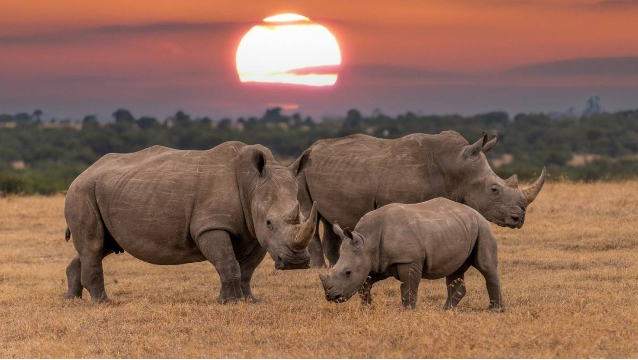
Pretoria – As the world marks World Rhino Day, South Africa reaffirmed its commitment to protecting its rhino population, which has experienced an increase of 4.9%.
South Africa, home to the world’s largest rhino population, also reaffirmed its efforts to intensify the fight against poaching that continues to threaten these iconic animals.
“At the end of 2025, the minimum national rhino population was estimated at 15 096 animals, comprising at least 2 565 black rhinos and 12 531 white rhinos,” the Department of Forestry, Fisheries And The Environment revealed on Tuesday 22 September 2026.
“This reflects a 4.9% increase of rhinos since 2024.”
While the rhino population has demonstrated a positive increase, the number of rhinos poached in South Africa remain significantly high.
From January to the end of August 2026, 230 rhinos were poached nationally, compared with 248 during the same period in 2025. In the Kruger National Park (KNP), 114 rhinos were lost to poaching during the first eight months of 2026, compared with 123 during the corresponding period in 2025. In 2025, poaching accounted for 2.2% of South Africa’s rhino population, below the estimated 3.5% population sustainability threshold.
The reduction has coincided with continued maintenance, dehorning programmes, strengthened protection measures and persistent law-enforcement efforts.
KNP has strengthened its field capacity through the appointment of additional field rangers and rhino monitors under the Rhino Renaissance Initiative as part of the broader Rhino Conservation Plan which includes dehorning, layered security, appropriate technology, skills development and strengthened integrity management.
Every rhino lost to poaching is one too many, as poaching also results in the loss of breeding animals, orphaning of calves and disruption to population recovery.
The objective must therefore be to drive poaching down as far as possible while strengthening the long-term recovery and resilience of rhino populations.
On 14 April 2026, the Department published the Biodiversity Management Plan (BMP) for the black and white rhino for implementation.
This 10-year plan envisages “thriving national herds of wild black and white rhino are valued, promote conservation, and people benefit from their inclusive sustainable use”.
The BMP is supported by five key objectives, with a key element focusing on growing and securing rhino populations through enhanced biological management interventions and support towards expansion projects.
The department said it was in the process of establishing a National Rhino Conservation Coordination Committee (NRCCC), which will serve as the lead implementing agency for the BMP.
The NRCCC will facilitate and coordinate the implementation of the BMP by supporting and monitoring the execution of the actions outlined in the plan.
Implementation of the National Integrated Strategy to Combat Wildlife Trafficking (NISCWT) continues to target the entire illicit value chain – from poachers to traffickers to financers of criminal operations and to those who profit from international trafficking.
By the end of March 2026, the second year of implementation was on track, with progress being particularly strong in coordinated investigations, strengthened prosecutions, intelligence sharing and targeted operations.
The fight against rhino poaching demands a whole-of-society approach, including national and provincial conservation authorities, law-enforcement and criminal justice agencies, government and financial institutions, local communities, private-sector and the international community.
On World Rhino Day, South Africa recognises all those who continue to contribute to the protection of the country’s rhino populations.
Our objective must remain focused – to ensure that South Africa’s rhinos survive and thrive, and that future generations inherit these remarkable animals as part of our country’s natural heritage.
Members of the public can report any suspicious activities around wildlife to the Department’s environmental crime hotline which is 0800 205 005 or the SAPS number 10111.
The provincial and national breakdown of rhinos poached from January to August for 2024, 2025 and 2026 is as follows:
| Provinces and National Parks | 2024 | 2025 | 2026 | |
| SANParks | 53 | 123 | 114 | |
| Gauteng | 0 | 0 | 1 | |
| Limpopo | 34 | 28 | 33 | |
| Mpumalanga | 1 | 3 | 14 | |
| North West | 9 | 14 | 19 | |
| Eastern Cape | 4 | 2 | 5 | |
| Free State | 3 | 8 | 12 | |
| Northern Cape | 3 | 3 | 3 | |
| KwaZulu-Natal | 165 | 67 | 29 | |
| Western Cape | 0 | 0 | 0 | |
| Total | 272 | 248 | 230 |
The post World Rhino Day: Fewer Rhinos Lost In SA, But The Fight To Keep Them Safe Is Far From Over appeared first on The Bulrushes.