Good morning. In today’s Fortune 500 Digest:
- Middle East war now involves 17 different countries.
- Stock markets are broadly up today. Phew!
- Why hasn’t Iran bombed any of its neighbors’ water desalinization plants?
- Angeliki Frangou, CEO of Navios Maritime Partners, tells us what it’s like having your ships trapped in the Strait of Hormuz.
- Elon Musk’s SpaceX IPO could hit $1.7 trillion.
- Leopold Aschenbrenner’s $5.5 billion AI bet.
- Palantir CEO thinks governments might nationalize AI.
THE MARKETS
Risk on! Global relief rally under way
S&P 500 futures are flat this morning before the opening in New York. The index rose 0.78% yesterday. Asia and Europe are strongly up and tech stocks are going gangbusters today. Coinbase was up 15% yesterday and another 1.4% in overnight trades.
TOP STORIES
IRAN
Middle East war now involves 17 different countries
It’s Day 6 of the war with Iran. Israel and Iran continue to exchange bomb attacks. Iran said its navy hit a tanker in the north of the Arabian Gulf. U.K. authorities confirmed the hit. That’s significant because the tanker was far from the Strait of Hormuz, which has been the main focus of concern so far. A U.S. submarine torpedoed an Iranian ship in the Indian Ocean and Sri Lankan authorities are retrieving dozens of bodies. The war is draining the global supply of Patriot missiles needed by Ukraine for its defence against Russia. Nonetheless, Ukraine said it could offer the U.S. interceptor drones to fend off attacks from Iranian Shahed drones. Italy said it would send air defence equipment to Gulf nations being attacked. Azerbaijan says it was attacked by two Iranian drones. That brings to 17 the number of countries drawn into the conflict so far, by Fortune’s count: Iran, Israel, U.S, U.K., Qatar, UAE, Kuwait, Saudi Arabia, Azerbaijan, Italy, Bahrain, Oman, Lebanon, Jordan, Cyprus, France and Germany.
- President Trump has about a week to sort out the global oil supply chain before prices start going through the roof, according to Fortune’s Jordan Blum.
- Pain points incoming? “There is plenty of runway before the [U.S.] economy begins to hit pain points that result in a change in household and business consumption, investment and hiring. Those pain points will not kick in until oil hits approximately $125 a barrel,” according to RSM analyst Joe Brusuelas. At that point, it would become a drag on GDP growth and boost inflation with “downside risks to growth, inflation, unemployment and the continuation of the business cycle.”
It’s not the oil that is important. It’s the water.
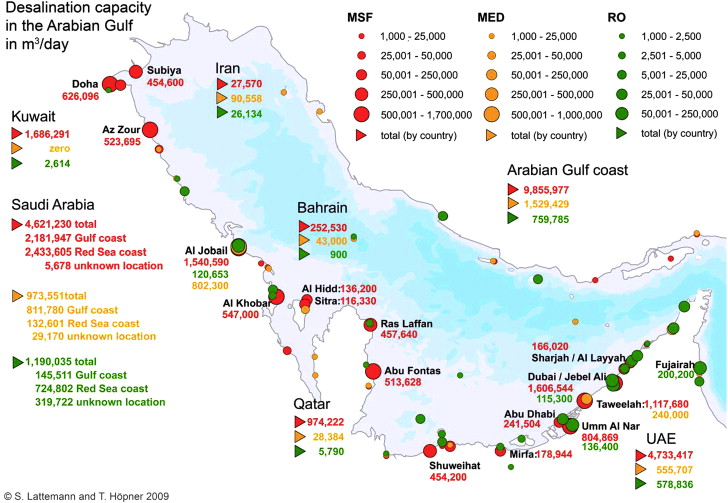
Iran has attacked its neighbors in reprisal for not supporting it against the U.S. and Israel. But one thing Iran has not done is attack Gulf countries’ water supplies. Many of its desert kingdom neighbours are dependent on seawater desalinization plants. “The targeting of key infrastructure, such as water desalination plants … would mark important escalations of the conflict,” Macquarie analysts Thierry Wizman and Gareth Berry told clients recently. “Water desalination has always been a key vulnerability in the Gulf states. In one report from several years ago, it was estimated that a hostile act against Saudi Arabia’s water infrastructure would force authorities to evacuate Riyadh (with a population of 8.5mn) within a week.” Saudi’s Jubail Desalinization Plant produces 1.6 million cubic meters of water per day. According to the U.S. Embassy in Saudi Arabia, in the event of an attack on Jubail, “Riyadh would have to evacuate … the current structure of the Saudi government could not exist without the Jubail Desalinization Plant.”
- So why hasn’t Iran targeted them? One clue may be that the regime is sending a signal by not taking out its neighbors’ most vulnerable infrastructure. The message might be, “We can make it worse, but we are currently choosing not to. Maybe you could urge the U.S. to wind this down before we get there.” Back in 2025, Iran signalled it was willing to end its 12-day war with Israel by muting its retaliatory attacks on U.S. sites and Qatar. Peace swiftly followed.
What’s it like owning ships in the Strait of Hormuz?
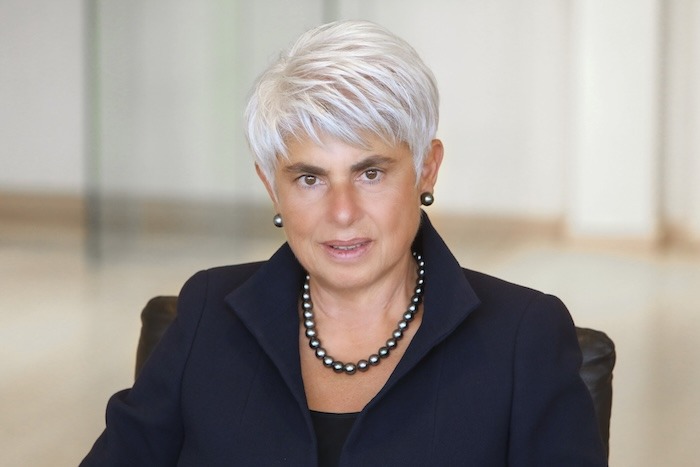
Fortune’s Diane Brady talked to Angeliki Frangou (above), the fourth-generation owner and CEO of Navios Maritime Partners, which operates a global fleet of more than 170 bulkers, tankers and container ships. She said attacks on her ships in the strait are “just a part of what we are living.” Shipping costs in the region have gone up by 4X, she said, if alterative routes can be found.
“Everything is about national security. It is about mercantilism. It is about friend‑shoring,” she says. “We went from just-in-time to just-in-case, getting resources from where we think is most secure.” For those reasons, she is a pessimist about the near-term future of free trade: “The efficiency of trade and globalization, low tariffs and efficiency, is not part of the equation.”
“We are watching history in a lot of ways,” she said. “The WTO world we built our companies in basically doesn’t exist today. We are living in a different world.”
SPACEX
Musk’s SpaceX IPO could hit $1.7 trillion
The stats surrounding Elon Musk’s planned IPO for SpaceX are astonishing, Fortune’s Shawn Tully writes. Analyst Franco Granda of PitchBook told him that a $1.75 trillion mark is justifiable based on SpaceX’s gigantic growth opportunities. Even at $1.5 trillion, the SpaceX debut would rank as the second-most-valuable IPO in history—trailing only Saudi Aramco at $1.7 trillion-plus in late 2019, and leagues ahead of Alibaba at $169 billion in 2014. A $50 billion raise through an IPO would surpass the $44 billion raised through 90 previous IPOs last year.
- There’s one small caveat: The company has reportedly generated $8 billion in operating profits, but it is still not clear whether its net earrings on the bottom line are greater than zero. To justify a $1.5 trillion market cap, it would need to earn more than Berkshire Hathaway does today.
ARTIFICIAL INTELLIGENCE
Leopold Aschenbrenner’s $5.5 billion AI bet
Leopold Aschenbrenner’s “Situational Awareness” AI hedge fund now reports roughly $5.5 billion in U.S. equity exposure, spread across nearly 30 holdings, Fortune’s Sharon Goldman reports. Among the new or expanded positions are Bloom Energy, a fuel-cell power company that is now the fund’s single largest holding, CoreWeave, an AI cloud infrastructure provider, and Cipher Mining, another large crypto-mining firm. Aschenbrenner appears to be betting that the most valuable assets in the AI era may not be algorithms, but electricity and computing power.
- Nvidia is going into space: “NVIDIA is looking for an Orbital Datacenter System Architect to help define and build products for AI in orbit.” See the job ad here. Hat tip to Jack Kuhr for spotting it.
CHART OF THE DAY
Apple never joined the AI capex race
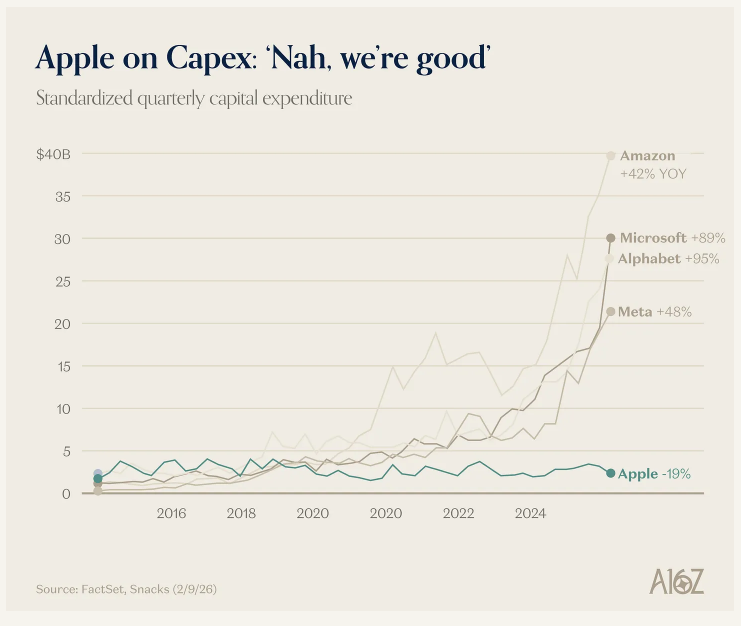
Chart from A16Z via FactSet and Snacks.
NUMBER OF THE DAY
$290 million
The amount of money Palantir co-founder and chairman Peter Thiel made after selling about 2 million shares. He still holds about 68.9 million shares through LLCs he controls and the value is about $10 billion, Fortune’s Amanda Gerut discovered in the bowels of the SEC.
QUICK HITS
- Korean startup wrtn is on track to pass $100M in annual recurring revenue, riding a loneliness epidemic-fueled boom in AI entertainment by Nicholas Gordon
- Poor brain health costs the world economy $5 trillion a year. The world is waking up to the crisis by George Vradenburg
- Trump’s new 401(k) match collides with a harsh reality: More workers are dipping into their retirement cash just to get along by Jake Angelo
- American consumers are the ultimate losers in the ‘immense mess’ that is $175 billion tariff refund, says Trump’s former commerce secretary by Eleanor Pringle
A SELECTION FROM THE FRONT PAGES TODAY
Trade court orders Trump administration to jumpstart tariff refund process – Axios
Morgan Stanley Lays Off 2,500 Employees Across All Divisions – Wall Street Journal
China Sets Economy’s Growth Target Below 5% for First Time in Decades – The New York Times
‘Everyone’s calling’: demand for private jets soars by up to 300% amid Iran war – The Guardian
ONE MORE THING
Palantir CEO thinks governments might nationalize AI
There’s a video clip of Alex Karp currently going viral among tech nerds that shows him talking about the future of AI at an A16Z sponsored conference. In it, he argues that “If Silicon Valley believes we’re going to take everyone’s white collar jobs … and screw the military … If you don’t think that’s going to lead to the nationalization of our technology—you’re retarded … this is where that path is going.” Much of the commentary so far has focused on his offensive language. But Fortune’s Catherina Gioino thinks we should pay mopre attention to his alarmingly dystopian point: If AI really does destroy everyone’s jobs, then “the danger for our industry is that you get a famous horseshoe effect, where there is only one thing people agree on, and that’s that this is not paying the bills and our industry should be nationalized,” he said.
This story was originally featured on Fortune.com