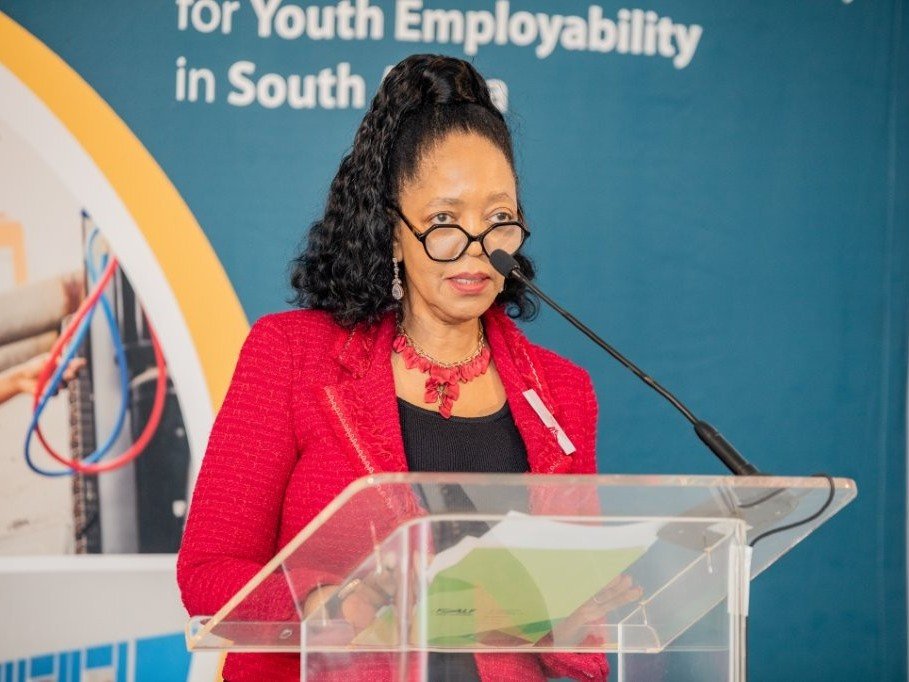
Johannesburg – Transformation in higher education cannot be achieved through policy statements or symbolic gestures.
It requires confronting systemic barriers, reshaping institutional cultures and advancing black women’s leadership with intention and accountability.
This was the central message delivered by Dr. Judy Dlamini, Chancellor of the University of the Witwatersrand, during a roundtable discussion at the University Chancellors’ Thought Leadership Seminar recently hosted by Universities South Africa (USAf).
“This topic matters. Trust starts internally, with our support staff, our ground staff, academic staff and students, especially those historically excluded, especially black women,” Dr. Dlamini stated.
Systemic barriers must be confronted, not acknowledged in passing
Dr. Dlamini highlighted the lived experiences of women in academia, including bullying, gender‑based harm, microaggressions and sexual harassment, all of which are issues that remain insufficiently addressed due to institutional silence, taboo and inadequate accountability.
She challenged leaders to ask whether gender equity and transformation structures are genuinely trusted by the people they were created to serve.
Policies, she argued, must be reviewed with affected groups, measured for impact and backed by dedicated financial and human resources.
Dr. Dlamini introduced the Big Six, namely gender, race, social class, geography, sexual orientation and disability, as intersecting identities that shape exclusion in higher education.
“If you carry all six, you are in trouble,” she said.
She urged higher education leaders to examine who occupies leadership roles, such as deans, heads of school and deputy vice‑chancellors, and whether these structures reflect the Big Six.
If not, leaders must ask why, and what they are doing to change it.
Leadership transformation requires courage, not comfort
Dr. Dlamini warned against leadership cultures that cling to the status quo.
Universities must adopt intersectional approaches that enable underrepresented groups to thrive, not merely survive.
Bringing historically excluded groups into leadership cannot be a numbers game; without support, they face toxic masculinity, silent bullying and institutional resistance.
She cited the Deputy Vice Chancellor of Research and Innovation at the University of Johannesburg.
Prof. Refilwe Nancy Phaswana-Mafuya’s work, which cautions against expecting black women to adapt to unjust systems. Instead, leaders must change the system itself, establishing institution‑wide agendas with clear milestones, measurable indicators and timelines.
Allyship and collective responsibility
Roundtable participants reinforced Dr Dlamini’s message. They emphasised:
- The importance of allyship in confronting gender‑based harm.
- The need for ethical councils led by people of integrity, not merely credentials.
- The responsibility of universities to model the world as it ought to be, not simply reflect societal dysfunction.
- The urgency of protecting truth, evidence and academic freedom.
In terms of moving forward, the roundtable produced a clear set of priorities:
- Leadership transformation that reflects South Africa’s diversity.
- Advancement of black women through intentional pathways, mentorship and structural reform.
- Removing systemic barriers that undermine dignity, safety and progression.
- Creating inclusive environments where historically excluded groups can thrive.
- Embedding accountability into gender governance and transformation frameworks.
A call to change the system, not the individual
“True diversity requires integrated systems of change. We must assess who succeeds, who is seen, and who is supported, and change the system accordingly,” said Dr. Dlamini.
Her closing message was that inclusion cannot be reduced to representation, nor can transformation be achieved by asking individuals to adapt to environments that were never designed for them.
Inclusion is not an act of benevolence; it is a structural responsibility that demands courage, accountability and institutional self‑interrogation.
She urged leaders to recognise that systemic barriers are not incidental.
They are embedded in organisational cultures, policies, leadership norms and everyday practices.
Changing them requires more than goodwill.
It requires deliberate redesign, consistent measurement, and leadership willing to confront discomfort.
Dr. Dlamini noted the future of South African higher education depends on leaders who are prepared to reshape the system itself, including its assumptions, its power dynamics and its structures, so that diversity becomes a source of excellence rather than an exception to it.
Only then will universities embody the values they espouse and earn the trust of those they exist to serve.
The post Higher Education: Spotlight On Inclusion, Systemic Barriers, Black Women’s Leadership appeared first on The Bulrushes.