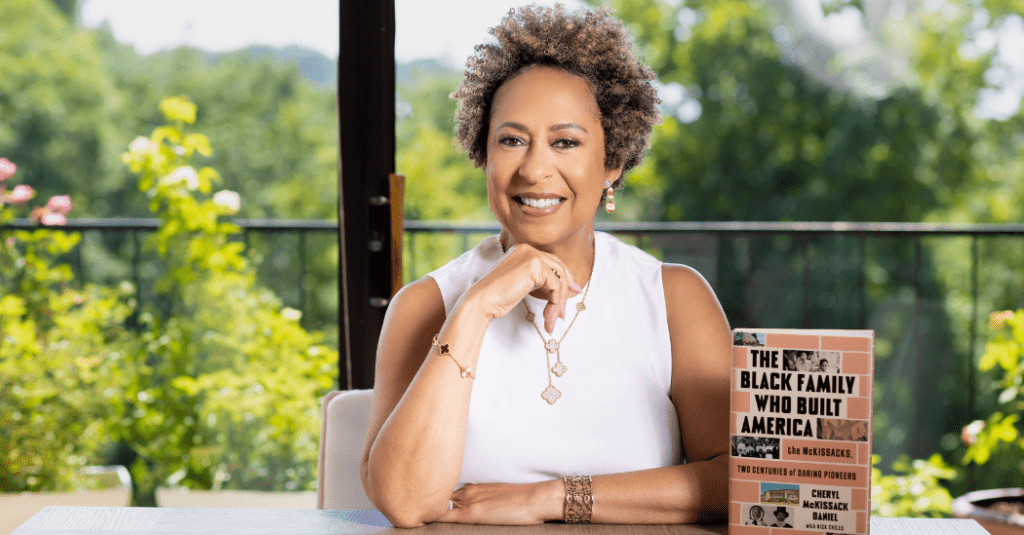
The McKissack family’s involvement in American construction predates the Civil War by several decades.
Their documented history in the building trades begins around 1790 with an enslaved Ashanti ancestor who mastered the craft while enslaved and passed it to his children.
That lineage eventually reached Pulaski, Tennessee during Reconstruction, where the family continued building despite operating in one of the most hostile racial environments in the country. In 1905, Moses McKissack III incorporated McKissack & McKissack in Nashville.
The firm is still operating today.
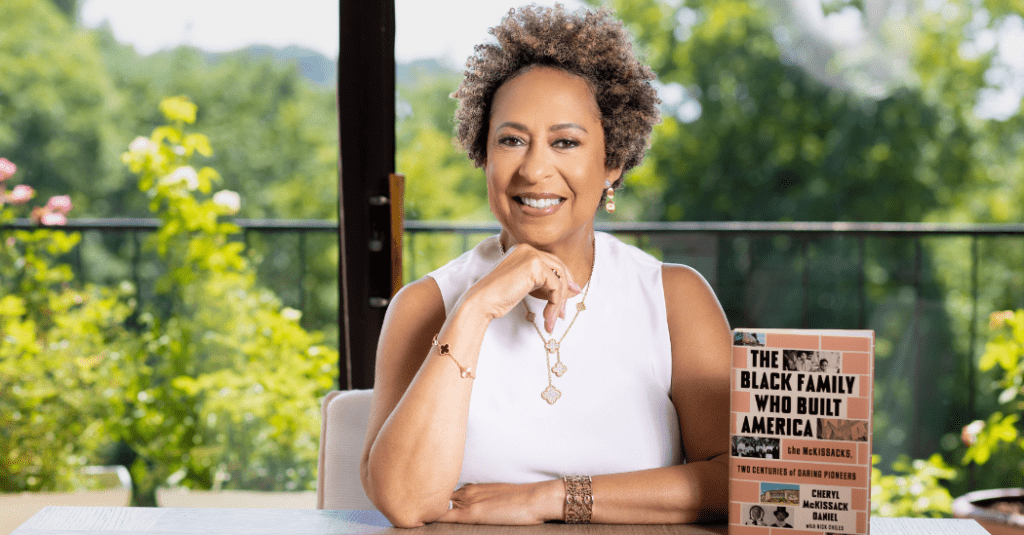
Dr. Cheryl McKissack Daniel, Moses III’s granddaughter, serves as Chair of the Board. She is the fifth generation of her family to lead the company, and in that role she has overseen more than $50 billion in construction projects over the past decade.
McKissack & McKissack is the oldest minority- and woman-owned design and construction firm in the United States.
Cheryl recently published The Black Family Who Built America: The McKissacks, Two Centuries of Daring Pioneers, which traces that history from slavery through to the present. The book functions as much as a business document as a family narrative. It documents how a firm survives through operational discipline applied across generations.
What Survival Actually Required
When Cheryl examined her family’s history, she expected to find resilience. What she found alongside it was strategic precision.
“What shocked me is their strategic brilliance,” she said. “When you think about Moses McKissack II in Pulaski, Tennessee, during Reconstruction, the Klan was founded in that same town. How was he able to stay alive and even grow when you had that right there, annihilating anyone of color who was showing any kind of economic success?”
Her answer was relationships.
The family built what she calls conditional protectors: relationships with people who needed them. They invested continuously in their craft, communicated selectively, and built financial systems that were sophisticated for their time. These were not isolated survival instincts. They became a repeatable operating framework carried across generations.
What endured was not a fixed set of tactics but a disciplined way of operating. Long-term thinking, sustained investment in technical capability, and strategic relationship management remained constant through five generations of leadership, economic downturns, political shifts, and structural changes across the construction industry.
Building at the Scale of New York City
McKissack & McKissack operates primarily in New York, with offices in Mount Vernon, Philadelphia, and Central Florida.
New York’s construction environment is, by Cheryl’s description, one of the most complex and capital-intensive in the country. Regulations are steep, costs exceed comparable projects elsewhere by significant margins, and the coordination required to move major infrastructure from planning through completion demands operational depth that few firms can sustain over long periods.
Across more than 6,000 projects and 120 years as a family-owned business, the firm has worked across aviation, transportation, healthcare, and academic infrastructure. When JP Morgan Chase opened its corporate headquarters at 270 Park Avenue, Jamie Dimon announced that the trading floors McKissack built process $2 trillion in daily transactions. The firm has also served as an Independent Engineering Consultant for the Metropolitan Transportation Authority, the largest transportation network in the United States.
Cheryl’s view on how projects at that scale succeed centers on planning.
“Planning is king,” she said. “Planning sets the tone for the entire project.”
In her framework, the availability of AI and advanced IT tools means a structure should be fully constructable on paper before physical work begins. Efficiency established during early-stage planning compounds forward through every subsequent phase of construction. Deficiencies do the same.
Succession as an Operational Problem
McKissack recently completed a succession process that Cheryl estimates took between five and seven years to execute correctly. Earlier attempts failed because the incoming leadership did not fully understand the conditions and decisions that built the firm into what it is today.
Succession, in her view, is not simply about title transfer. It is about preserving operational context.
“When we’re thinking about the growth of our company and we’re thinking about who’s going to lead us into that growth, we also have to consider who understands the history,” she said.
The current leadership structure reflects both the firm’s technical standards and its intentional approach to representation within the industry. Cheryl’s position is that being the first or only Black firm operating at a certain scale is not a meaningful long-term outcome. The objective is structural normalization: enough firms operating at enough levels of the industry that representation stops being treated as an exception.
“We don’t want to hear anymore that we’re the only first Black person to do this,” she said. “It should be more mainstream and more of a norm for the next generation coming in.”
Building the Next Layer of Ownership
In 2019, Cheryl and mechanical engineer John Rice launched Legacy Engineering with a specific structure in mind: build the company, then transition ownership to minority engineers who would operate it independently. The company is now in its sixth year, and two minority engineers have become owners.
The model addresses a structural issue that MWBE programs alone do not solve. Access to projects and ownership of firms are fundamentally different economic conditions.
For Cheryl, ownership requires financial literacy, understanding the capital requirements of running a business, and procurement systems that give firms consistent opportunities to compete over long periods of time rather than temporary access.
She also sees acquisition as a viable path to scale. Investors in her network, including Black developers and finance professionals, are actively looking to deploy capital into construction companies. Whether those transactions happen depends largely on whether firms have the operational infrastructure to support them: governance, financial systems, leadership depth, and long-term planning capacity.
What 120 Years Actually Requires
Tools change, markets shift, governance structures evolve. What the McKissack firm has demonstrated across 120 years is that surviving those shifts requires continuous re-engineering: updated technical capabilities, restructured leadership, and deliberate expansion into new markets. The operating framework gets rebuilt as conditions demand.
That is what sustained presence in one of the most difficult construction markets in the country actually looks like.
Looking Beyond the United States
McKissack is also evaluating long-term opportunities outside the United States, particularly across Africa. The firm’s current president was raised in Ghana, a connection Cheryl described as a full-circle moment given the family’s ancestral roots.
For Cheryl, the expansion is tied to infrastructure, long-term development, and a view of construction leadership built around ownership, technical capability, and institution building across generations.
The firm’s view of growth reflects the same operating posture that has sustained McKissack for more than a century: deliberate expansion, continuous re-engineering, and long-term positioning inside markets undergoing structural change.
The post How the McKissack Family Sustained a Construction Firm Across Five Generations appeared first on SHOPPE BLACK.