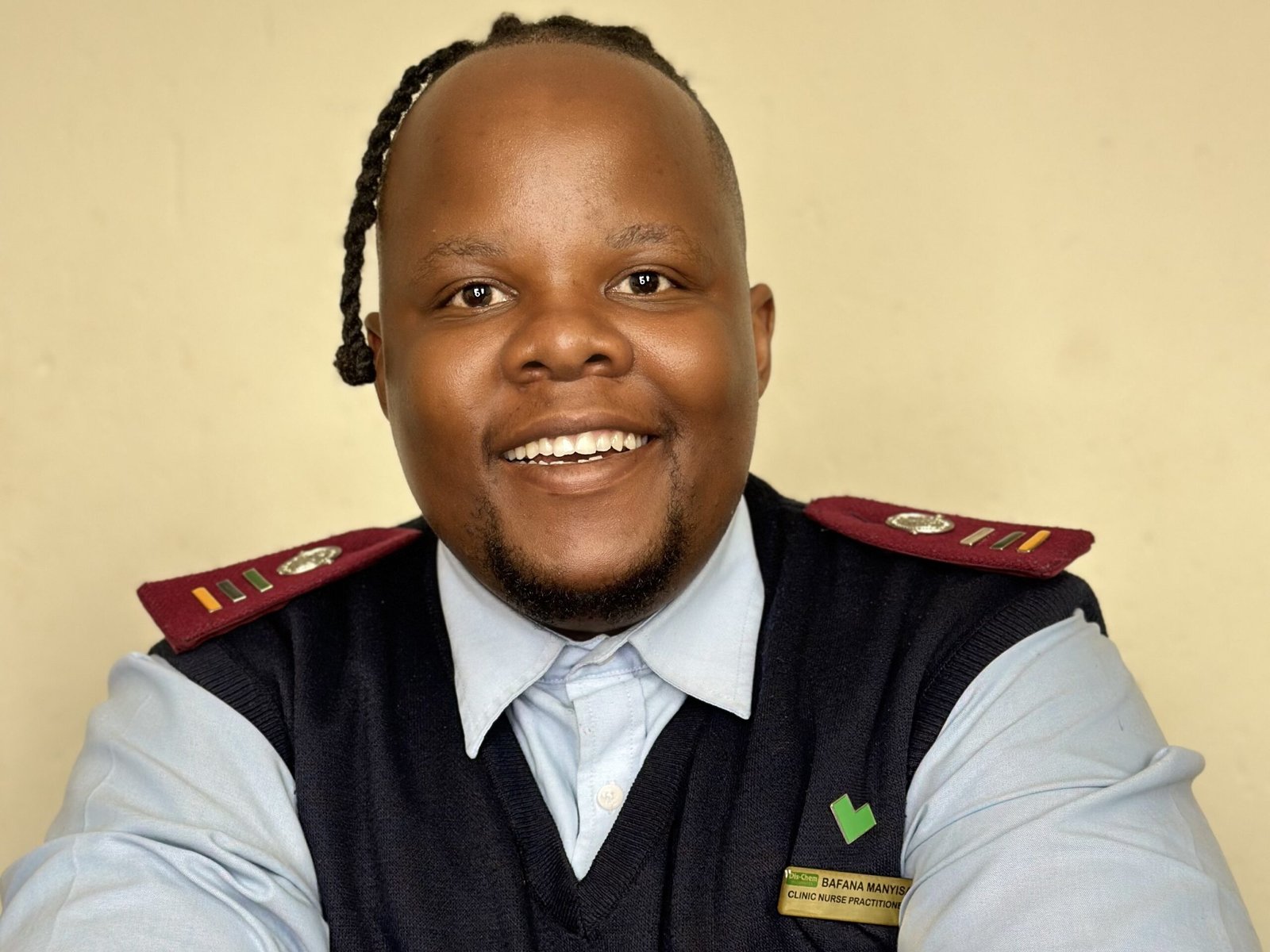
Johannesburg – For Bafana Manyisa, strength doesn’t look the way most men are taught it should. It’s not toughness or stoicism or an unshakeable composure.
Strength, he says, looks like sitting with a patient who needs reassurance. It looks like supporting a new, overwhelmed father navigating the parenting journey for the first time.
It looks like simply being present for your family when they need you most.
As a registered nurse, Operational and Outreach Team Leader at Dis-Chem and Dis-Chem Baby City Clinics, husband and father, Manyisa has spent his career learning what few South African men are encouraged to admit: that care is one of the most demanding forms of strength there is.
From mechanics to healthcare
Raised in Mohlakeng on Johannesburg’s West Rand, Manyisa’s path to nursing was unconventional.
His childhood dream was mechanical engineering.
He spent his early years studying motor mechanics, working in workshops, and enjoying the technical precision of the work.
But something was missing.
“I realised that what fulfilled me most was helping people,” he explains.
It took his older sister, a primary healthcare nurse practitioner, to recognise what he didn’t yet see in himself, a natural capacity for compassion.
She urged him to apply for the R425 nursing programme.
“From the moment I started training, everything aligned,” he says.
“I fell in love with nursing because it gave me the opportunity to make a real difference in people’s lives, especially during their most vulnerable moments.”
The values that shaped his approach to healthcare were rooted long before he entered any clinical setting.
Growing up in Mohlakeng taught him resilience, humility, and the importance of community lessons, he says, no textbook could replicate.
“Our community taught us to look out for one another,” he reflects.
“Simple acts of kindness, respect for elders, and serving others became part of who I am.”
The weight of witnessing
Those values were tested most severely during his time at Eyethu Yarona Clinic under the Gauteng Department of Health.
Faced with water shortages, electricity interruptions, and stock limitations, the clinic ran on compassion and improvisation.
It was difficult work in difficult conditions, yet it was there that Manyisa experienced one of the defining moments of his career.
After helping an elderly patient collect her chronic medication, she paused and told him something that has stayed with him ever since.
“You make a difference in our lives. You don’t just give us medication, you treat us with care.”
That moment crystallised his understanding of nursing and, later, fatherhood.
“It’s not about treatment alone,” says Manyisa, the father of one.
“It’s about dignity, empathy, and human connection.”
A different kind of strength
Working in healthcare has given Manyisa an intimate view of the pressures South African men carry in silence. Financial stress.
The relentless expectation to provide.
The demand to always appear strong. He sees men shoulder these burdens alone, asking for nothing, showing nothing.
His message to them is direct: asking for help is not a weakness. Vulnerability is not failure.
“Too many men believe they have to carry everything on their own,” he says.
“Real strength comes from being honest, seeking support when you need it, and taking care of yourself so that you can take care of those who depend on you.”
The qualities that make a good healthcare professional – empathy, resilience, patience, and care are, he believes, the very same qualities that make a good father.
This Father’s Day, he’s actively encouraging more men to recognise this, to become more involved in their families’ health and wellbeing.
To support partners during pregnancy.
To take an active role in their children’s healthcare journeys. To show up.
The strongest thing
“People may forget what you said or what you did,” Manyisa reflects.
“But they never forget how you made them feel.
Nursing teaches you resilience and compassion in ways no salary ever could.”
His story challenges a narrow version of masculinity that has done South African men no favours.
Men can be leaders and caregivers.
They can be strong and compassionate.
They can provide and nurture.
Perhaps, he suggests, the strongest thing a man can do is simply care.
The post Strength Looks Like Care: The Male Nurse Redefining South African Fatherhood appeared first on The Bulrushes.